

In This Article:
- 160+ Years of Master Menswear Weaving:The rich heritage of Chikakata Orimono (rooted since 1860), a legendary weaver that once dominated 98% of Japan's premium men's Kaku-obi sash production.
- The "Silk & Washi Paper" Material Revolution:How the studio strategically differentiated itself from Kyoto and Hakata by blending high-sheen silk with textured Japanese Washi paper, creating a breathable, featherlight, and structurally organic textile.
- World-Class Variety with Modern Innovations:Exploring a diverse lineup of 30 distinct weaving structures, including their viral casual-tie men’s sash, inspired by neckties and interior wall coverings for the contemporary global wardrobe.
Over 160 Years of History in Yonezawa,
Thriving on the Weaving of “Kaku-obi”
(formal men’s kimono sashes)
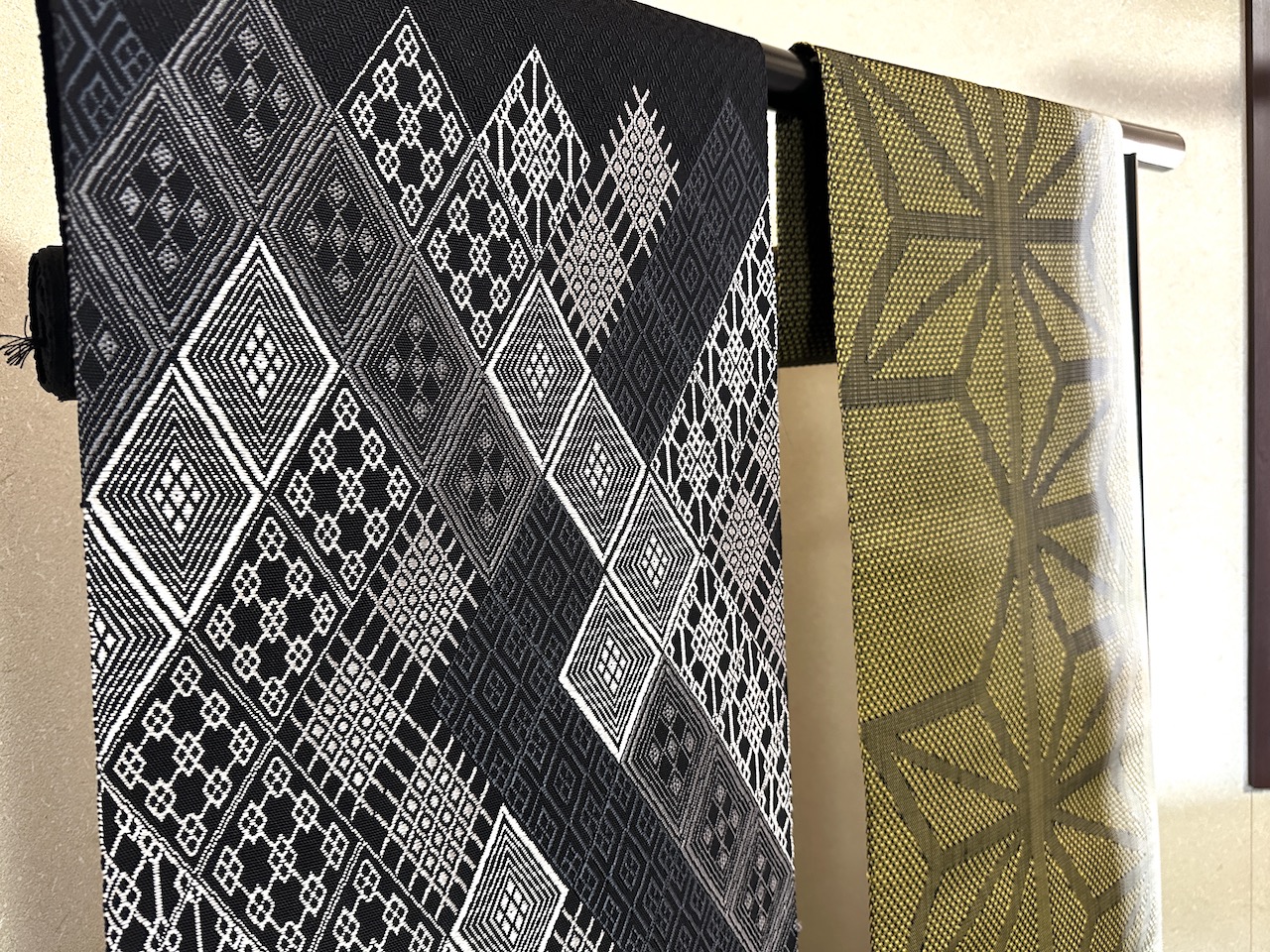
“Konken Orimono,” a long-established Yonezawa-ori weaving house, is renowned for its wide range of “obi” with distinctive weave structures and rich designs. Its roots trace back to 1860, when Yonezawa had already been a major production center for “hakama” (pleated trousers) and men’s “obi.” The founder, Kintarō Kondō, was invited from present-day Kiryū City in Gunma Prefecture as a textile technician, and was the creator of the “shusshi-ori” (slub yarn weave). In 1900 he established his own enterprise in Yonezawa, later founding Konken Orimono Co., Ltd. in 1965. Today, the fifth-generation head, Mr. Tetsuo Kondō, continues to energetically develop new products in step with the times, offering “obi” and kimono fabrics of captivating beauty. The refined silk textiles produced with techniques passed down over generations have won the admiration of both men and women.
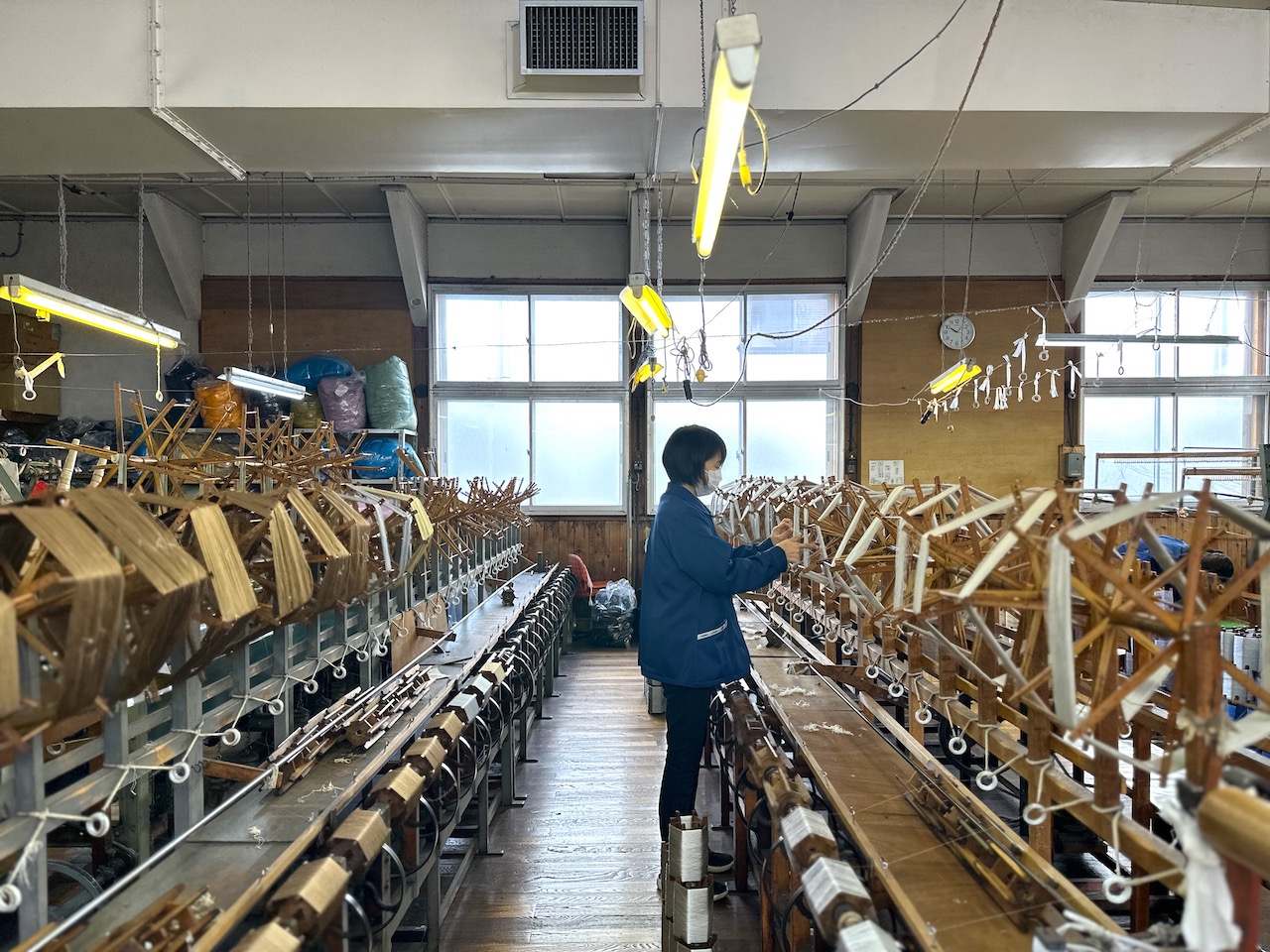
When Mr. Kondō became president in 2002, he recalls that 98% of their production was “kaku-obi” (formal men’s kimono sashes).
“In earlier days, we also wove coats and silk-wool kimono, but under my father’s leadership, kaku-obi became our main line. Back then, demand for them was extremely high, so we converted all the wide looms in the house to narrow-width ones, weaving fabrics no wider than 45 cm, prioritizing efficiency to produce as many as possible. In the past, especially in regions like Hokuriku and Nagoya, kaku-obi were often chosen as gifts for engagement return presents or wedding favors—that history is part of the backdrop.”
##
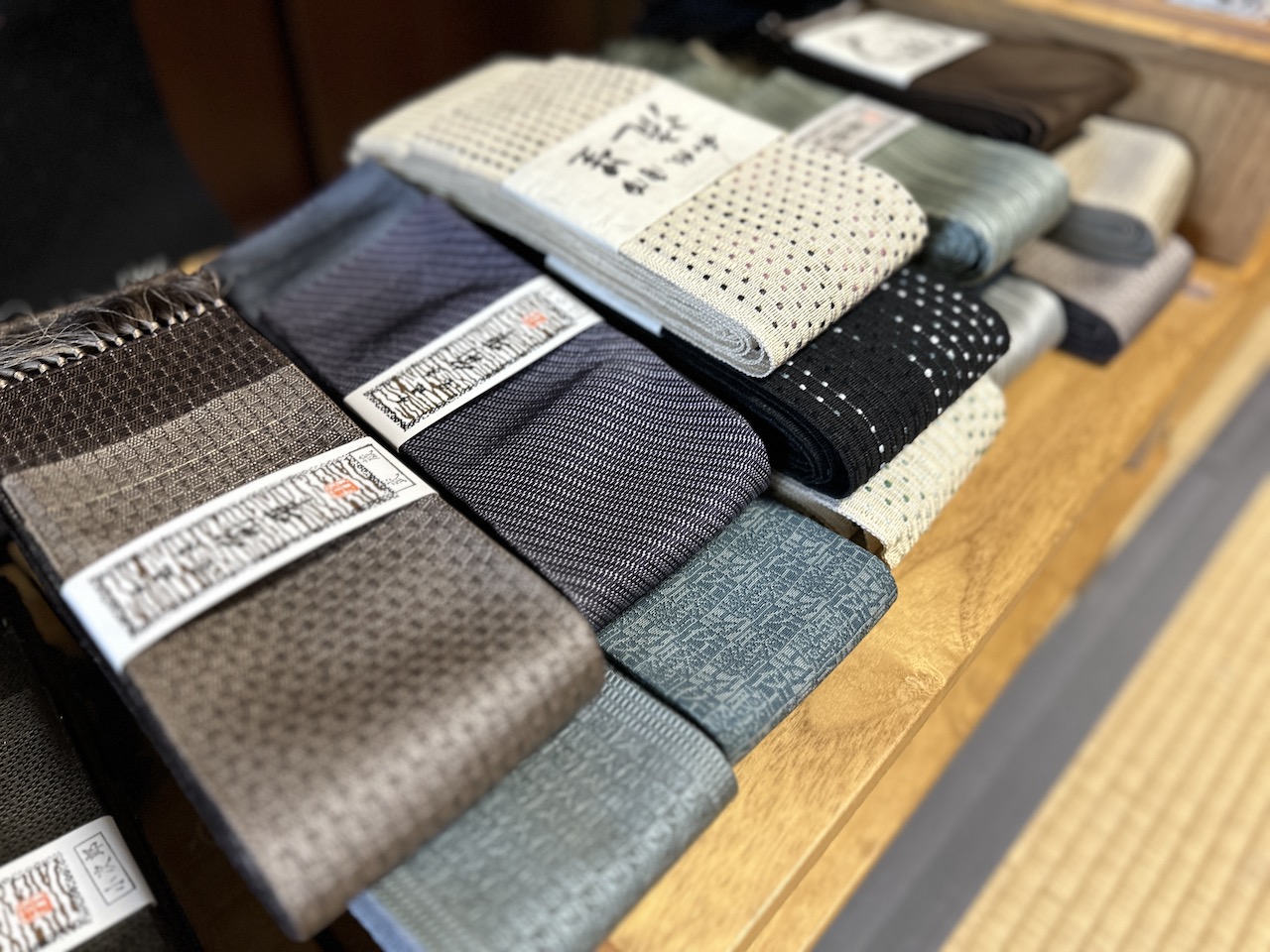
Today, Konken Orimono offers a full range of items, from men’s “kaku-obi” to women’s kimono and obi. This expansion began with a collaboration with a renowned designer, who commissioned the weaving house to produce “hanhaba-obi” (casual half-width sashes).
“That request led me to think—if we can make hanhaba-obi, why not ‘Hassun-obi’ (approximately 31 cm wide obi)? Instead of smooth, flat-textured obi, I wanted to try creating something with texture—using yarns that produce intentional irregularities—and began experimenting.”
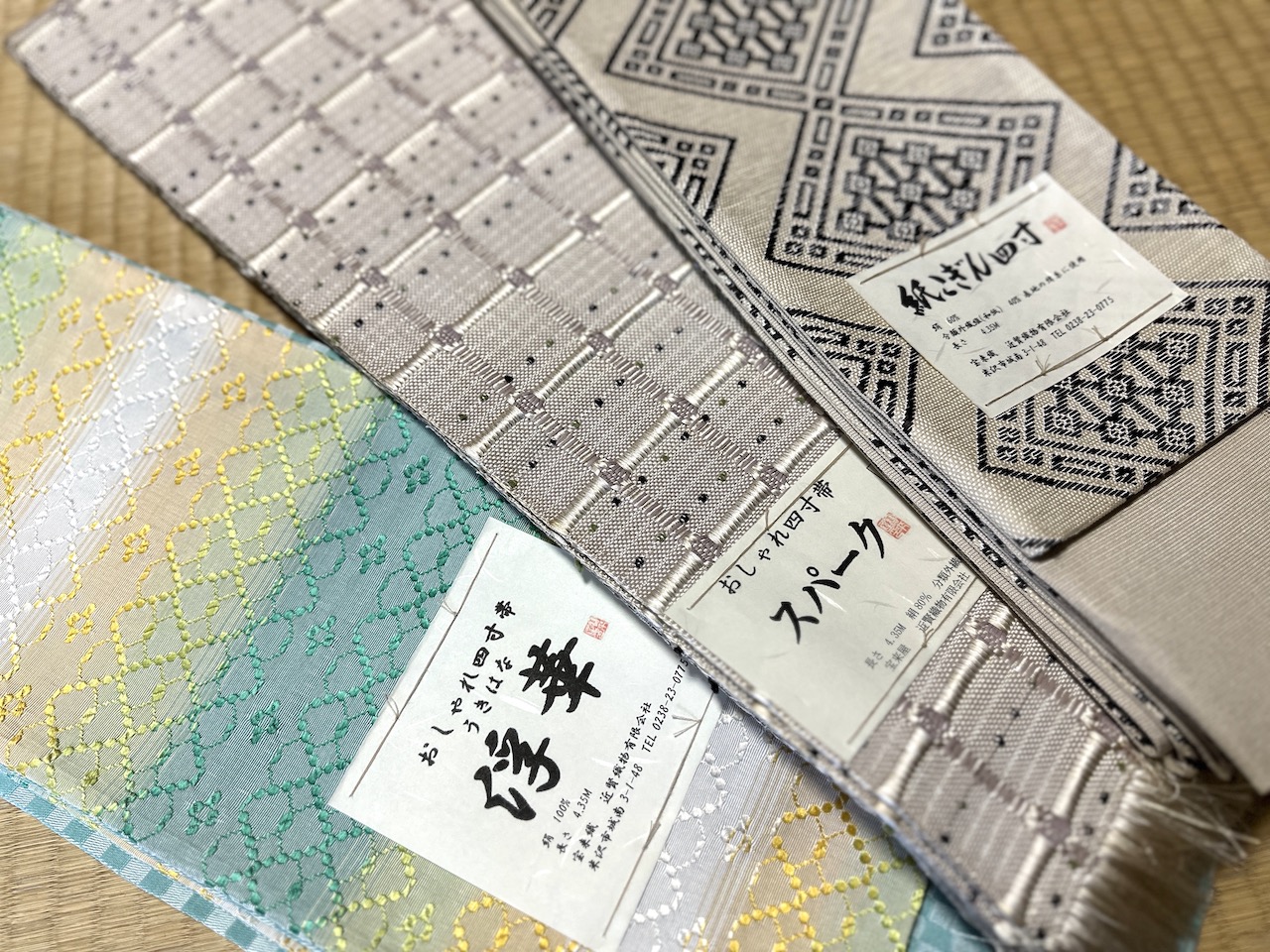
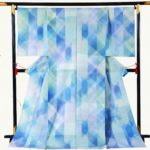
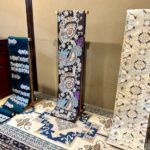
Around half of the Hassun-obi produced by Konken Orimono are woven with silk warp threads and “washi” (Japanese paper) weft threads. The noble luster of silk combined with the rustic charm of washi creates an exquisite harmony, especially well-suited to “tsumugi” (a silk textile woven from pre-dyed yarns, known for its unique texture and durability, worn from casual to stylish occasions). These obi also pair beautifully with casual kimono styles, and their unique texture and distinctive designs have come to be recognized as unmistakably “Konken.”
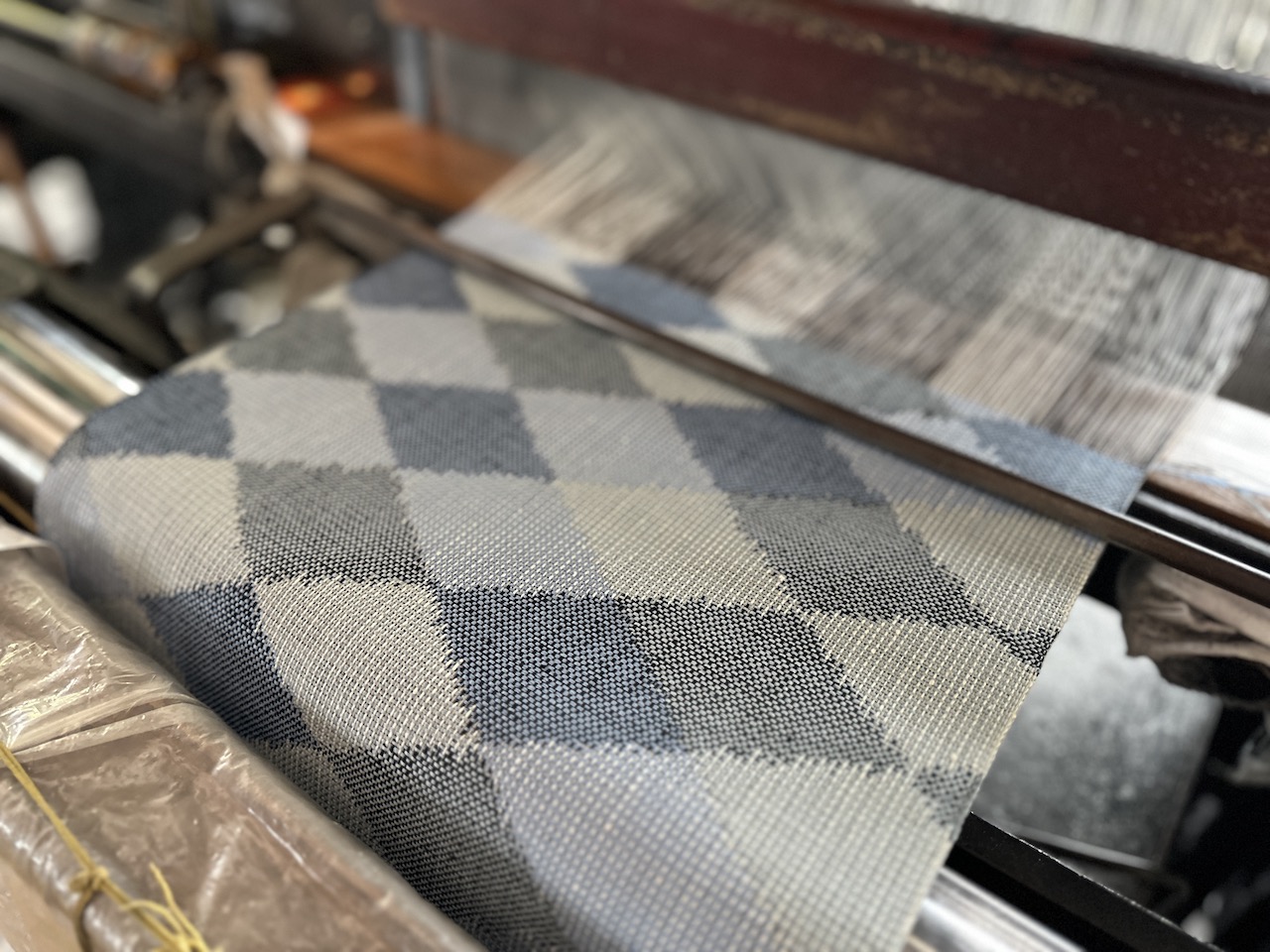
“Once washi is woven in, it becomes strong, yet remains light, and when tied, it holds a crisp shape. It also offers excellent moisture absorption and breathability, preventing discomfort from humidity. As we explored more Hassun-obi using washi, we thought, ‘Why not try a fukuro-obi as well?’ and then, ‘Why not also make the kimono to match?’ That led us to create formal fabrics with metallic threads, as well as summer kimono with a deliberately retained layer of sericin to give a hemp-like crispness. Today, we can present our customers with a complete lineup.”
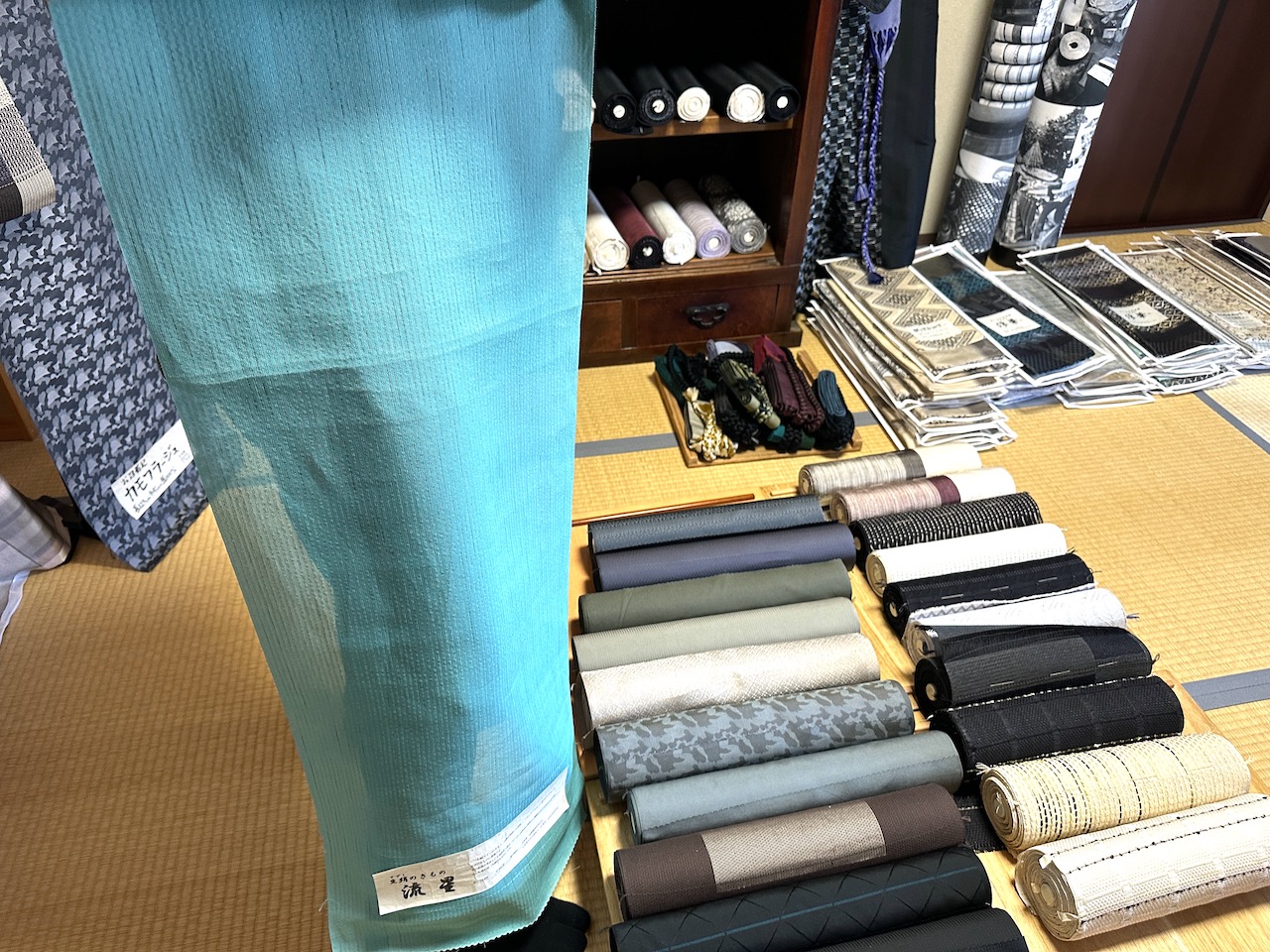
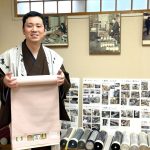
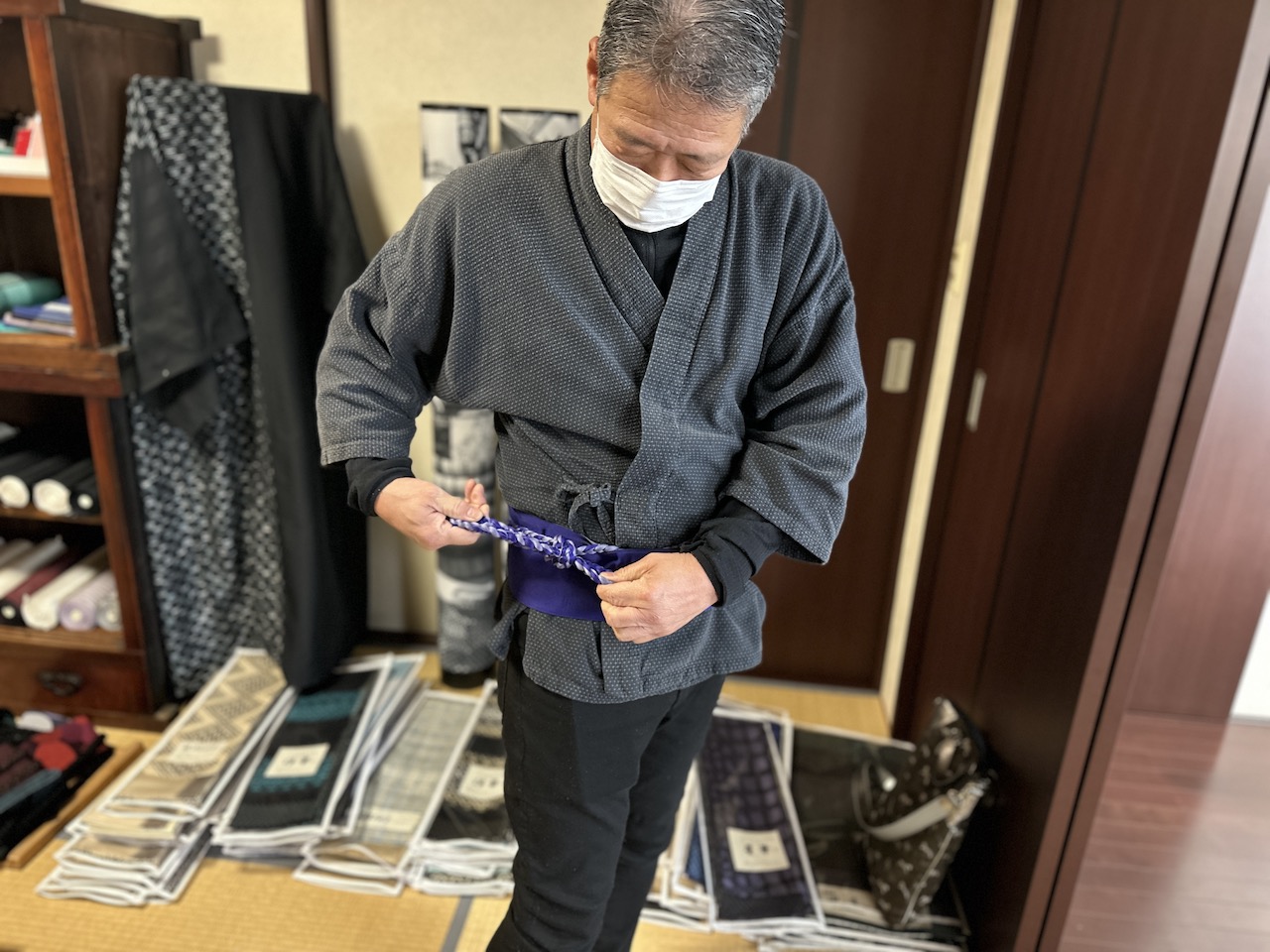
“This was one of our best-selling obi,” says Mr. Kondō as he puts one on—a “kaku-obi” with cords attached. Originally a bespoke piece adapted from a monk’s under-sash, it has cords braided into both ends; once you wrap the obi, you simply tie the cords casually and it looks refined. You can also shift the knot position to suit your mood or outfit, which adds to its popularity.
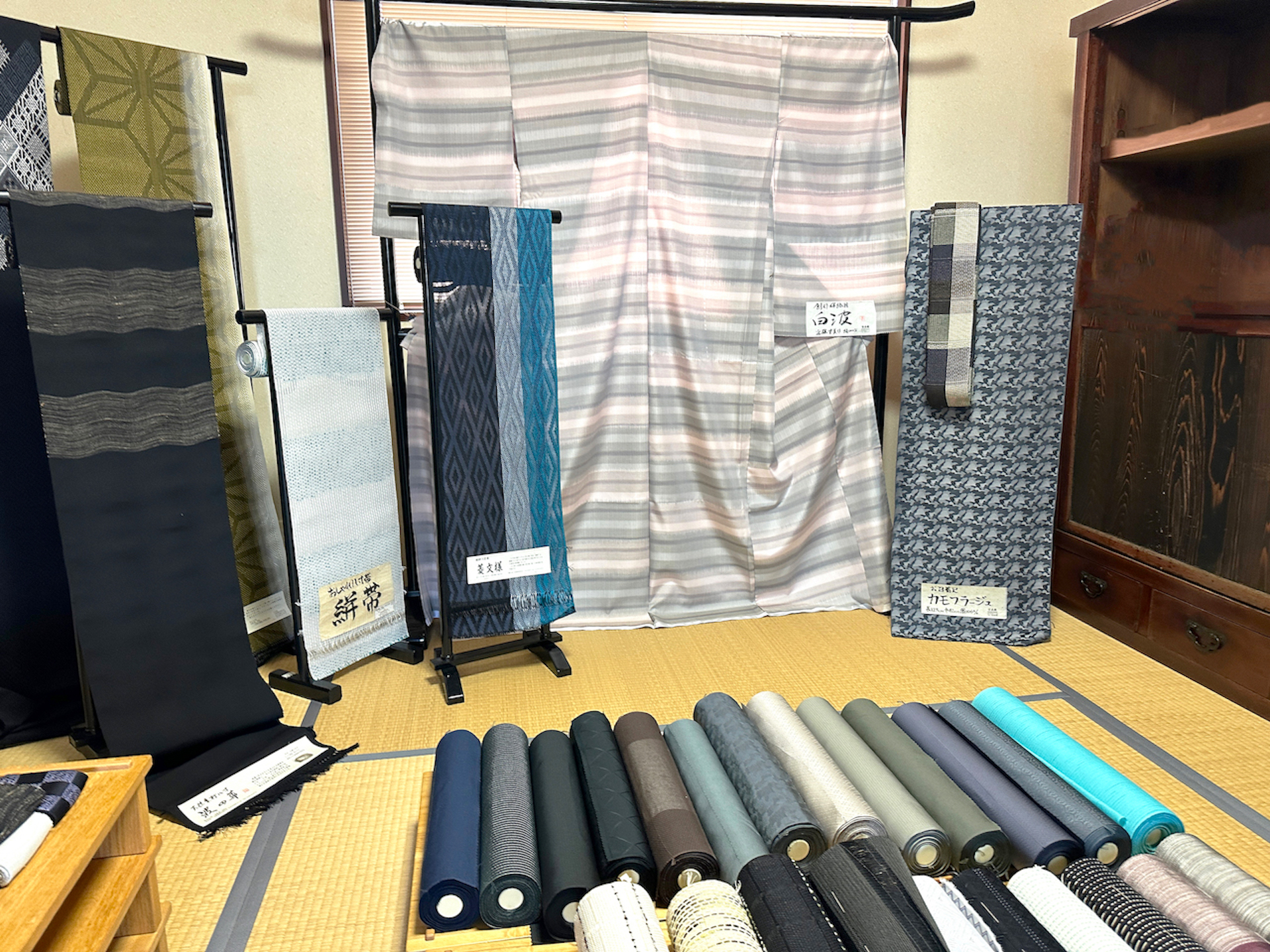
“We have roughly 30 obi types, each in five colorways—so we might have the largest variety of any weaving house in the world,” he laughs. “There are countless weave structures out there, and when I look at neckties or wallpaper I’m always asking myself, ‘Could this be applied to obi weaving?’ ‘Nishijin-ori’(Kyoto brocade tradition) expresses a richly multicolored world, and ‘Hakata-ori’ (Fukuoka’s obi weaving)has its own distinctive traditional techniques. Honestly, we can’t compete head-on with those strengths. That’s why we pour our energy into differentiating through materials.”
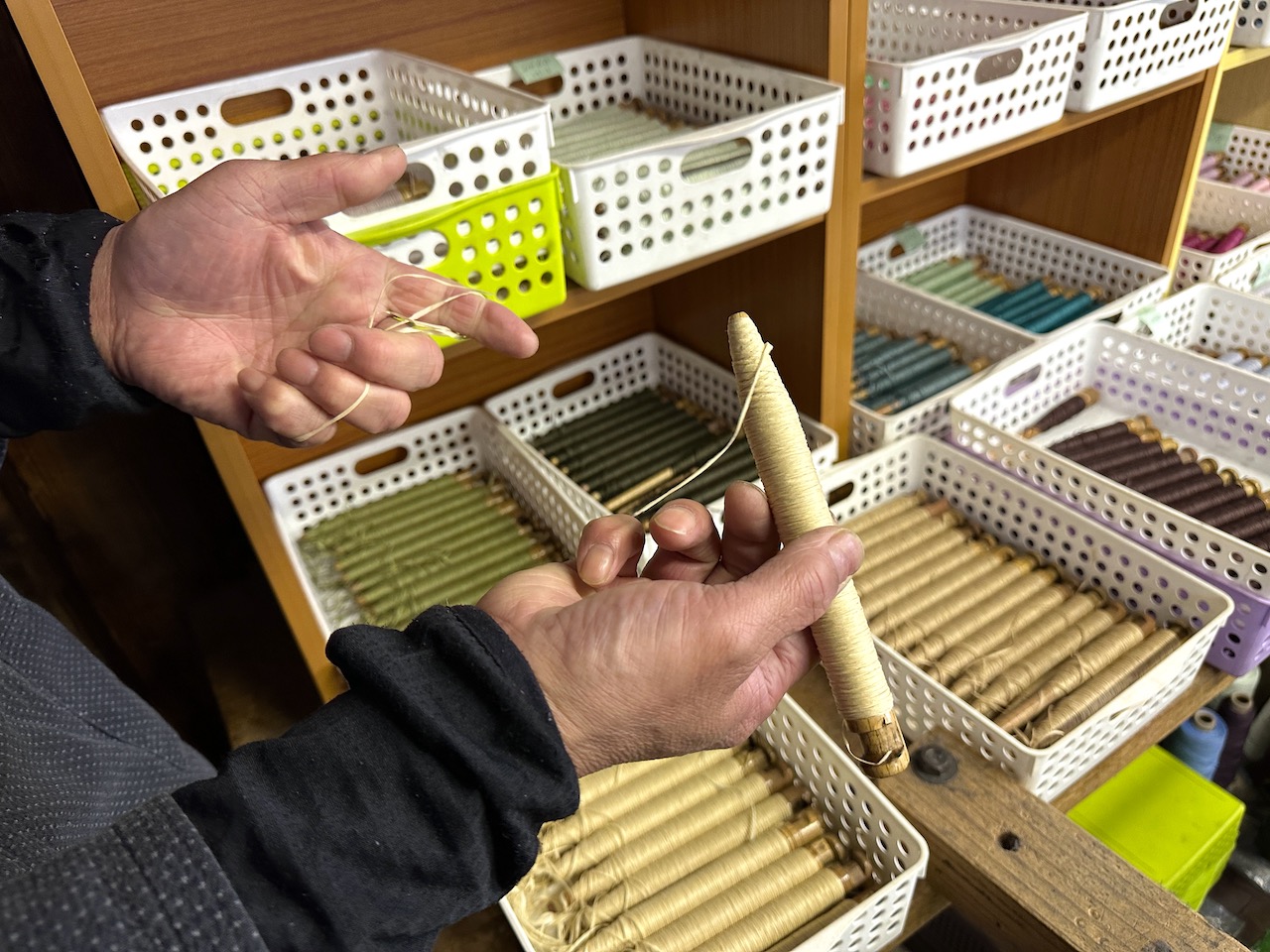
Mr. Kondō also serves as chairman of the Yonezawa Textile Industry Association, working daily to further the growth of Yonezawa-ori.
“To convey the appeal of Yonezawa-ori, it’s important to let customers handle the fabrics at exhibitions—but the most compelling experience is watching the weavers at work. I encourage weaving houses here in Yonezawa to keep their workshops well maintained and to actively welcome visitors.”
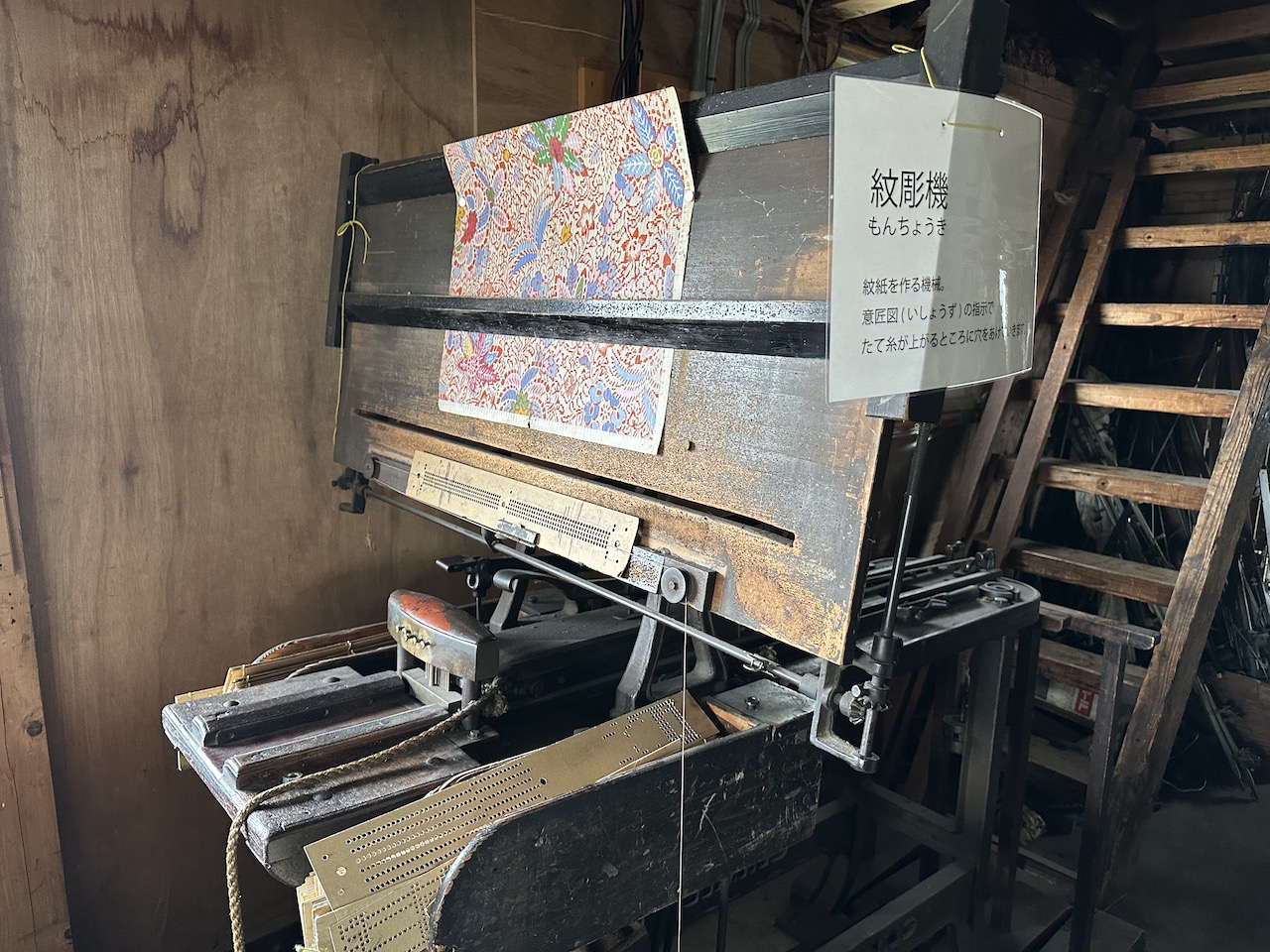
In 2023, the Yonezawa Textile Industry Association marked its 131st anniversary, organizing citywide events such as the “Yonezawa-ori Kimono Grand Prix,” “Kimono Town Stroll Perks,” and the “Kimono Photo Contest.” Consider visiting Yonezawa for a factory tour or to join one of these events—you’ll be able to experience the allure of Yonezawa-ori firsthand.
Official Website of the Yonezawa Textile Industry Association
See Also : The Textile Encyclopedia / Yonezawa-ori & Yonezawa-tsumugi (Yamagata Prefecture)”
See Also : “Exploring the Allure of Yonezawa-ori Vol.1 / Nitta”
See Also : “Exploring the Allure of Yonezawa-ori Vol.2 / Sashime Orimono”
Konken Orimono
3-1-48 Jōnan, Yonezawa-shi, Yamagata Prefecture, Japan
TEL:0238-23-0775
Official Website>>