

In This Article:
- From Samurai Lineage to Master Weaver:Discover the 140-year history of Nitta, founded in 1884 and currently led by the visionary 5th-generation master, Mr. Gentaro Nitta.
- The Revival of "Phantom" Safflower Dye (Benibana):The inspiring story of how the 3rd-generation owners restored the lost art of natural botanical dyeing, introducing the world's first Benibana Tsumugi silk.
- An Award-Winning Modern Masterpiece:Inside the creation of "Forest," the exquisite textile that won the prestigious Ministry of Economy, Trade and Industry Award by blending historic natural pigments with contemporary design.
Revived Benibana Dyeing
and Passed Down Its Rich Colors
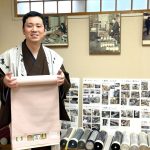
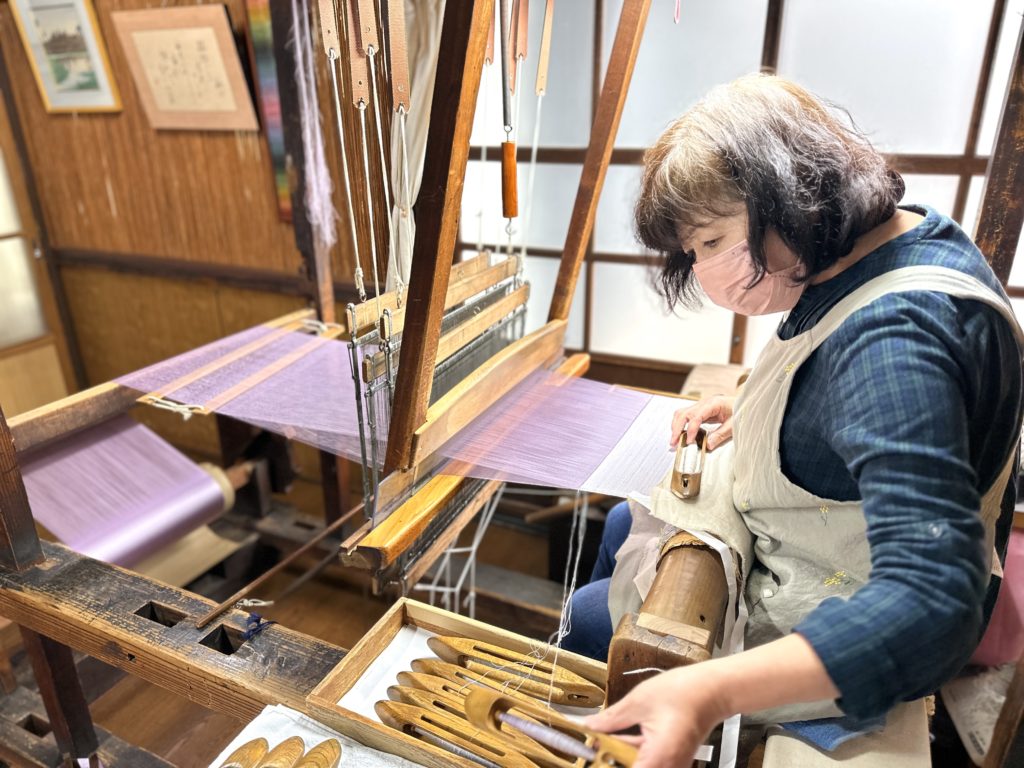
The textiles of Nitta captivate with their distinctive and refined color palette. The company’s history dates back to 1884. Originating from a samurai lineage, the family initially specialized in weaving hakama (traditional pleated trousers worn over kimono), earning a reputation as “Nitta of the Hakama.” Today, under the leadership of the fifth-generation Mr. Gentaro Nitta, the atelier continues to honor the tradition of craftsmanship passed down through generations, while creating works that resonate with the spirit of the times.
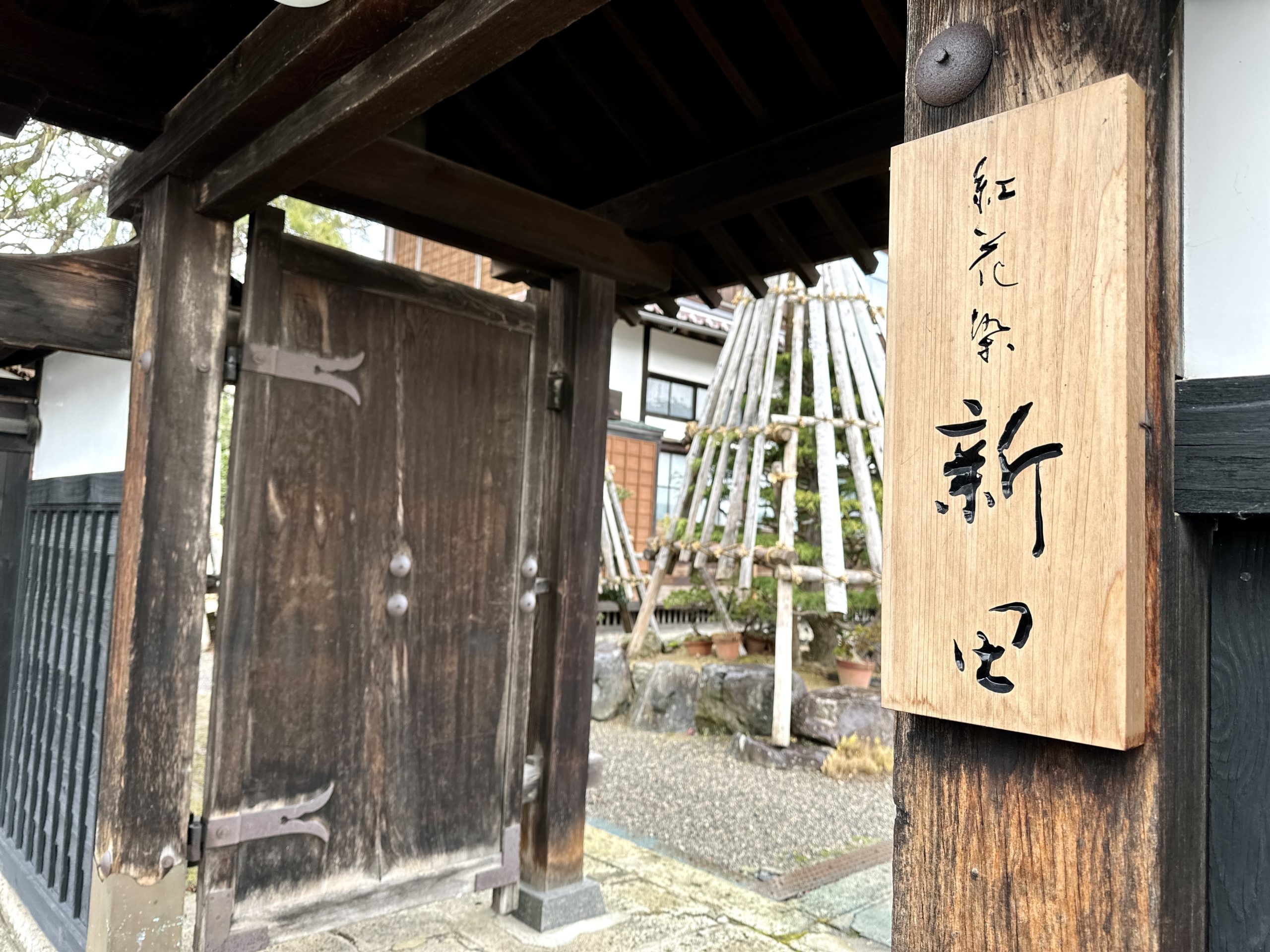
A key element in understanding the identity of Nitta is the benibana (safflower), designated as the prefectural flower of Yamagata. This is because Nitta played a vital role in reviving benibana-based dyeing, once lost to history, and introduced Benibana Tsumugi (safflower-dyed silk fabric) to the world.
The earliest record of benibana in Yamagata appears in a book offered by Lord Yoshiaki Mogami (1546–1614), a feudal lord of Dewa Province during the late Sengoku to early Edo period. Later, the cultivation of safflowers was also described in “Shiki Nōkaisho” (Four-Season Farming Guidelines), a farming manual written by Lord Kanetsugu Naoe (1560–1620). These historical documents suggest that safflowers were actively grown at the time as a form of taxation or cash crop. Yamagata’s climate and fertile soil made it ideal for cultivation, and the region flourished as a major production area. The flowers were sold at high prices as a premium dye, bringing prosperity to the area.
However, with the arrival of synthetic dyes and the wartime ban on luxury goods, safflower cultivation declined significantly.
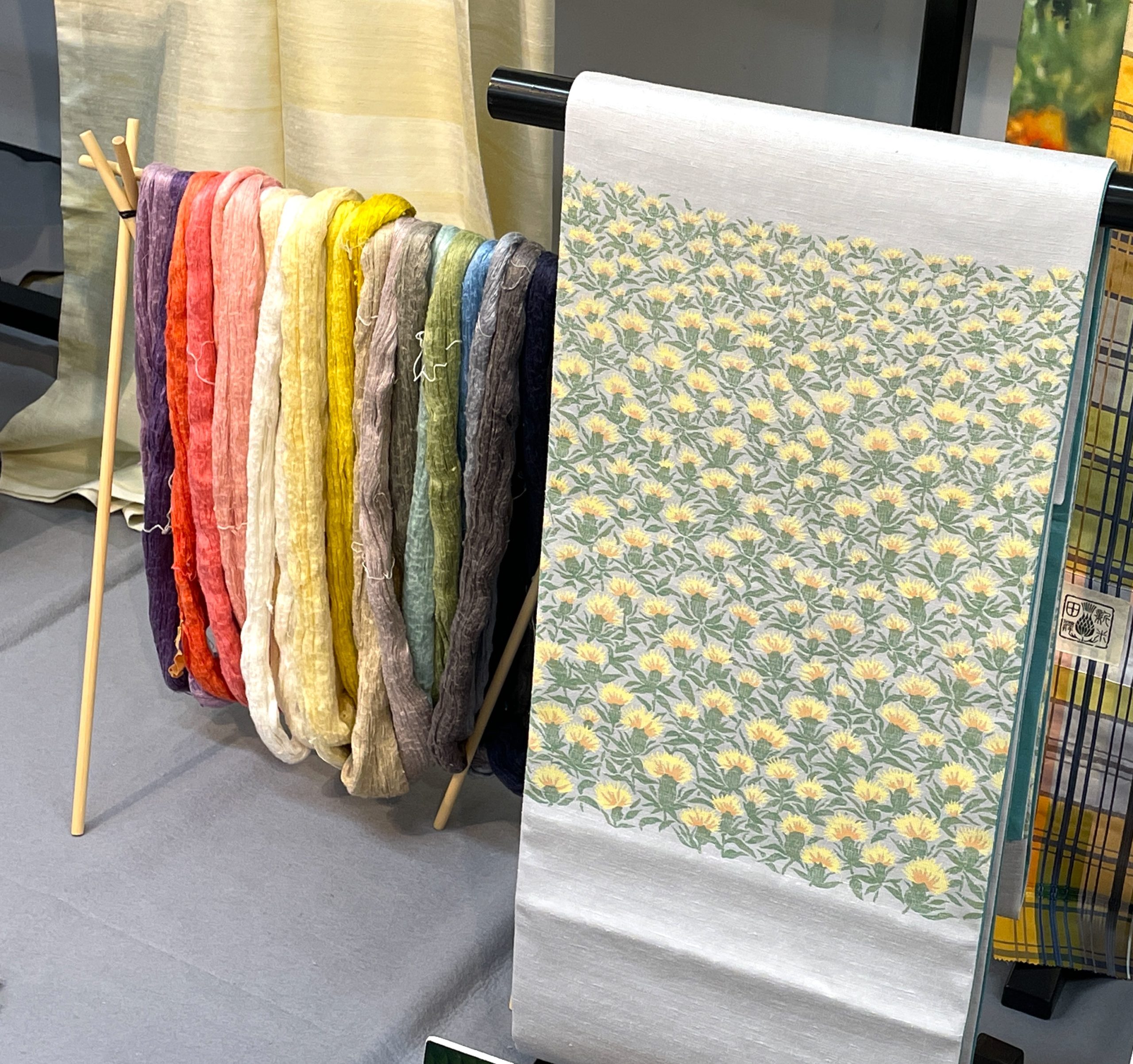
In the late 1950s , Mr. Gentaro Nitta’s grandparents—Mr. Shuji and Mrs. Tomiko Nitta, the third-generation owners—were captivated by the beauty of safflower dyeing (benibana-zome) and began researching its revival. They consulted historical documents and engaged in years of study, eventually succeeding in restoring this once-forgotten dye, often referred to as a “phantom color.”
Although kimono production in Yonezawa traditionally followed a division of labor, no dye house at the time handled safflower dyeing. As a result, the Nitta family decided to take on the dyeing process themselves. This decision laid the foundation for Nitta’s integrated production system that continues to this day.
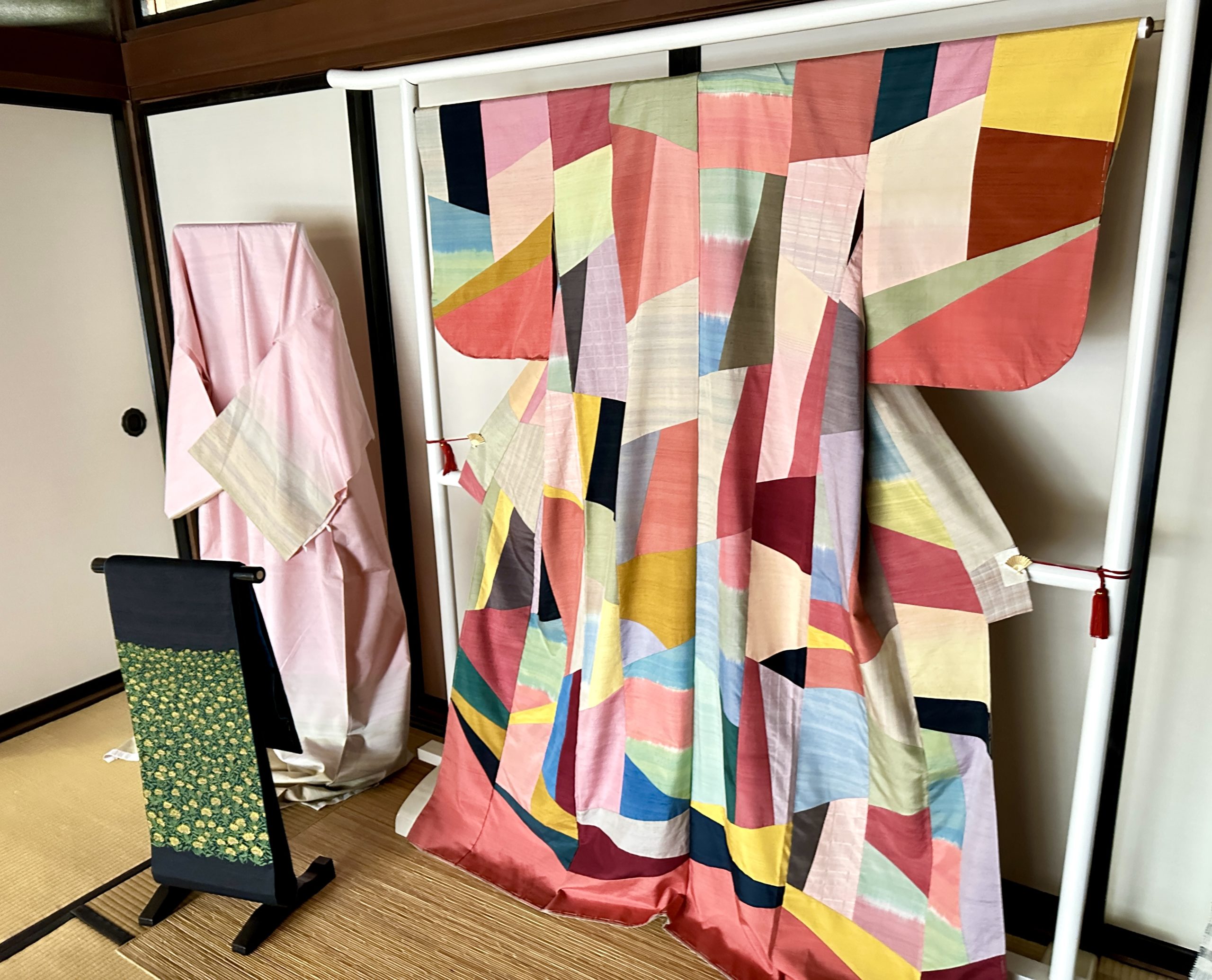
In the early 1960s, Nitta unveiled Benibana Tsumugi—a type of tsumugi (casual woven silk kimono) dyed with safflower—by combining traditional tsumugi with revived safflower dyeing. During the height of safflower trade, safflowers held a value comparable to gold and were shipped to Kyoto and Edo (present-day Tokyo). As a result, safflower-dyed fabrics were rarely distributed locally in Yamagata, the production region, nor had anyone considered dyeing tsumugi—a fabric for everyday wear—with such a precious dye. When Nitta first showcased Benibana Tsumugi at an exhibition, it instantly attracted public attention. Its popularity further soared in 1972, when Emperor Emeritus and Empress Emerita (then Crown Prince and Princess) officially visited the Nitta workshop, giving national recognition to the textile.
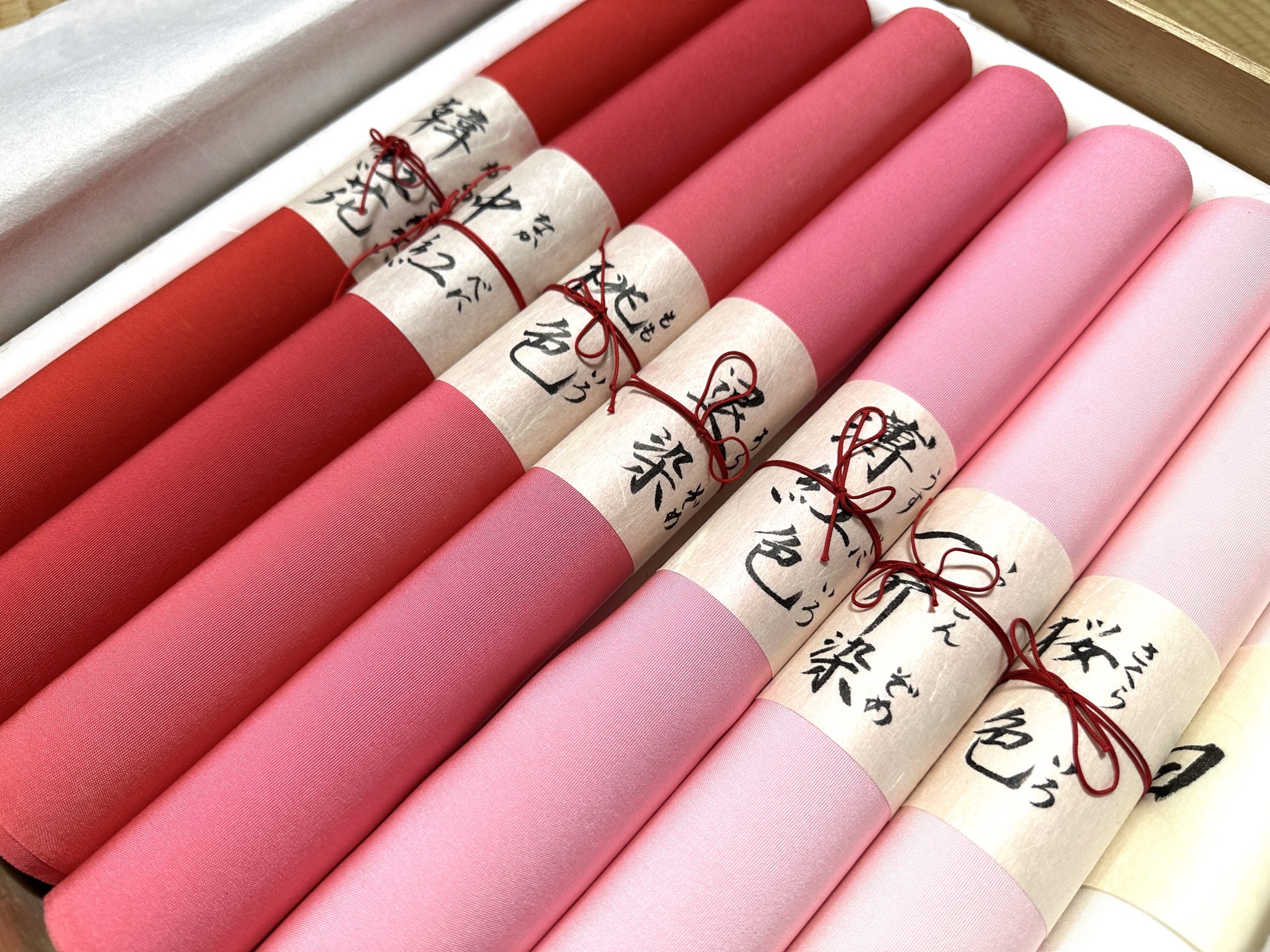
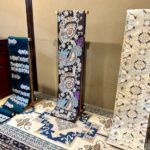
Nitta is best known for its exquisite and ineffable color expression. While safflower (benibana) yields only yellow and red pigments, the workshop creates textiles with hundreds of nuanced hues by layering safflower dye with other dyes.
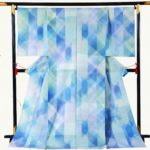
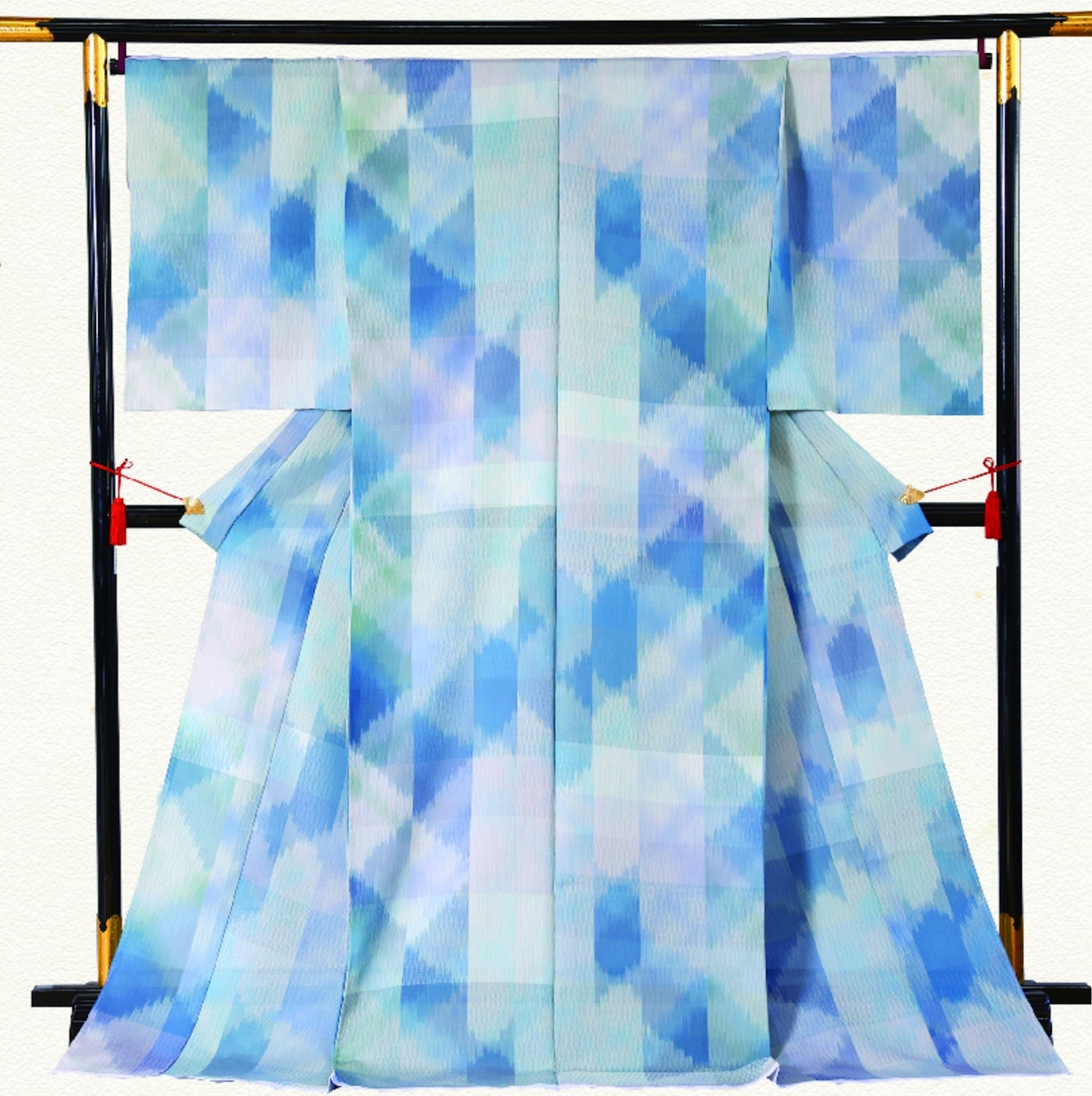
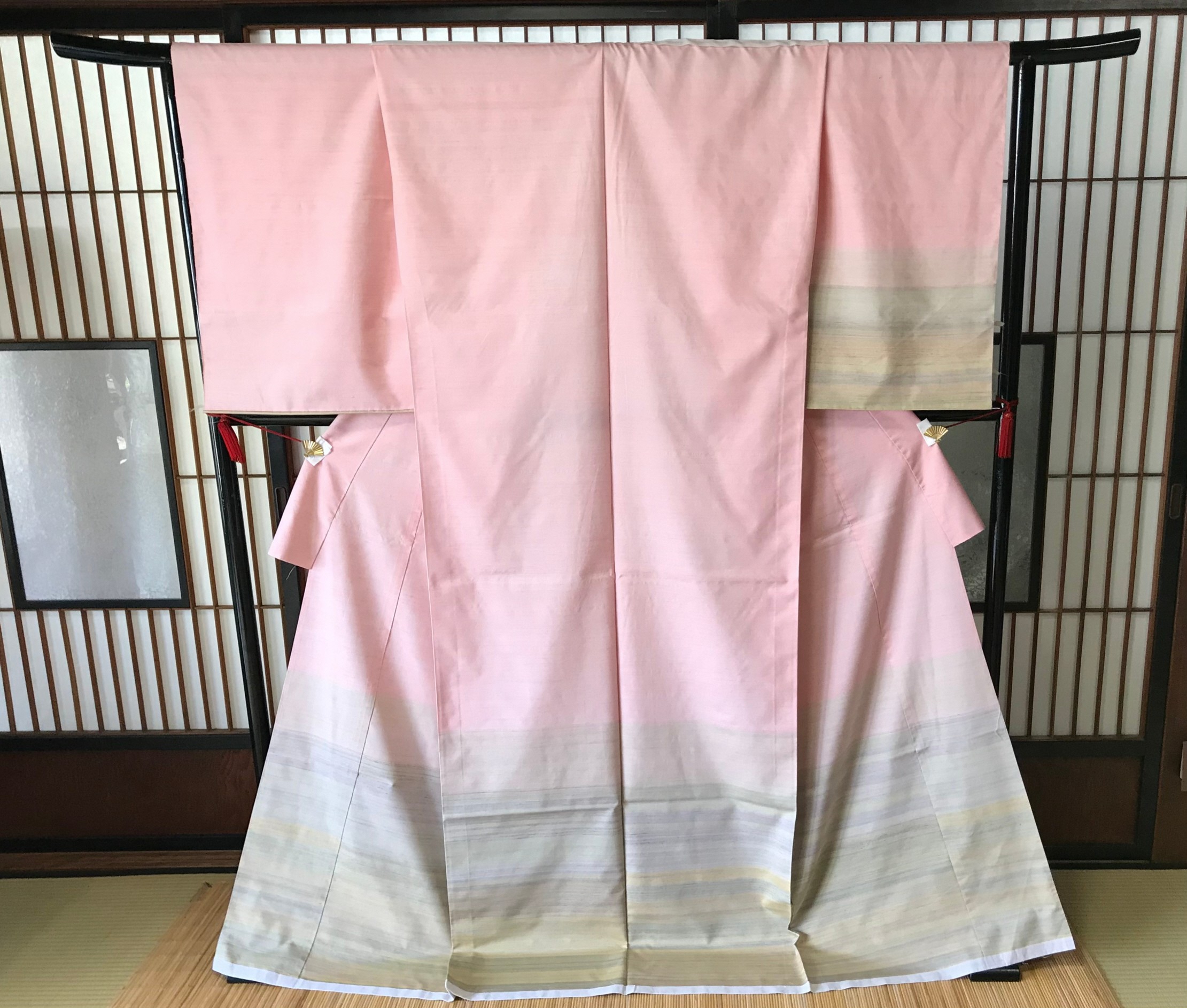
One such example is “Forest“ (pictured), which won the Minister of Economy, Trade and Industry Award at the 2021 Yonezawa Textile Competition. To capture the image of “a forest illuminated by light,” the piece was dyed using not only safflower and other plant-based dyes, but also chemical dyes. Through this layering process, the work evokes a mysterious sense of depth and radiance.
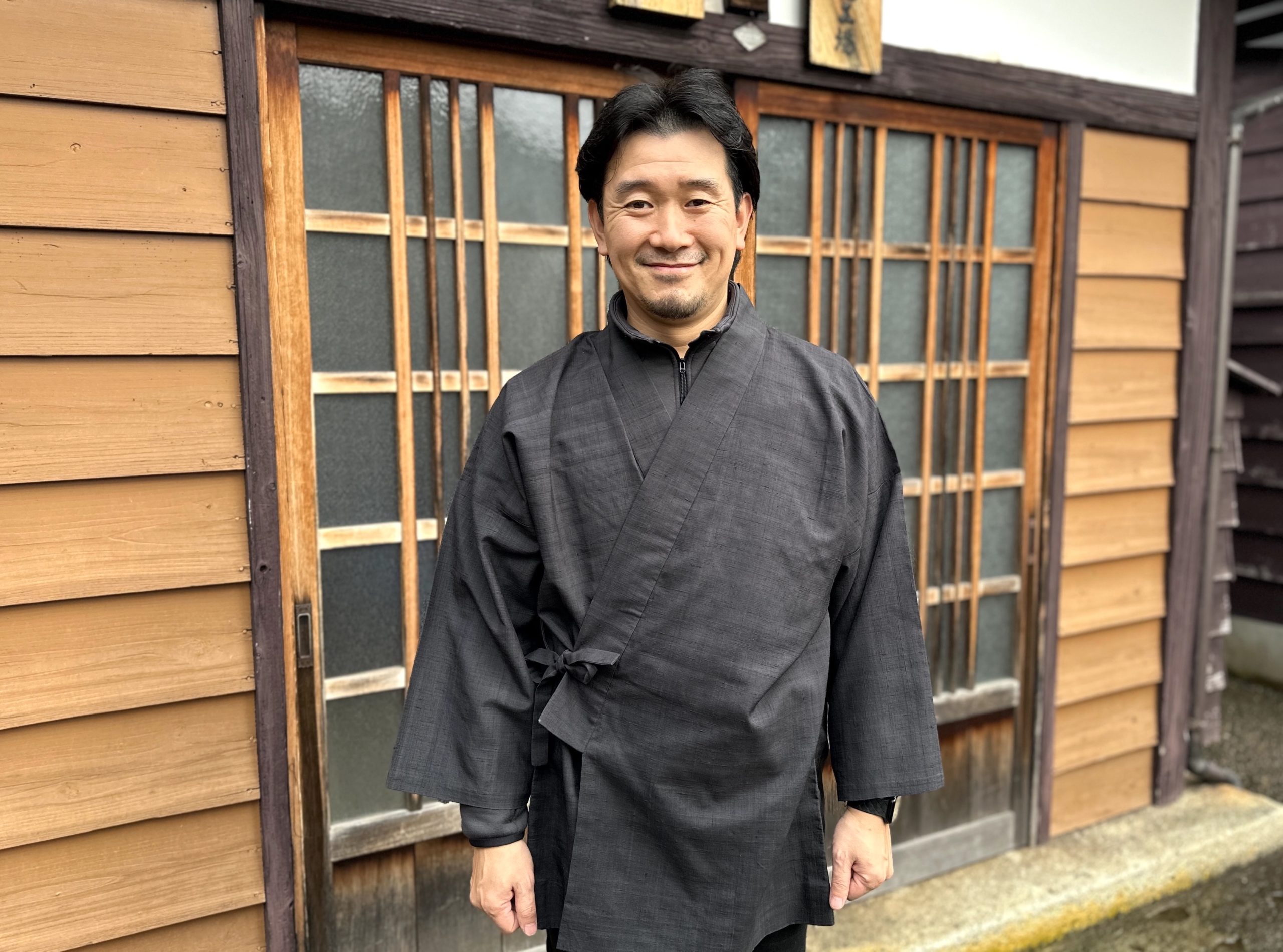
Mr. Nitta, often draws inspiration from nature when conceptualizing his works.
“Sometimes I also reference designed works I encounter at art museums. In those cases, I internalize the impression the piece gives me, construct the image I want to express, and then begin developing the colors.”
No two patterns or colors at Nitta are ever exactly the same. Rather than reproducing what has sold well, they are committed to constant innovation—each creation infused with exquisite coloration and unwavering dedication. Every encounter with a Nitta textile is truly a once-in-a-lifetime experience, the result of generations of relentless effort and refinement. If you are fortunate enough to come across such a piece, it is something to be cherished.
Nitta
2-3-36 Matsugasaki, Yonezawa City, Yamagata Prefecture
TEL:+81-238-23-7717
Official Website>>
Related Articles
Yonezawa-ori (Yonezawa-tsumugi) is a traditional Japanese silk textile from Yamagata Prefecture, characterized by its rustic charm. Using only natural dyes such as safflower, artisans create fabrics that embody the region’s heritage and the subtle beauty of hand-dyeing.
Osaen, a Yonezawa weaving house in Yamagata, Japan, is known for original kimono creations, including the “Yuragi-ori” with its beautiful gradation. Led by third-generation Mr. Soichi Inomata, the house continues to explore and innovate through a passion for dyeing and weaving.