

Set in Toranomon, Tokyo, The Okura Tokyo carries forward the Japanese aesthetic sensibility that Hotel Okura has cherished since its founding, now expressed in harmony with contemporary architecture. On this visit, I arrived in kimono at the Prestige Tower, spent some time relaxing in the Main Lobby, and then headed to Bar Lounge Starlight on the 41st floor. There, I enjoyed cocktails and light dishes while watching the evening light spread across the Tokyo skyline. Also within the grounds is the Okura Museum of Art, home to a collection of historic Japanese and East Asian artworks. Architecture, art, and kimono come together here with a quiet sense of continuity. In this article, I introduce a refined way to spend an evening in Toranomon—one that feels especially rewarding when experienced in kimono.
Table of Contents
The Japanese Aesthetic at the Heart of The Okura Tokyo
The first space to capture your attention in the Prestige Tower at The Okura Tokyo is the Main Lobby, defined by an atmosphere of quiet elegance and dignity. The lobby of the original Hotel Okura Main Building, the predecessor of today’s hotel, was designed by Yoshiro Taniguchi, one of Japan’s leading architects of the 20th century. By bringing together traditional Japanese sensibilities and Western modernism, the space came to be regarded as an icon of Japanese modernist architecture. The present-day lobby was designed by his son, Yoshio Taniguchi. While carrying forward the aesthetic principles established by his father, he reinterpreted them for a contemporary luxury hotel.
A Serene Lobby Shaped by Light and Negative Space
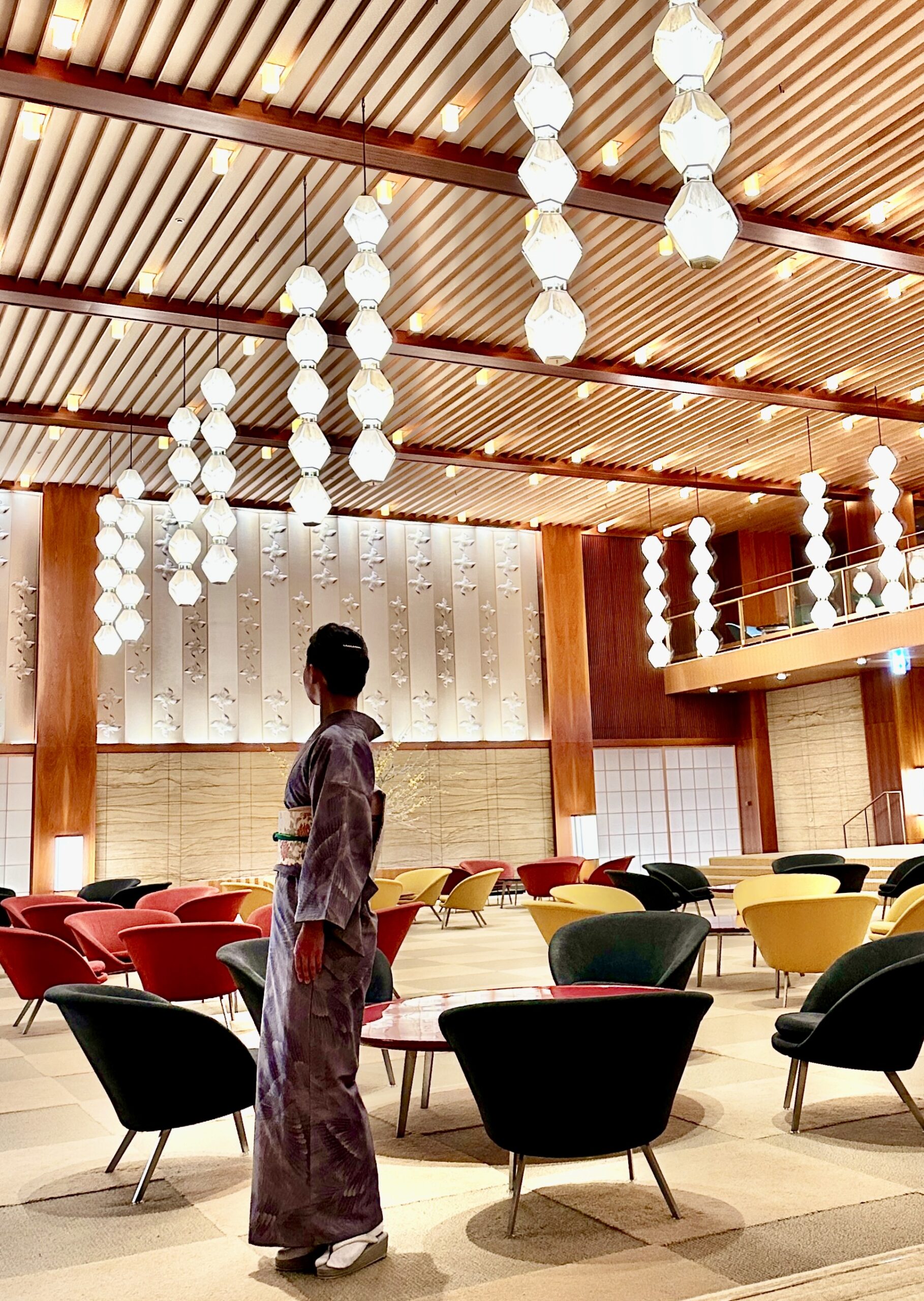
The round tables and chairs arranged throughout the lobby are inspired by plum blossoms. Rather than filling the space with furniture, the design deliberately preserves areas of openness, creating a calm and distinctly Japanese sense of balance. Suspended from the ceiling, the iconic Okura Lanterns were inspired by crystal ornaments dating back to Japan’s Kofun period. As natural daylight blends with the soft interior lighting, the lobby takes on subtly different shadows and expressions throughout the day. The hotel also incorporates decorative elements connected to Japan’s craft traditions, including the four-petal floral motif wall panels designed by ceramic artist Kenichi Tomimoto and produced in Nishijin by Tatsumura Textile. Although it is a hotel, the experience can feel almost like walking through a museum, with architecture, design, and traditional craftsmanship revealing themselves quietly throughout the space.
Where Kimono Comes Beautifully to Life at The Okura Tokyo
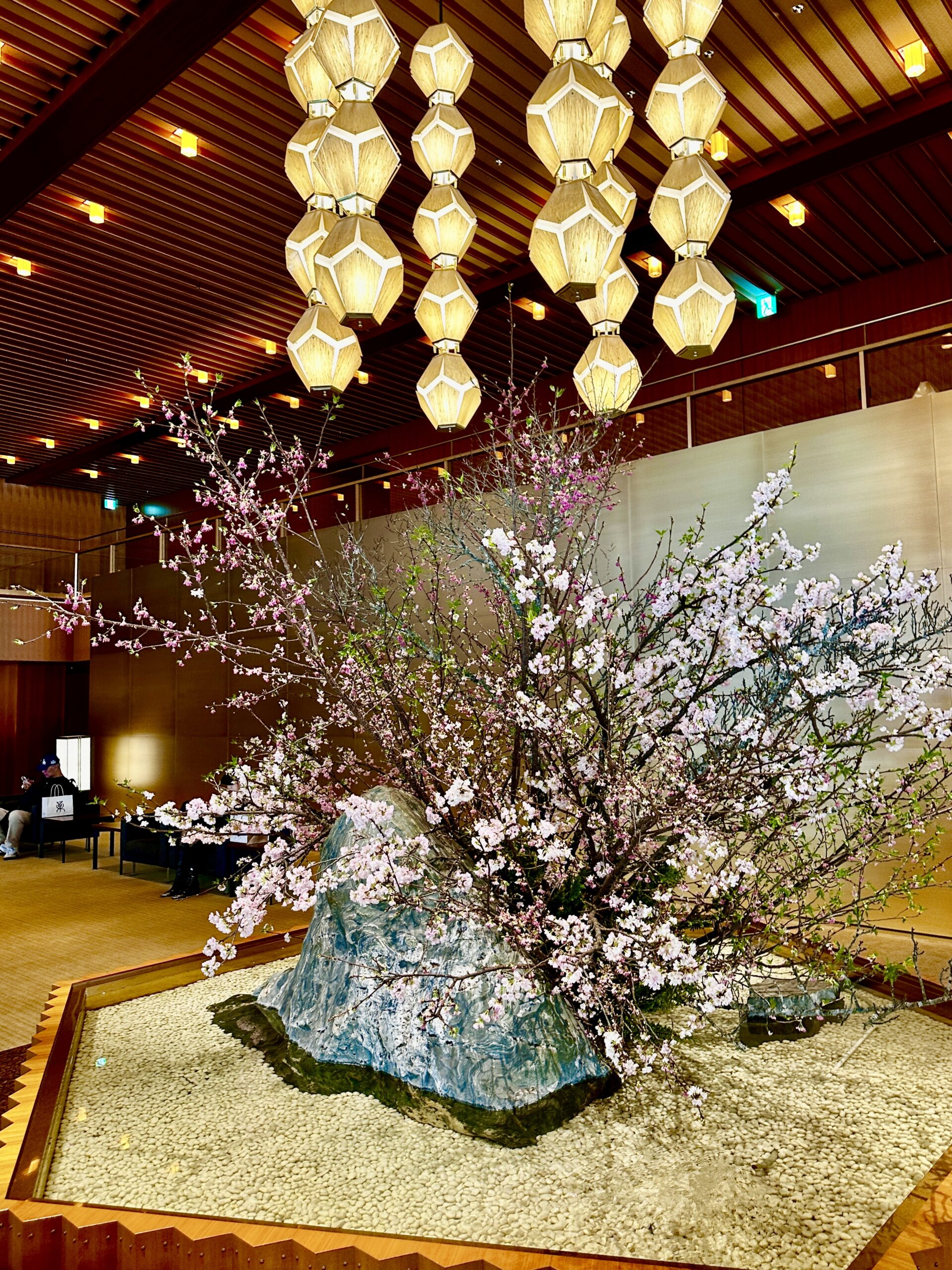
The Okura Tokyo is a place worth visiting in kimono not simply because it incorporates Japanese design elements, but because its entire aesthetic—its materials, light, shadows, and carefully preserved sense of space—shares something fundamental with the beauty of kimono. Kimono, too, begins with a simple, linear form, yet reveals remarkable richness through weaving, dyeing, pattern, and the way it is coordinated with an obi. In the soft glow of natural light and the Okura Lanterns, the colors and motifs of a kimono can take on subtly different expressions from one part of the hotel to another. And because this is a hotel, there is no need to assume that only formal kimono such as hōmongi or tsukesage are appropriate. If you are visiting for cocktails at the bar, stylish everyday kimono such as Oshima tsumugi, omeshi, or komon can feel entirely at home. With thoughtful choices in color, pattern, and obi coordination, even a more casual kimono can carry a refined sense of elegance. To spend time here in kimono while appreciating the architecture and craftsmanship is to experience a quiet harmony between dress and space. At The Okura Tokyo, that relationship becomes part of the pleasure of the visit.
Sunset Views from the Top-Floor Bar & Lounge
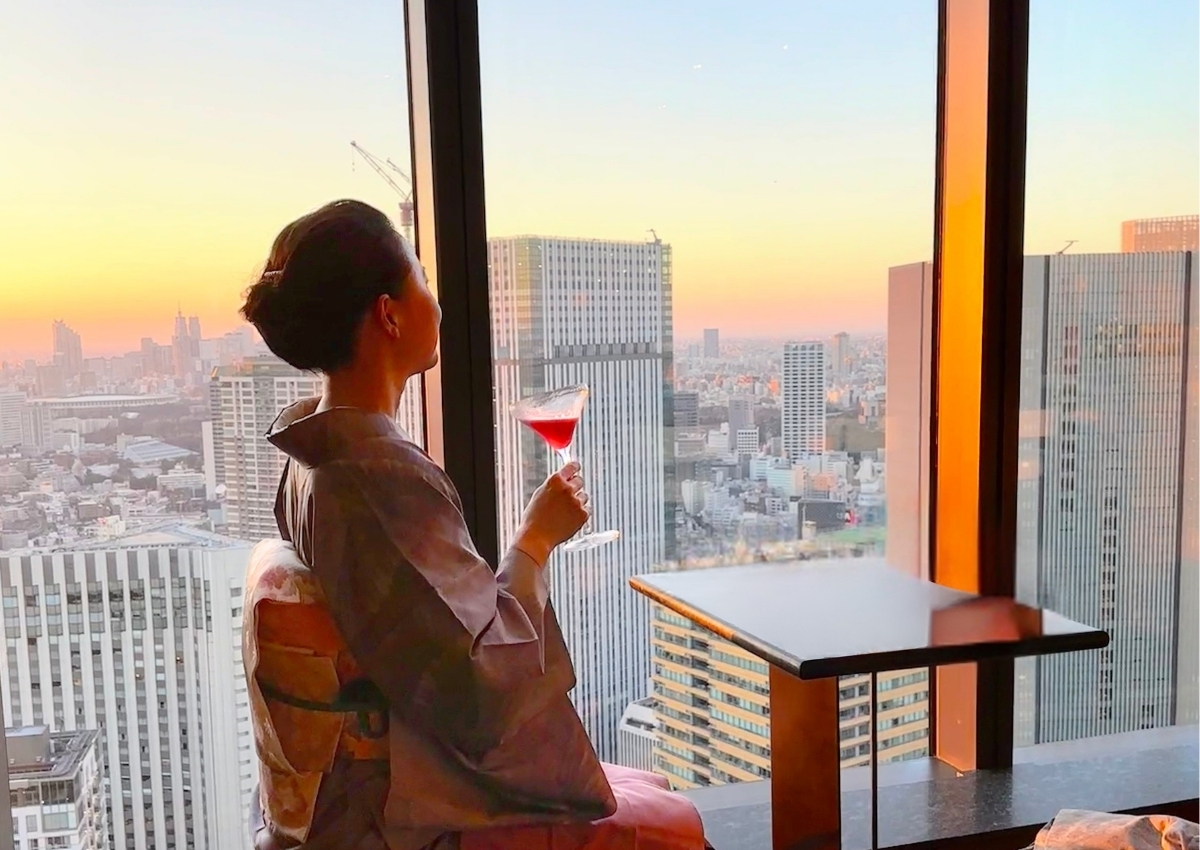
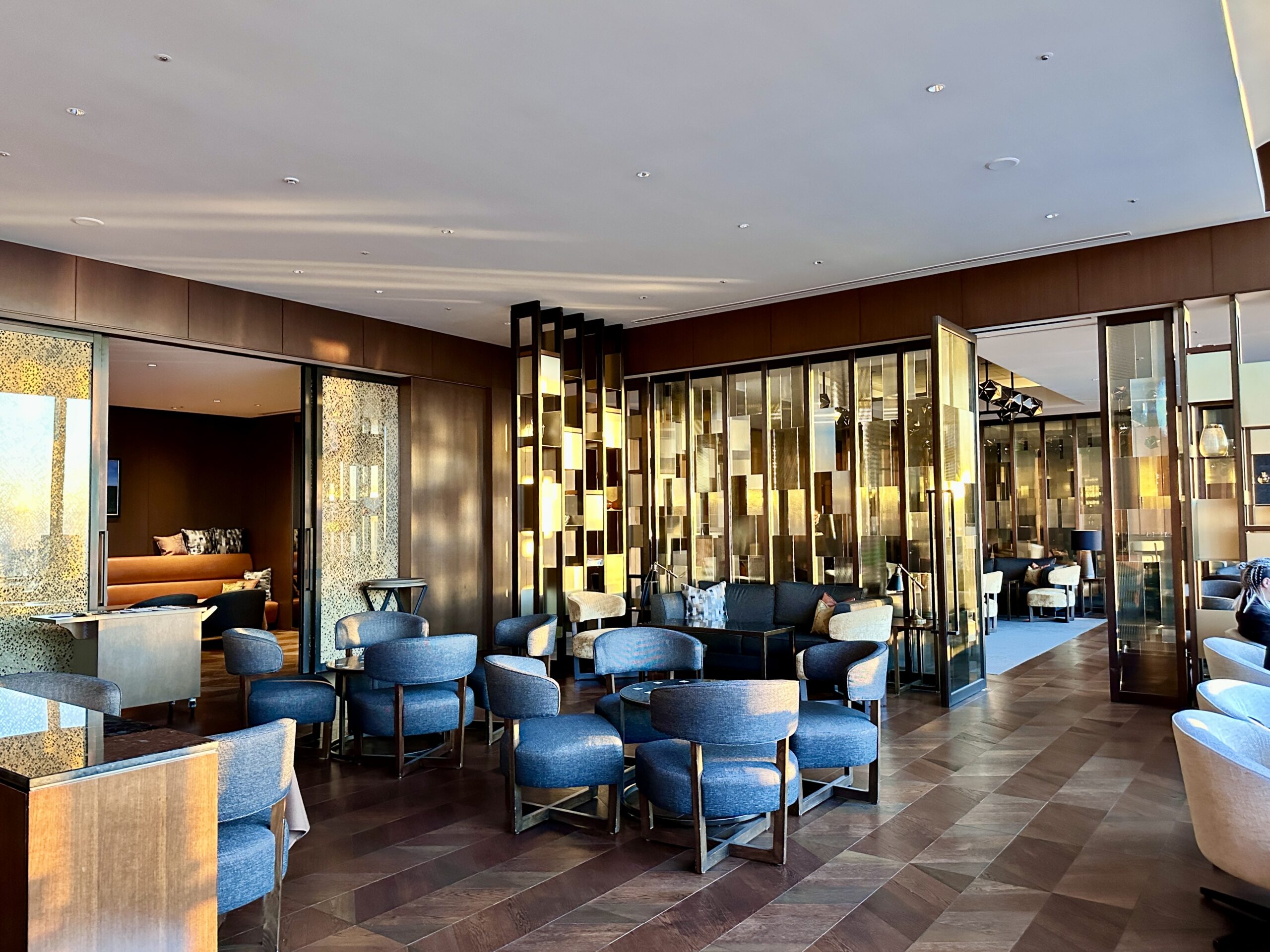
After exploring the hotel, I headed to Bar Lounge Starlight on the 41st floor, the top floor of the Prestige Tower. Beyond the expansive windows, the Tokyo skyline stretches out below. I visited around sunset and enjoyed a colorful cocktail with light dishes as the view gradually transformed. The blue sky softened into pale orange, while the setting sun reflected across the windows of the surrounding high-rises and onto the lounge walls, changing the atmosphere from moment to moment.
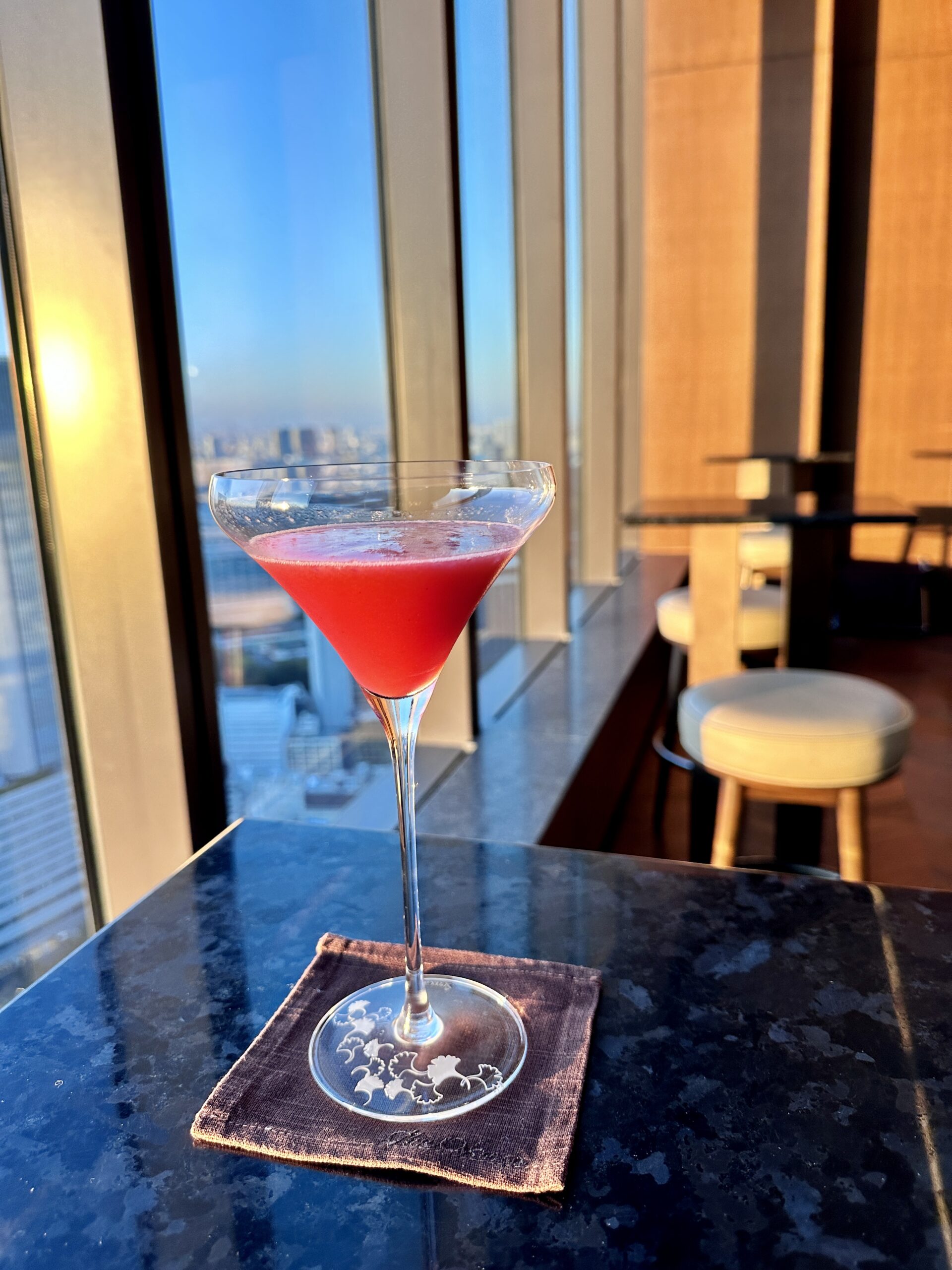
Sipping a drink by the window while watching the sky change color offers a more grown-up kind of pleasure, quite different from lunch or afternoon tea. The atmosphere is glamorous yet composed, making it especially suited to an early evening spent in kimono. As the sun began to set, its warm crimson light fell across the pale lavender of the kimono, bringing out a richer and more nuanced depth of color.
▶︎ Discover 6 Tokyo Hotel Afternoon Teas to Enjoy in Kimono
Wearing Tokiemmon’s Artfully Crafted Oshima Tsumugi
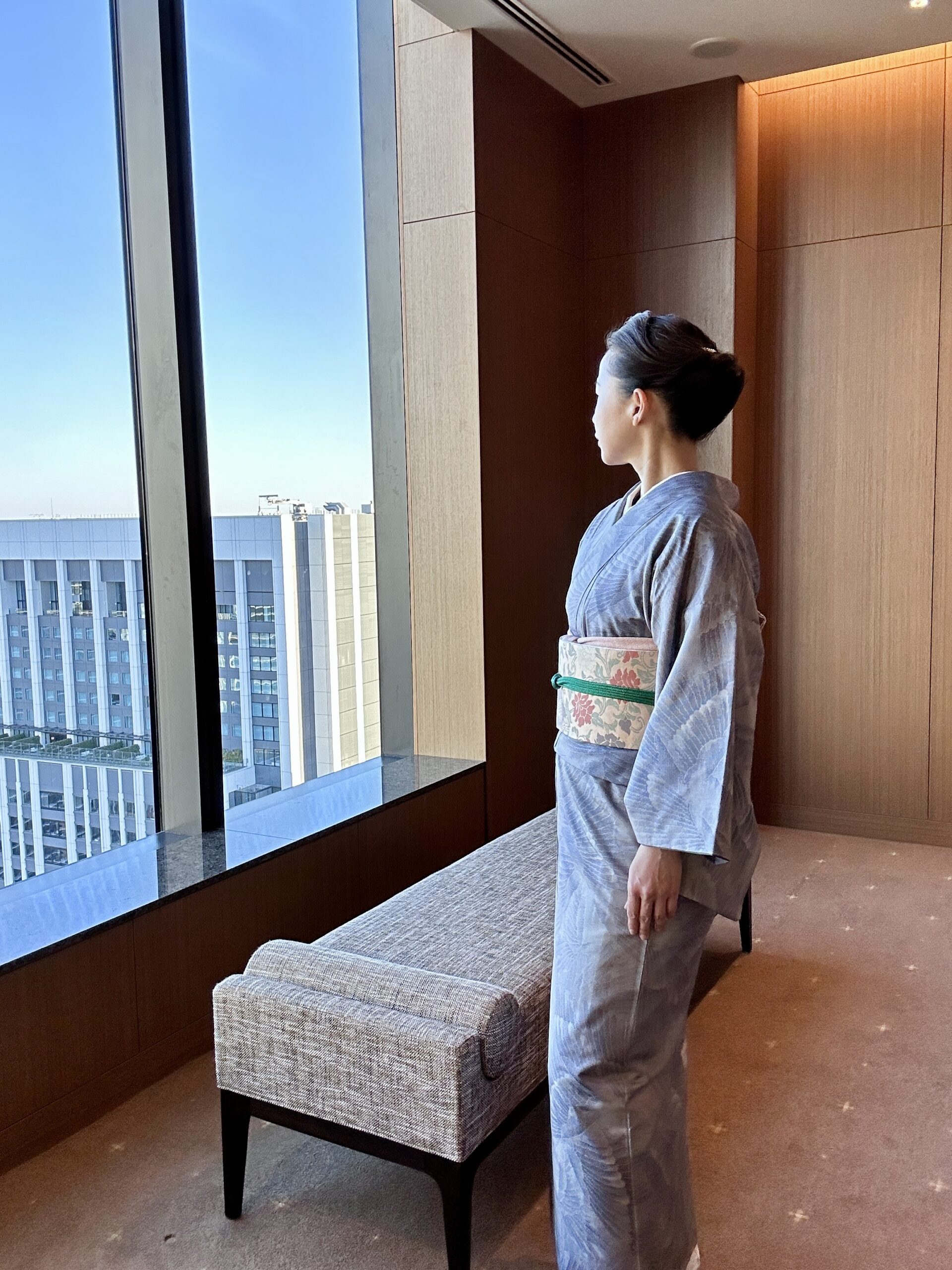
For this visit, I chose a kimono by Tokiemmon of Fujikin Orimono in Kagoshima, known for its Bijutsu Oshima, or artfully crafted Oshima Tsumugi.
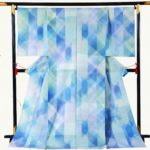
Against a pale lavender ground, birds are woven in flight, creating a graceful sense of movement across the fabric. The kimono retains the refined character associated with Oshima Tsumugi, while its soft coloring and expansive motif give the ensemble an elegant, almost lyrical quality.
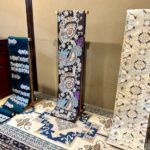
I paired it with a Nagoya obi decorated with a variety of auspicious Japanese motifs. The predominantly white obi brightened the pale lavender kimono, while a deep green obijime added definition and brought the entire coordination together.
Pairing Oshima Tsumugi with a Nagoya obi is, in terms of kimono formality, a relatively casual choice. Yet by carefully balancing the colors of the kimono and obi and selecting refined motifs, the ensemble can still feel perfectly at home in an elegant hotel setting.
Rather than relying on formality alone, kimono can also be dressed with sophistication through the harmony of color, pattern, and texture. That freedom to create elegance through balance is one of the deeper pleasures of wearing kimono.
A Cultural Stroll Through the Museum Next Door
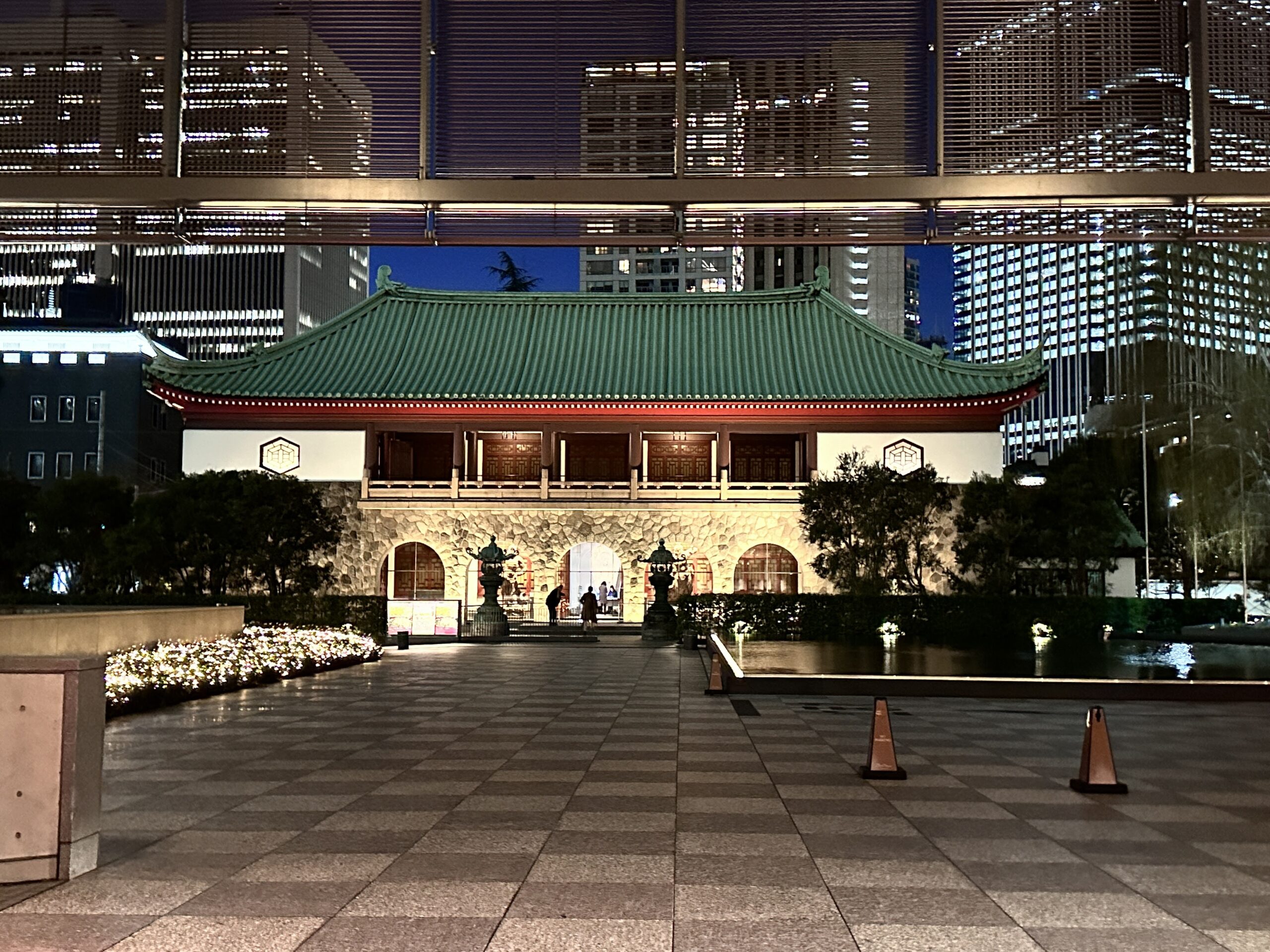
Within the grounds of The Okura Tokyo stands the Okura Museum of Art, a private museum founded in 1917 by Kihachiro Okura, founder of the Okura business group and a noted collector of Japanese and Asian art. The museum houses approximately 2,500 works, including National Treasures and Important Cultural Properties, preserving and presenting the artistic heritage of Japan and East Asia. Its distinctive exterior is also striking, offering a very different atmosphere from the contemporary Japanese aesthetic of the hotel. There is also a special benefit for visitors in kimono or other traditional Japanese attire: admission is discounted by ¥300. You might visit the museum first and then spend time at the hotel, or enjoy the hotel before heading to an exhibition. A leisurely day devoted to art and architecture makes an ideal cultural outing in kimono.
A Kimono Evening Surrounded by Japanese Beauty and Sunset Views
The Okura Tokyo offers a richness that reveals itself not only through striking visual beauty, but through subtler details—the play of light and shadow, the use of negative space, and the tactile qualities of its materials. That sensibility has much in common with the beauty of kimono, where the pleasure lies in appreciating the finer details of weaving, dyeing, and pattern. To wander slowly through the lobby, notice the hotel’s craft-inspired design, watch the sunset from Starlight on the 41st floor, and encounter Japanese and East Asian art at the Okura Museum of Art is to spend a day engaging with beauty in many forms. Rather than rushing from one landmark to another, this is a place to experience architecture, art, and dress at a gentler pace. The Okura Tokyo felt especially well suited to enjoying the quiet depth of Japanese aesthetics in kimono.
Connecting the people who create, curate, and wear kimono, Kimono-en shares the joy of wearing kimono through in-depth interviews on traditional craftsmanship, along with curated outings and a shop guide.
________________________________________
The Okura Tokyo
2-10-4 Toranomon, Minato-ku, Tokyo
TEL:03-3582-0111
Okura Museum of Art
・Opening hours: 10:00 a.m.–5:00 p.m.(Last admission: 4:30 p.m.)
・Closed: Mondays (or the following weekday when Monday is a national
holiday), during exhibition changeovers, and at the end of the year
Kimono benefit: Visitors wearing kimono or other traditional Japanese attire receive a ¥300 discount on admission.
*Opening days, admission fees, and exhibition details are subject to change. Please check the official website before your visit.
▶ The Okura Tokyo Official Website
_____________________________________