

Production Area/Shiga Prefecture
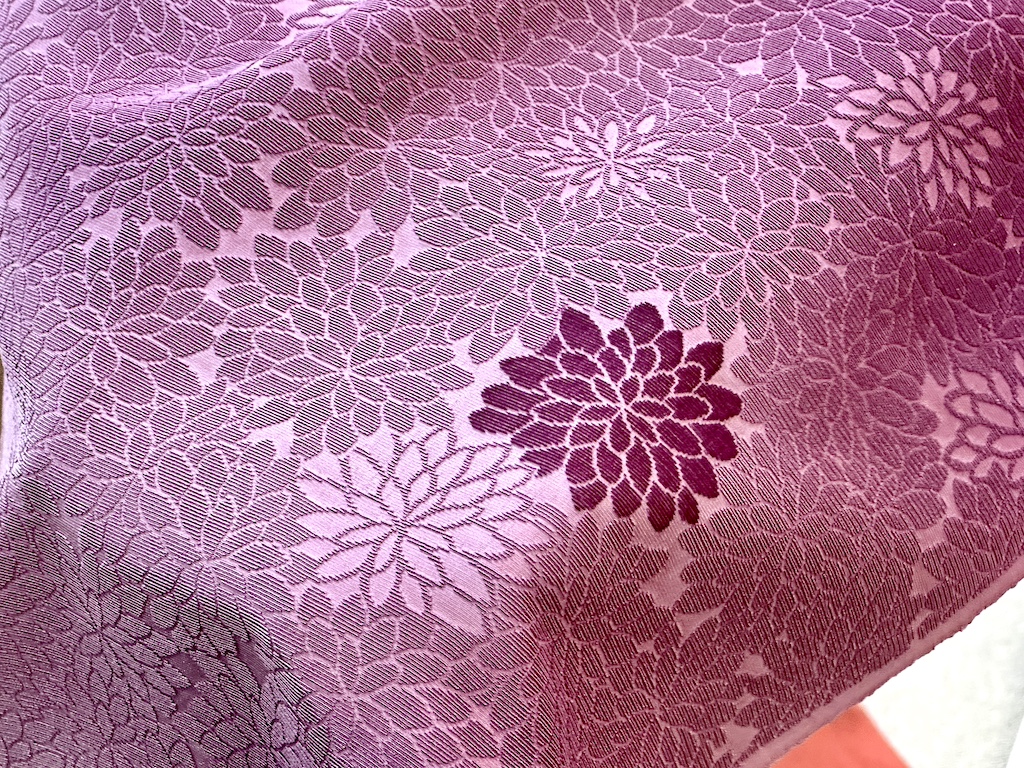
Originally introduced to Japan during the Sengoku period, Wana Velvet flourished in Nagahama during the Edo era. This exceptional textile combines patterned weaving and velvet techniques, producing a unique raised texture that expresses light and shadow through loops and cut pile. Once home to hundreds of workshops, only a handful remain today. Among them, Taketsune continues to preserve this rare craft alongside young weavers and female artisans. Lightweight yet warm, Wana Velvet brings the joy of wearing tradition into everyday life through its use in coats and other modern garments.
In This Article:
- Defining features of Wana Velvet.
- The history of Wana Velvet, introduced during the Warring States period and developed in Nagahama.
- The intricate process of weaving cores and finishing with pattern cutting and needle removal.
- Takatsune Workshop and the work of its women artisans.
- The appeal of wearing Wana Velvet and how to care for it.
Table of Contents
Velvet Refined —
Woven Elegance Traced Back to the Sengoku Era
Did you know there's a mysterious silk textile in which three distinct textures coexist on a single piece of cloth? Upon a plain ground, plush patterns rise gently in pile weave, with parts of the design shimmering in soft color and sheen. This textile is called "Wana Velvet", a traditional craft produced in Nagahama City, Shiga Prefecture. A rare and precious technique, it combines the intricacies of patterned weaving with velvet pile—an art form now seldom seen.
Lightweight yet warm, and graced with a refined elegance—"Wana Velvet" is a textile of quiet luxury. To uncover the secrets of its charm, we visited the Taketsune weaving workshop in Nagahama City, Shiga Prefecture.
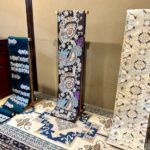
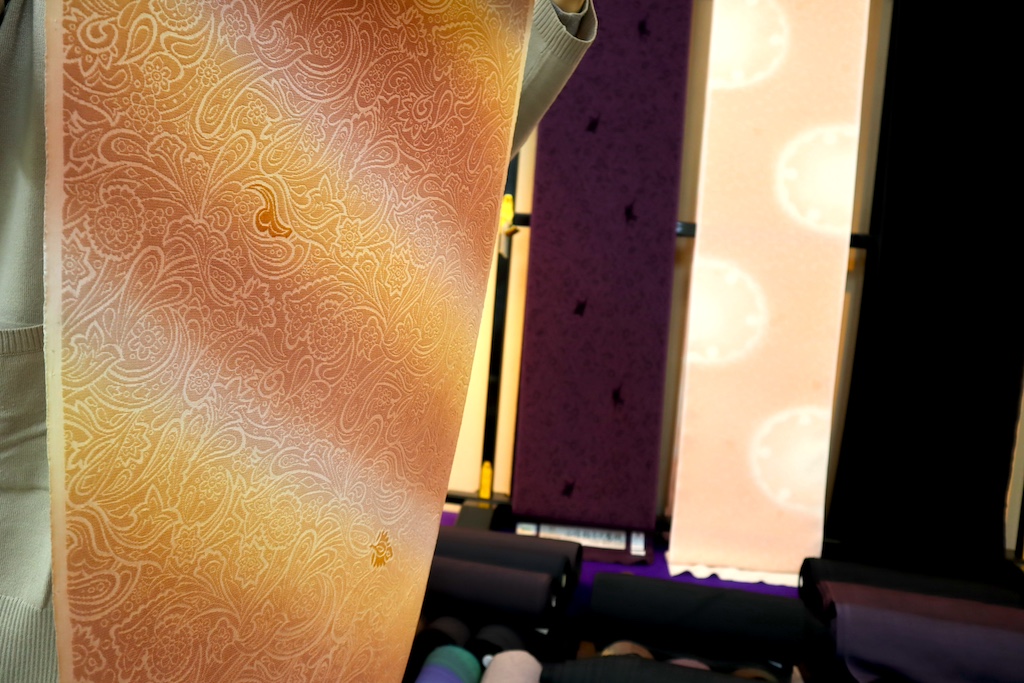
Various patterns, such as flowers and latticework,
are woven in the "Wana" technique.
Located in the northeastern part of Lake Biwa, Nagahama City once flourished as a post town along the Hokkokukaidō trade route. While popular spots like Kurokabe Square attract many visitors, even the quiet residential streets preserve the charm of old townscapes, offering a sense of nostalgic beauty simply by walking through. Nagahama is also known as a textile-producing region, especially for silk fabrics like Hama-chirimen. Among its treasures is "Wana velvet", a luxurious fabric that, along with Ami-ori tsumugi, has been officially recognized as a traditional craft of Shiga Prefecture.
Velvet, or birōdo in Japanese, is a pile weave fabric with a raised, fluffy surface that gives it a smooth, luxurious touch. The Japanese kanji for velvet is 天鵞絨 (pronounced ten-gajō), said to derive from the way white velvet shimmers like the feathers of a celestial swan (ten-ga, meaning “heavenly goose”). Its soft luster is one of the defining charms of this elegant textile.
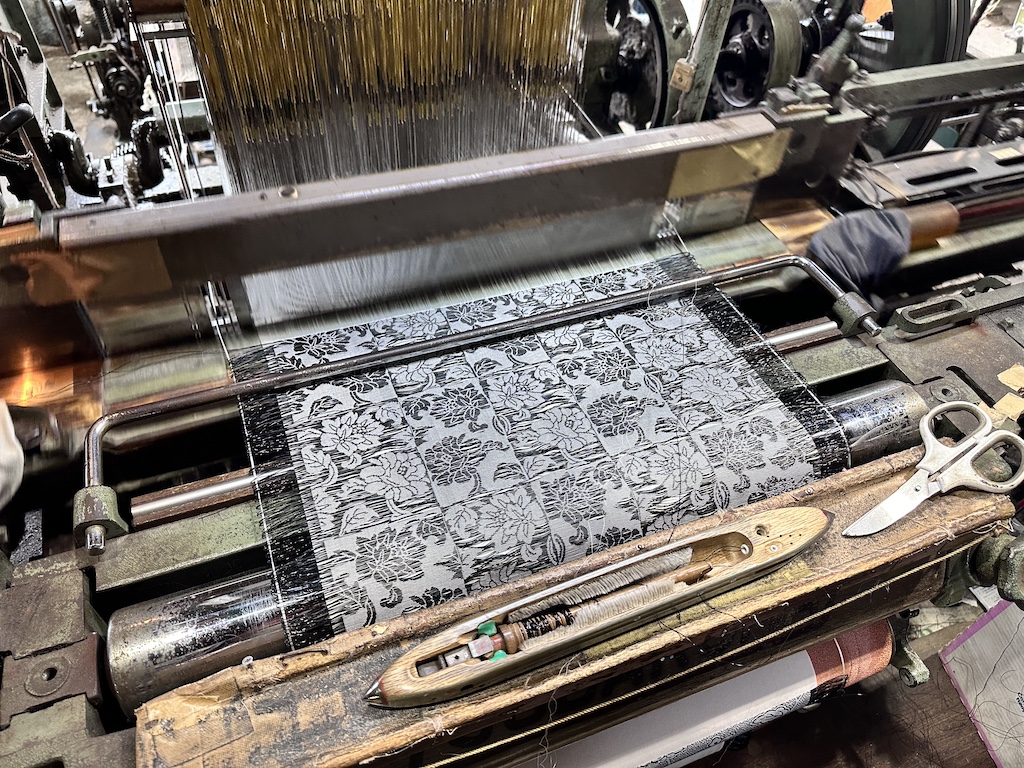
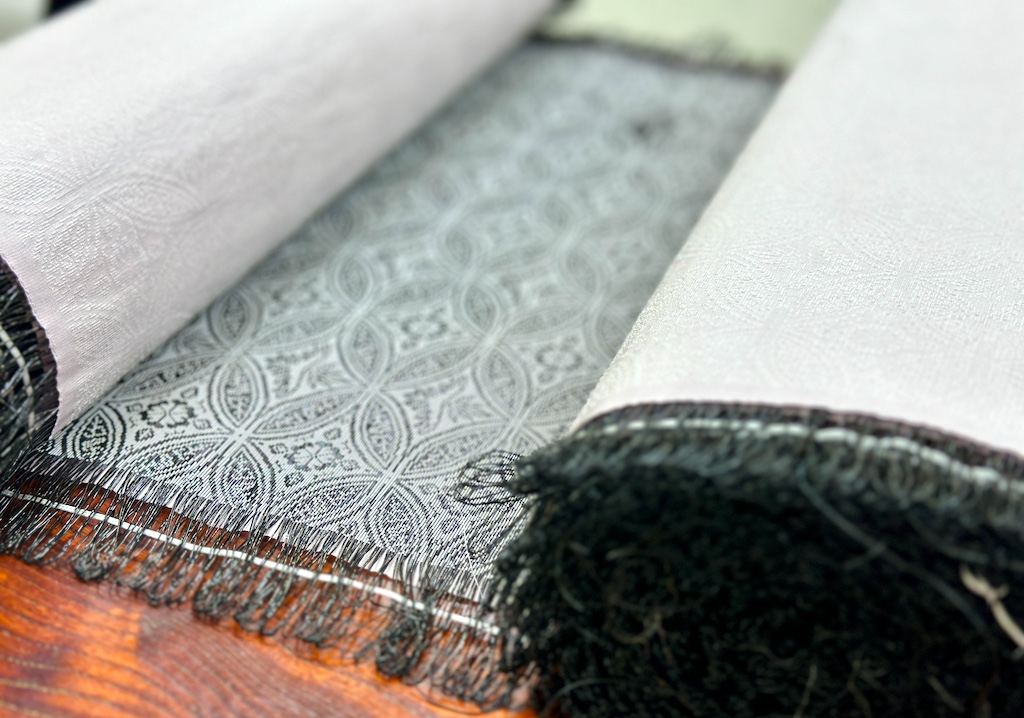
To create the signature pile texture of velvet, thin wire-like rods are used as core supports during weaving. These rods are inserted as weft threads and later carefully removed, causing the warp threads to form loops—known as wana. When the tops of these loops are cut, the surface takes on a soft, raised texture: the final form of birōdo, or velvet.
At Taketsune, the true star is not the velvet itself, but the wana—the uncut loops that precede it. Floral, lattice, and other intricate motifs emerge from these raised patterns, woven delicately into the fabric before any cutting takes place.
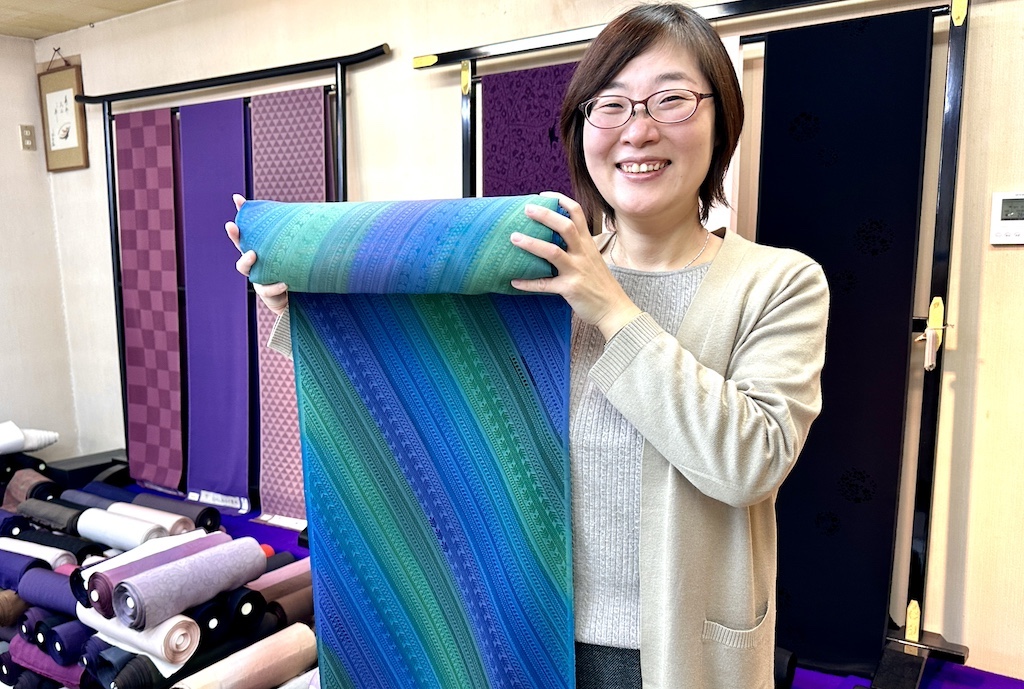
“To achieve a beautiful finish, it's essential to strike the right balance between the ground weave and the patterned wana areas,” explained Ms. Kiyoe Takeda, president of Taketsune. “The darker-looking sections are where we've cut the loops with a small blade to create velvet.”
The sections with deeper color and sheen are brushed to create a velvety surface, offering a remarkably smooth touch. Strategically scattered throughout the fabric, these areas add striking accents to the patterns. It's fascinating how the contrast between untouched loops and cut velvet creates light and shadow—even though only a single dye color is used—drawing the viewer in with its subtle complexity.
Crafted with Grace:
he Artistry in Women’s Hands at Taketsune
Velvet, long prized in Europe for use in high-end garments, was introduced to Japan during the Tenbun era (1532–1555). It is said that Japanese production of velvet began about a century later, during the Keian era (1648–1652) of the Edo period.
“At first, no one knew how to weave it,” Ms. Takeda explained. “But by chance, a piece of fabric was discovered with the copper wire core still intact. That clue allowed a Nishijin(Kyoro) craftsman to figure out the technique. Velvet weaving developed in this region because the Ii family, lords of Hikone Castle, promoted it as a domain industry. Today, instead of copper, we use lightweight polyethylene rods as the core material.”
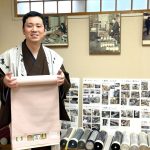
As she spoke, she showed us a bolt of fabric with the polyethylene core still in place.
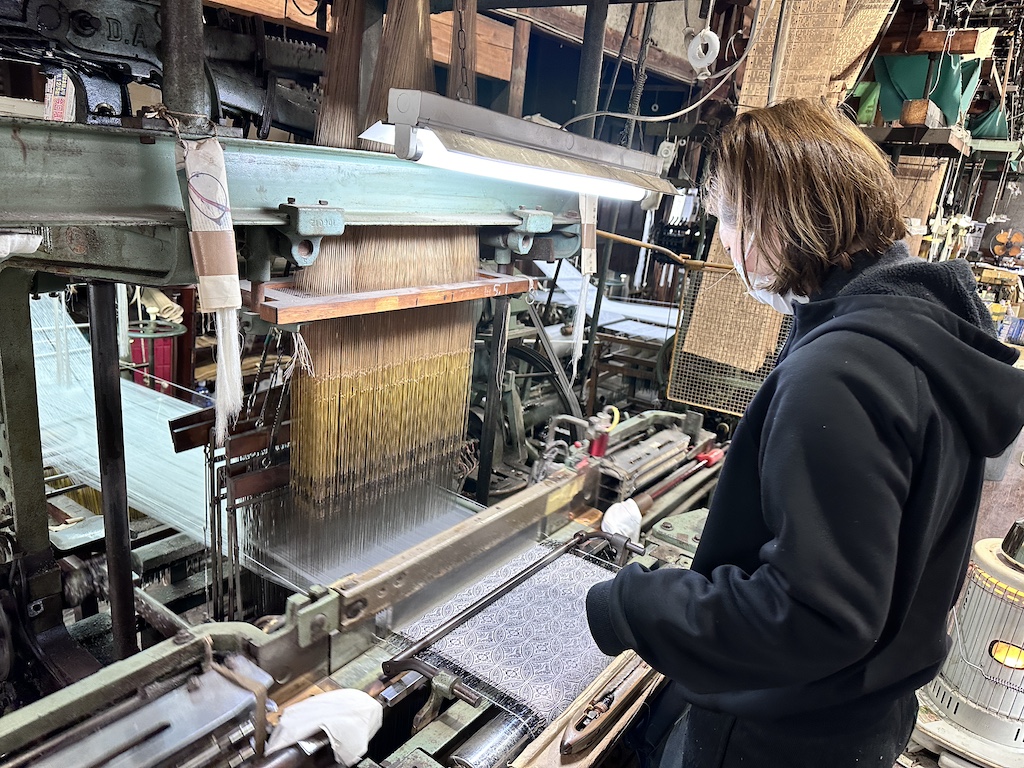
The person weaving this exceptional textile is Ms. Takeda’s cousin, the daughter of the company’s former president. With practiced hands, she swiftly moves between multiple looms, adjusting threads and fine-tuning settings on her own. To preserve the delicate texture, the weaving must be done slowly and at a consistent pace. It takes about three days to complet
It was both reassuring and inspiring to see such a rare and traditional textile being woven by the hands of a young craftswoman—living on as a gentle thread in today’s world.
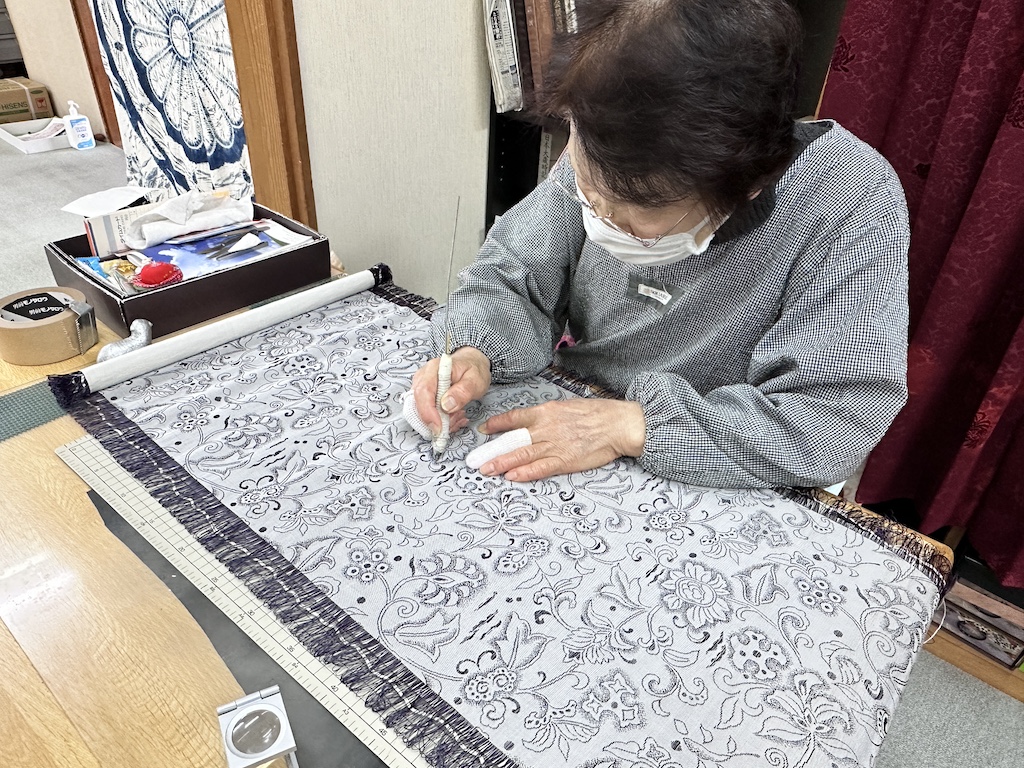
Once the weaving is complete, the process moves on to mon-giri, where the looped warp threads are carefully cut, and hari-nuki, where the polyethylene rods used as core materials are removed. These finishing touches are entrusted to four women, including Ms. Takeda and the wife of the former company president. Cutting an exact number of fine silk threads is an incredibly delicate task, yet each of them proceeds with confident precision. According to Ms. Takeda, every artisan uses her own personal small knife, specially honed for this intricate work.
“Each of us has our own habits and hand movements, so using someone else’s knife can easily lead to mistakes,” Ms. Takeda explains.
“The blades wear down quickly because they come into contact with the polyethylene cores, so keeping our own knives in perfect condition is essential.
In fact, sharpening the blade is even more difficult than cutting the fabric itself.”
The "hari-nuki" (needle removal) process is equally delicate and nerve-wracking.
Each artisan must stay highly focused, carefully extracting the core threads without snagging the surrounding yarns or damaging the fabric—a task that demands finely tuned senses and steady hands.
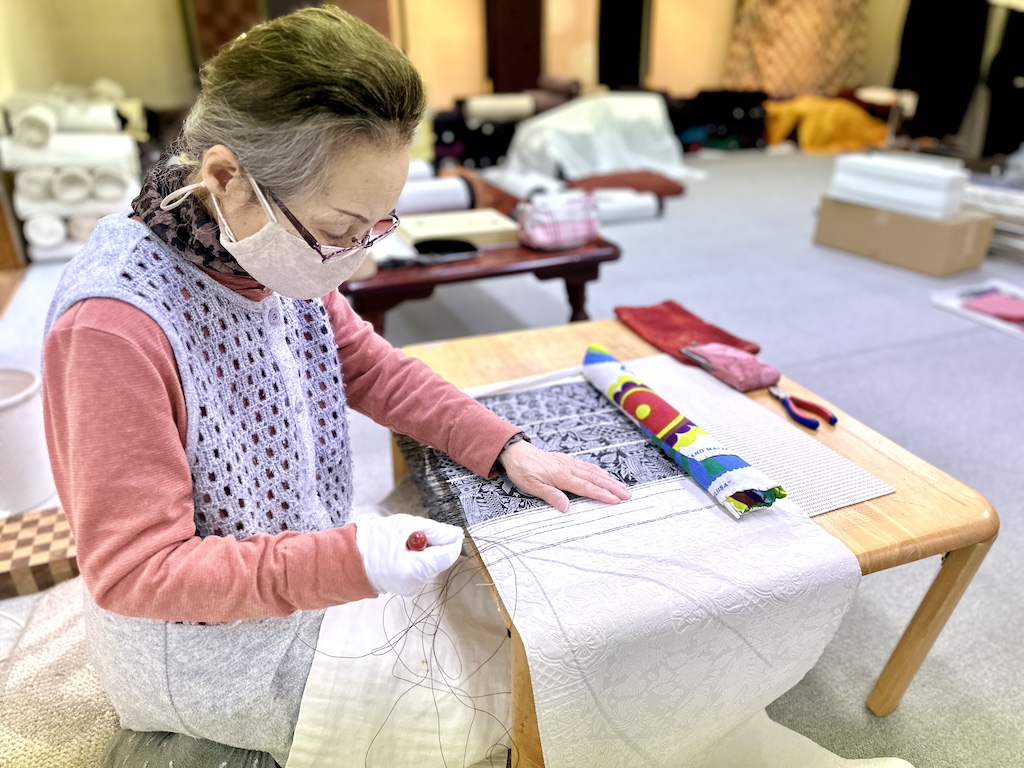
Each bolt of fabric contains approximately 15,000 polyethylene rods, making the "hari-nuki" process a laborious feat in itself. After selectively cutting the necessary warp threads, the rods are pulled out one by one—an undertaking that demands remarkable skill. Because the rods can melt from frictional heat, artisans must carefully control the speed and pressure of removal. When manual pulling proves too difficult, pliers are used. It’s the kind of painstaking work that seems almost unfathomable—yet it is precisely this level of craftsmanship that gives "Wana velvet " its exceptional beauty.
Carrying the Spirit Forward —-
Exploring the Future of Wana Velvet
Wana velvet, a textile with a long history dating back to the Edo period, is now produced in only limited quantities.
"At its peak in the Showa era, there were said to be nearly 900 Wana velvet weavers in Nagahama. Today, only two or three remain, including us. Among them, most now produce fabrics for geta or zori straps—our workshop is the only one still weaving coat fabric."
"‘Coats never go out of fashion—keep weaving them,’ her grandfather, the second-generation head, once said. Today, as the sixth-generation artisan, Ms.Takeda continues to carry that quiet legacy forward."
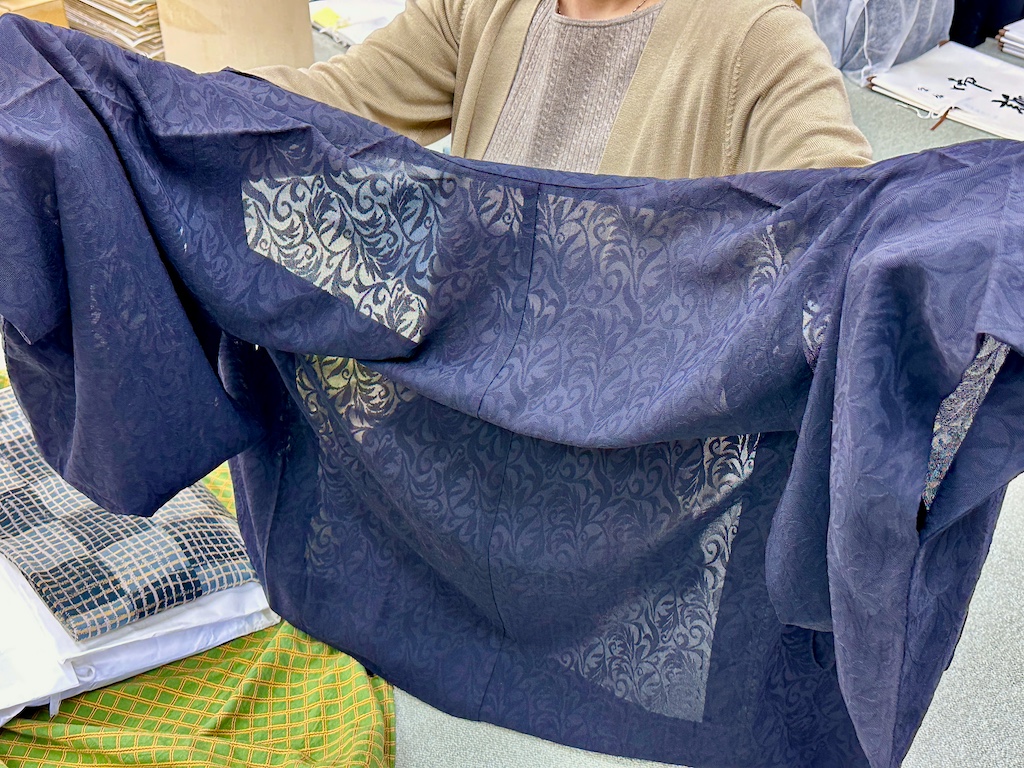
"The previous head of the workshop was also known for his spirit of innovation. One such endeavor was to create a sheer monsha fabric that would allow the luxurious texture of wana velvet—traditionally reserved for winter coats—to be enjoyed in spring and autumn as well. With the aging of the artisans who could weave it, however, this rare creation is no longer in production."
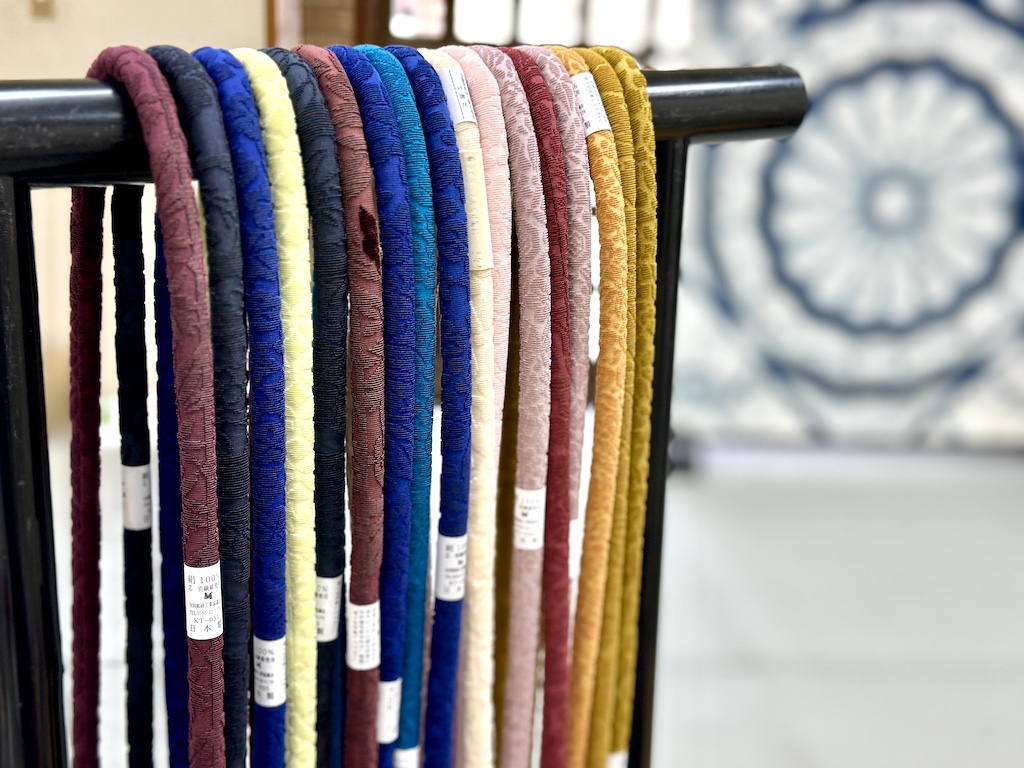
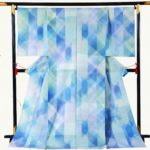
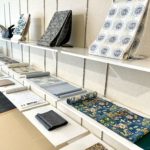
An addition to weaving wana velvet for wholesalers and retailers, Taketsune has been actively engaging directly with consumers through seasonal sales events at department stores, offering their own original patterns of woven accessories. They have also developed an online shop, where customers can find scarves and other small items. What’s more, the previous head of the workshop even ventured into crafting wana velvet kimono—garments once unheard of in this material. Ms. Takeda herself wears them whenever she appears at these special events, embodying the refined beauty of the textile in motion.
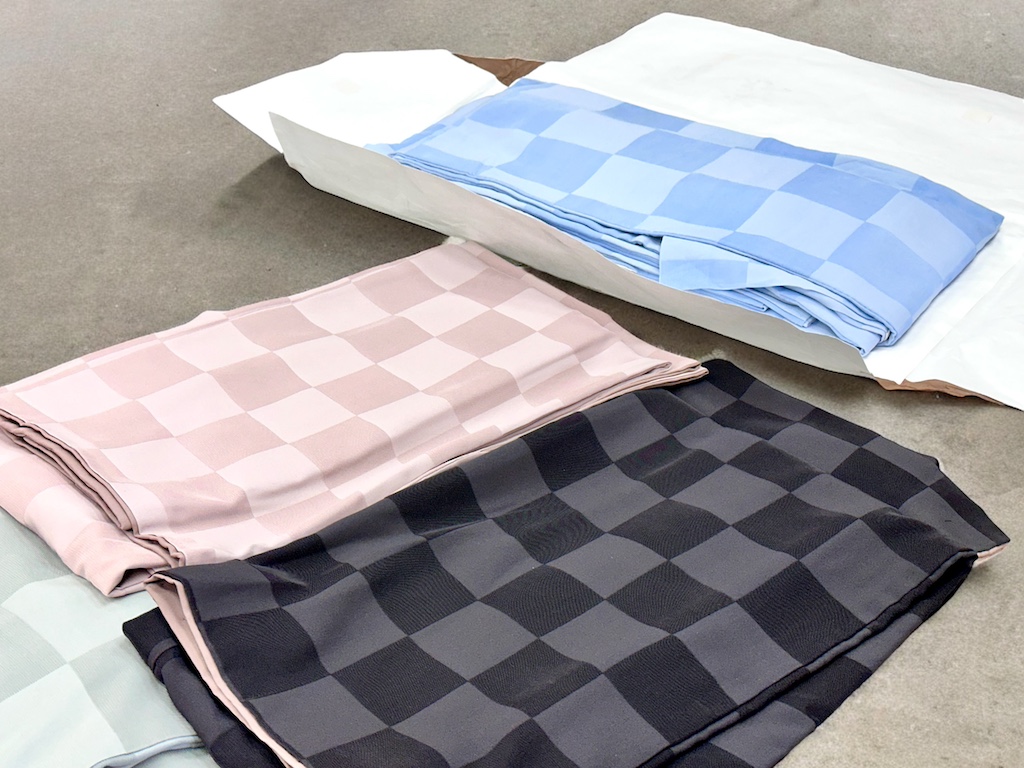
One of Wana Velvet’s greatest qualities is its lightness and resistance to creasing. Its solid-dyed colours make it easy to coordinate with a wide range of kimono and obi, making it a versatile addition to any wardrobe. When tailored into a coat, the choice of lining can bring an added sense of individuality to the piece.
“Care is the same as with other kimono fabrics,” explains Ms. Takeda.
“If the fabric has been treated with a protective coating in advance, a little moisture won’t be an issue.
If you notice wrinkles from sitting, a steam iron can help smooth them out.
Just be careful not to expose any one area to steam for too long, as it may cause the fabric to stretch.”
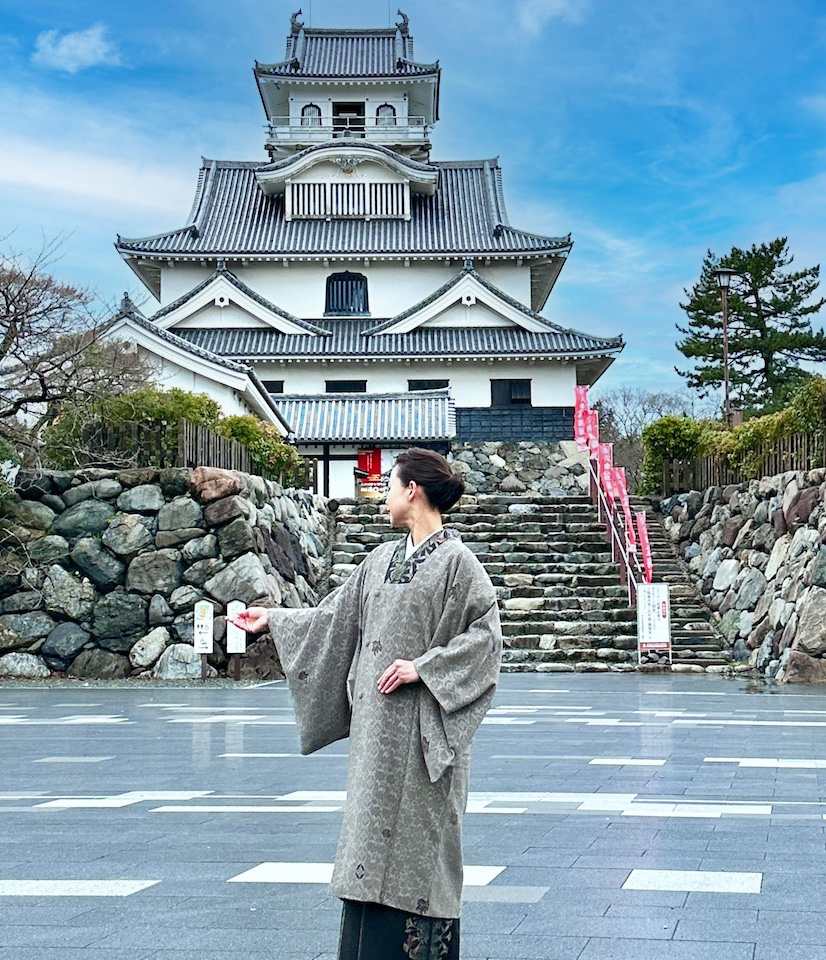
Wearing Wana velvet—a harmonious fusion of elegant patterns and rich velvet—brings a refined, distinctive charm to your ensemble. At the same time, it fills you with a quiet pride and joy, knowing that you are wrapped in a time-honored textile lovingly preserved by the skilled hands of women in Nagahama.
____________________________________
Taketsune
36-20 Asahi-cho Nagahama Shiga Prefecture
TEL +81-749-62-0310
Official Website>>
__________________________________
Text & Interview by Miki Shirasu
→ See also: The Textile Encyclopedia | Wana velvet(Shiga Prefecture)