

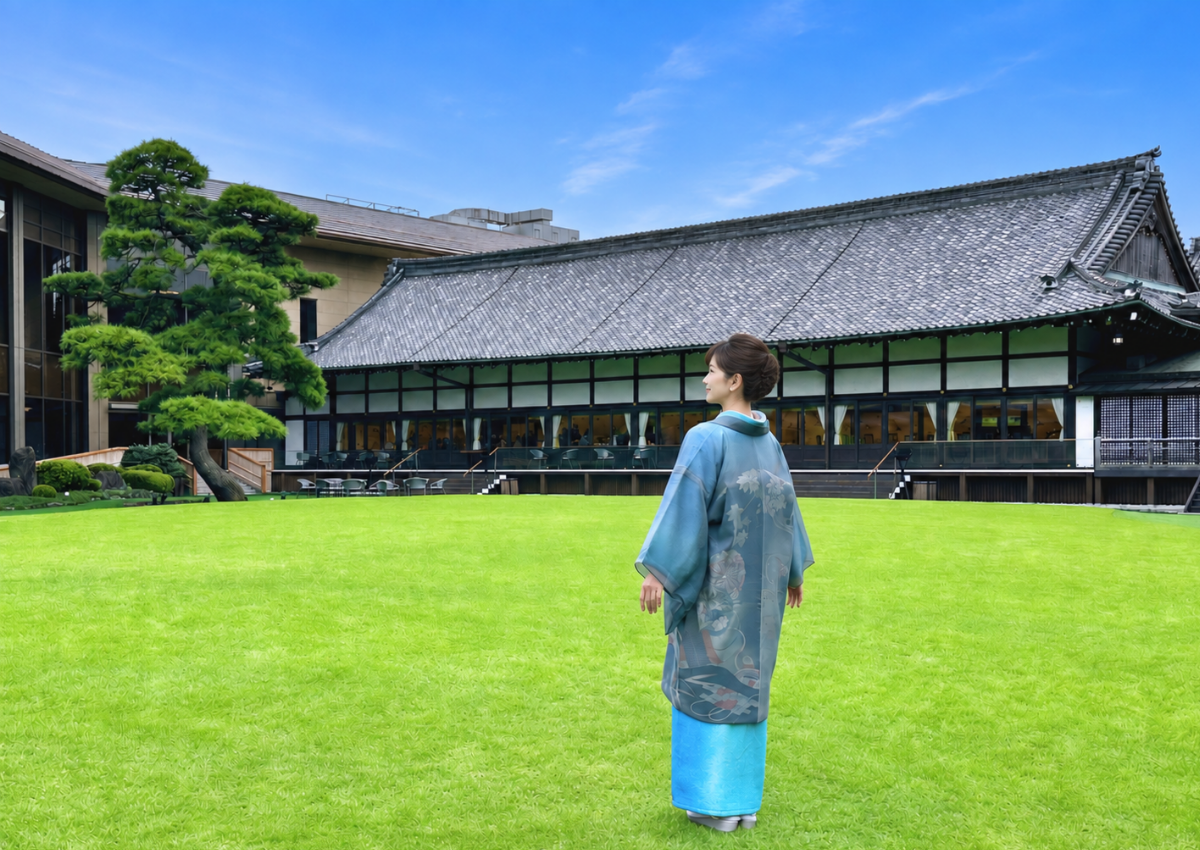
Kimono Travel Journal visits destinations where kimono feels especially at home. This time, we head to Meiji Kinenkan in Moto-Akasaka, Tokyo. Best known as a wedding venue, it also traces its history to a Meiji-era reception hall for distinguished guests. With its lush garden, seasonal Japanese cuisine at Hanagasumi, and summer evenings lit by kagaribi torches, Meiji Kinenkan offers a refined setting for spending a leisurely day in kimono.
Table of Contents
Meiji Kinenkan, Where a Legacy of Hospitality Meets Lush Greenery

Many people may associate Meiji Kinenkan primarily with weddings. Yet the origins of its Main Building date back to 1881, when it was built at the Akasaka Temporary Imperial Palace as a dining hall for court diplomacy. Until the completion of the Meiji Palace, it hosted formal banquets, including gatherings with foreign royalty. In 1888, it also served as the setting for an imperial conference to review the draft of the Constitution of the Empire of Japan. Alongside this distinguished history, Meiji Kinenkan is equally defined by its abundant greenery.
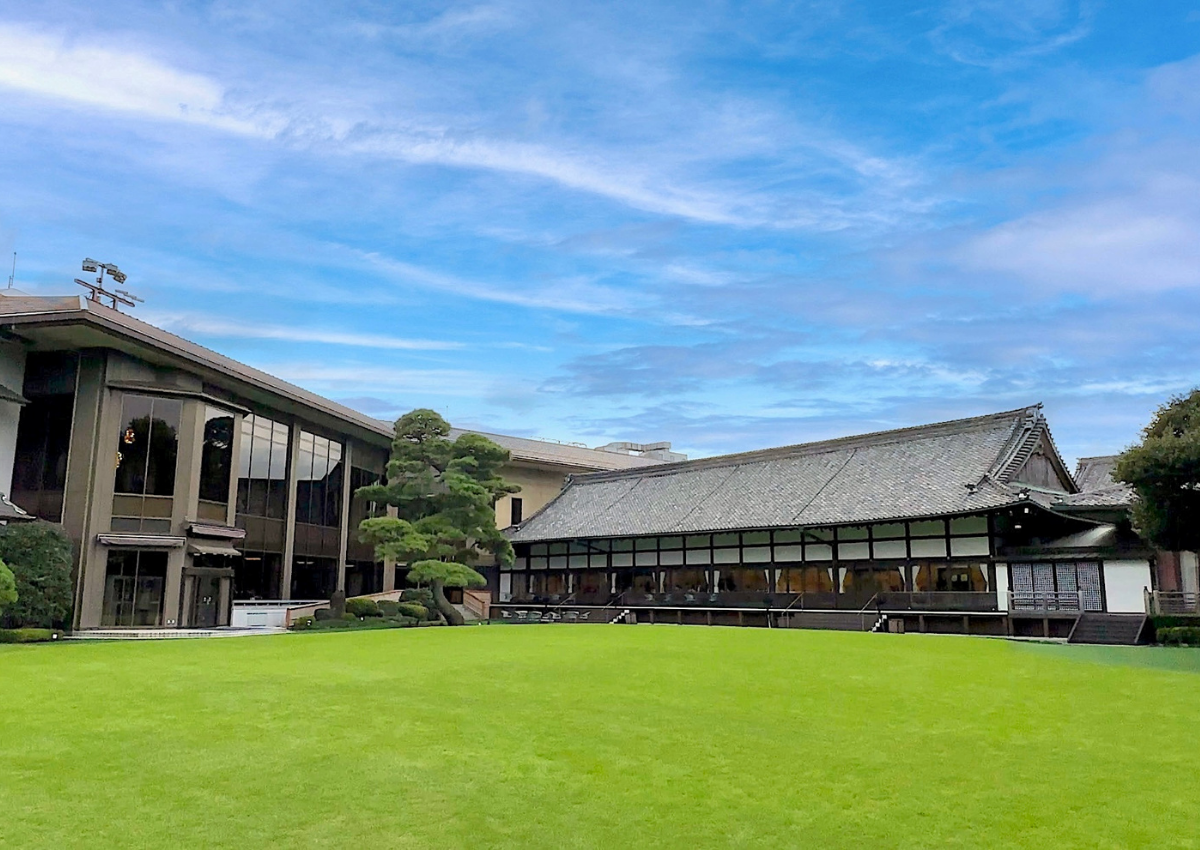
Though located in central Moto-Akasaka, Meiji Kinenkan is home to a garden of around 1,000 tsubo, with some 2,000 trees representing 50 species. The open sky and expansive lawn create a sense of calm that makes it easy to forget you are in the heart of Tokyo. Kimono blends naturally with both the historic architecture and the garden scenery, making Meiji Kinenkan a destination not only for weddings, but also for dining, strolling, and spending a leisurely day in kimono.
A Japanese Restaurant Inspired by the Four Seasons
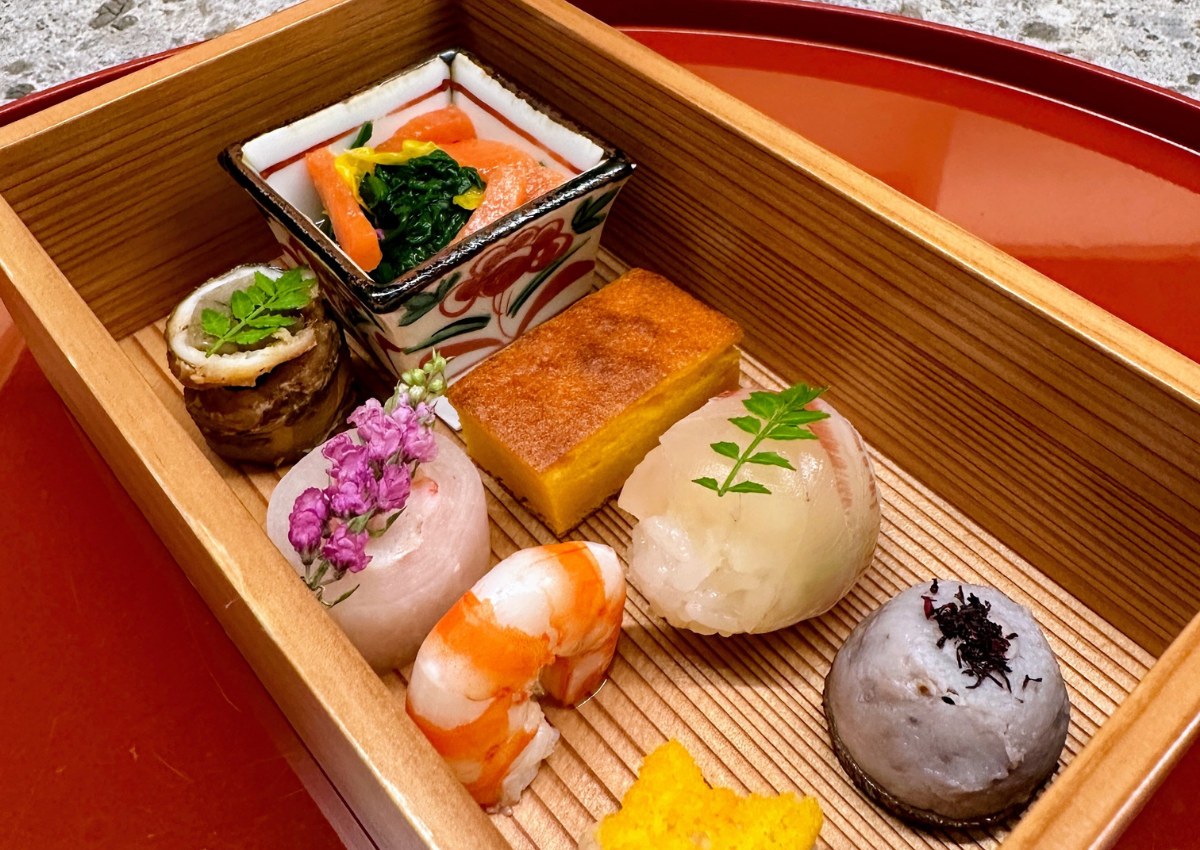
Beyond Meiji Kinenkan’s lush greenery, along a quiet stone-paved path, stands Hanagasumi. Rooted in the traditions of Japanese cuisine, the restaurant selects ingredients with the changing seasons in mind, expressing the chef’s sensibility in every dish and bowl. Its appeal lies not only in seasonal flavors, but also in the refined presentation, tableware, and colors that reflect the beauty of each season.
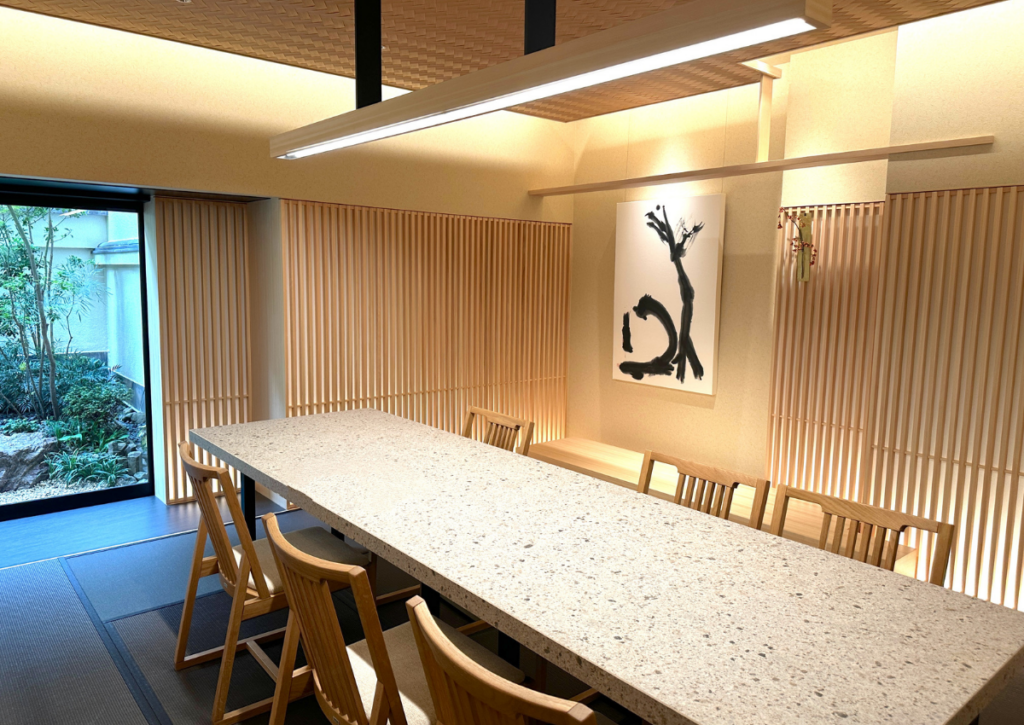
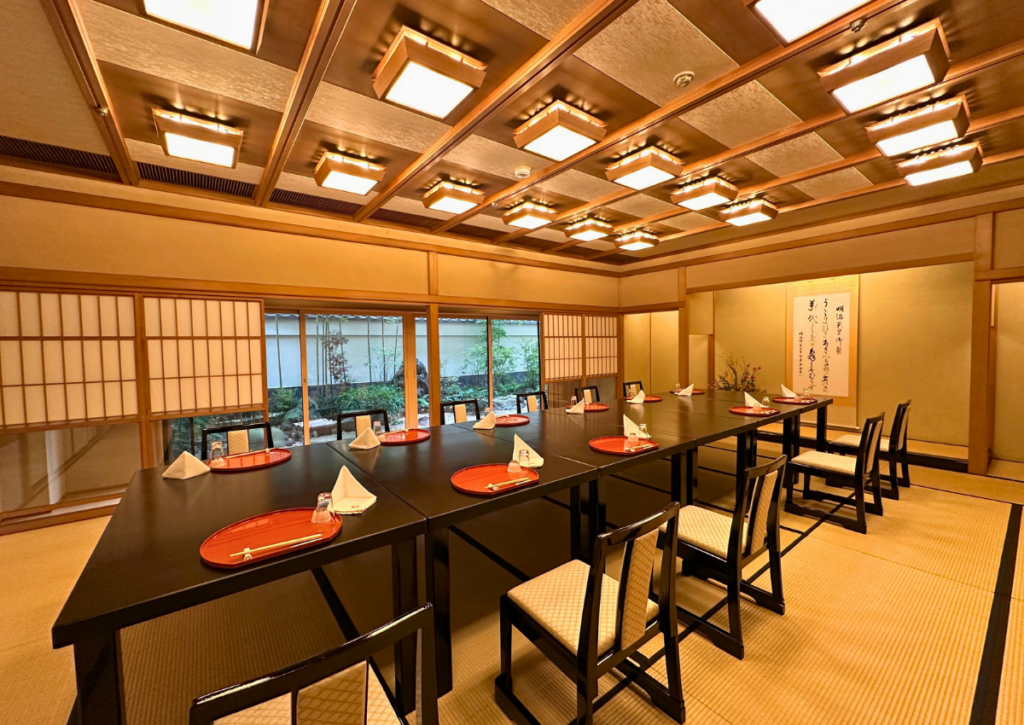
Hanagasumi has seven private rooms, including both table seating and sunken-floor seating, allowing guests to dine in a calm and secluded setting. For those wearing kimono, the extra space is especially welcome, making it easier to sit comfortably without worrying about the obi or sleeves. Beyond the cuisine itself, the interiors and attentive hospitality create a relaxed setting in which to appreciate the full experience of Japanese dining.
Japanese Afternoon Tea Following a Seasonal Meal
Hanagasumi also offers seasonal Japanese afternoon tea. Alongside traditional sweets, the menu includes light savory dishes, creating a seamless progression from Japanese cuisine to dessert. The small, delicate portions are another welcome detail when dining in kimono. Many dishes can be enjoyed in one or two bites, making them easy to eat without worrying too much about the collar or neckline. Rather than focusing mainly on elaborate sweets, as many hotel afternoon teas do, Hanagasumi carries the refined aesthetics of Japanese dining through to the final sweets. That sense of continuity is what gives its afternoon tea a distinctive character.
▶︎ Discover 6 Tokyo Hotel Afternoon Teas to Enjoy in Kimono
Cocktails by the Firelight
Before or after dining, take time to explore Meiji Kinenkan’s interiors and garden. The lawn and trees, framed by historic architecture, provide a natural setting for kimono, while the changing light and seasonal scenery create a slower, more reflective pace. In summer, another highlight is Sekirei, the evening garden terrace. As dusk falls, kagaribi torches are lit across the lawn, transforming the bright daytime garden into a more atmospheric scene. With a cocktail in hand, guests can watch the garden shift from afternoon into evening. From dining and architecture to the garden and twilight views, the chance to experience the passage of time in one place is part of what makes Meiji Kinenkan so appealing for a day out in kimono.
Kimono Coordination for the Day
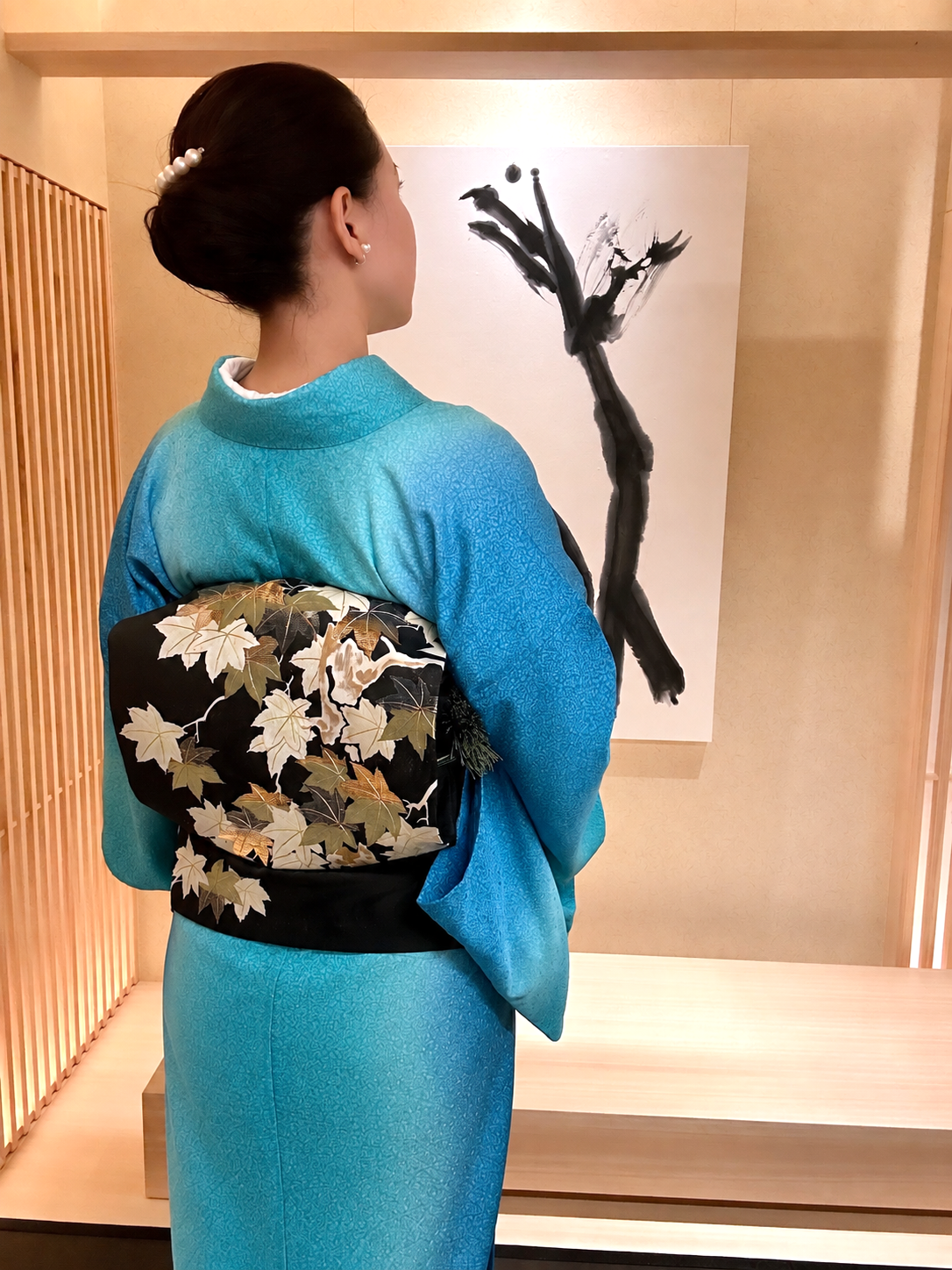
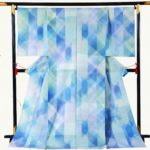
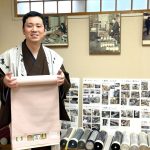
The haori worn on this day features Kagerō-jitate, a special tailoring technique developed by master kimono tailor Eiji Suzuki. Antique kimono fabric is carefully cut along the original motifs and layered beneath a sheer sha fabric. The patterns appear softly through the translucent surface, while the stitching is virtually invisible—a striking example of highly refined tailoring skill.
The kimono is a Tenmoku-dyed komon by Tomio Yamamoto, paired with an antique maru obi that has been remade into a Nagoya obi.
Both the haori and obi give new life to old textiles through contemporary craftsmanship. Set against Meiji Kinenkan, where a historic building has likewise been preserved and carried into the present, the styling creates a quiet dialogue between tradition and renewal.
The styling brings together a shared sense of beauty: preserving what has been inherited and giving it new life in the present.
Meiji Kinenkan, a Beautiful Setting for Kimono
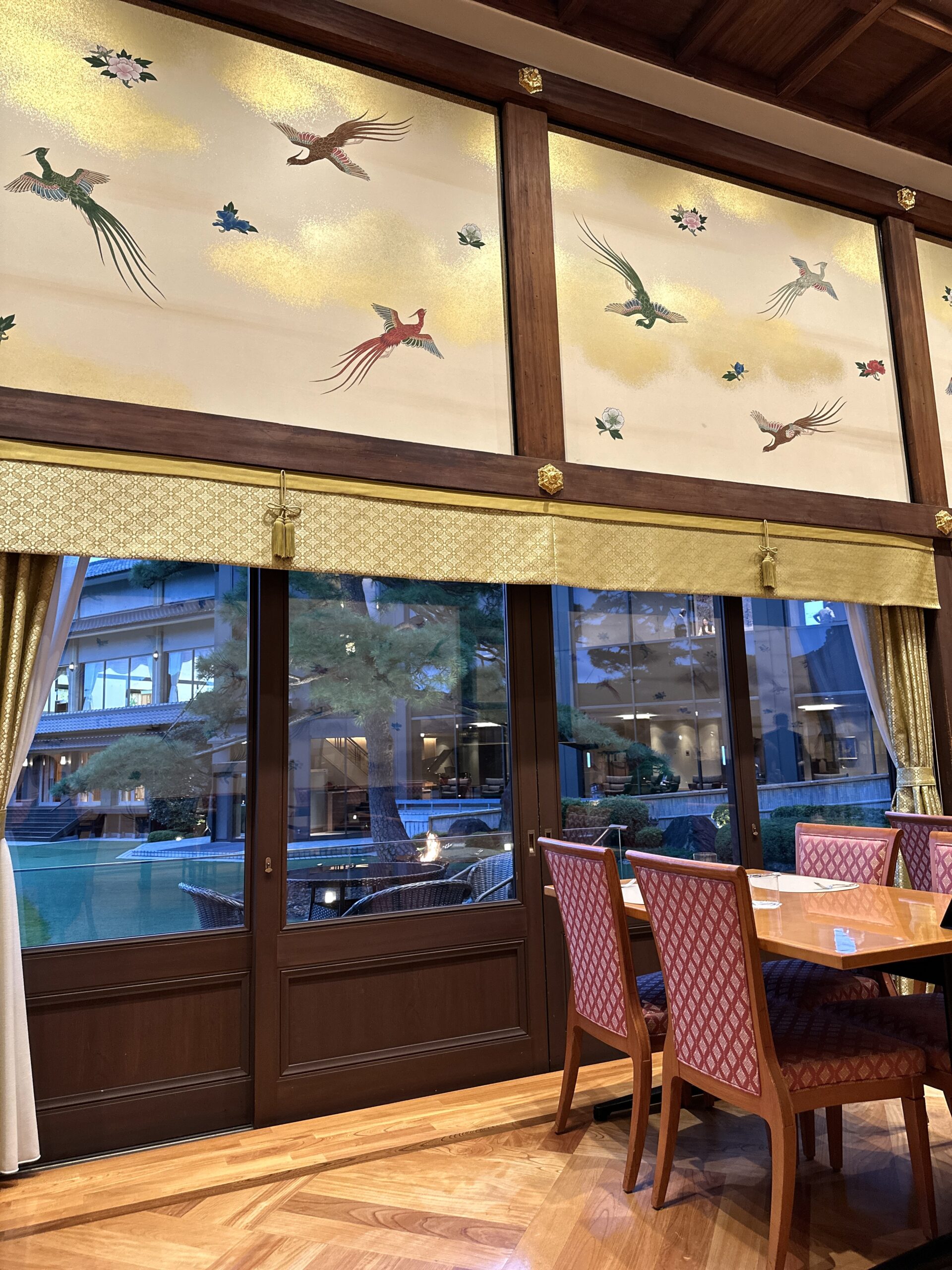
The architecture of Meiji Kinenkan reflects its history of welcoming distinguished guests, while its lush garden and seasonal Japanese cuisine offer a sense of beauty far removed from the pace of central Tokyo. At Hanagasumi, seasonal dishes are followed by a stroll through the garden, and in summer, the glow of kagaribi torches marks the transition into evening. From afternoon to dusk, the experience unfolds almost like a story. Wearing kimono in such a historic setting brings the beauty preserved in its architecture, cuisine, and garden into sharper focus. Beyond weddings, Meiji Kinenkan is a place to dress for the season and spend time immersed in Tokyo’s history.
________________________________________
Meiji Kinenkan
2-2-23 Moto-Akasaka, Minato-ku, Tokyo
TEL:03-3403-1171
▶︎ via official website
_____________________________________