

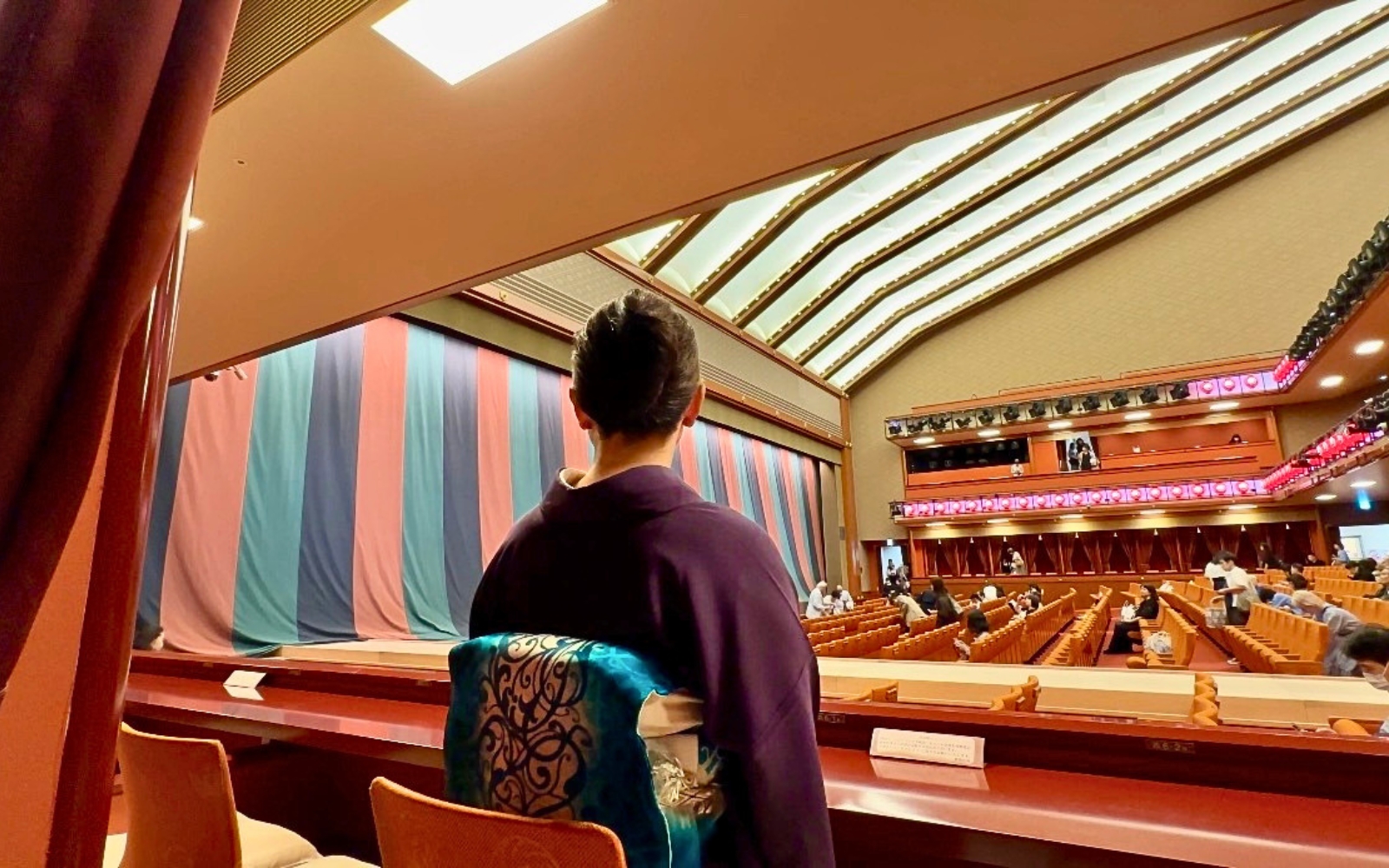
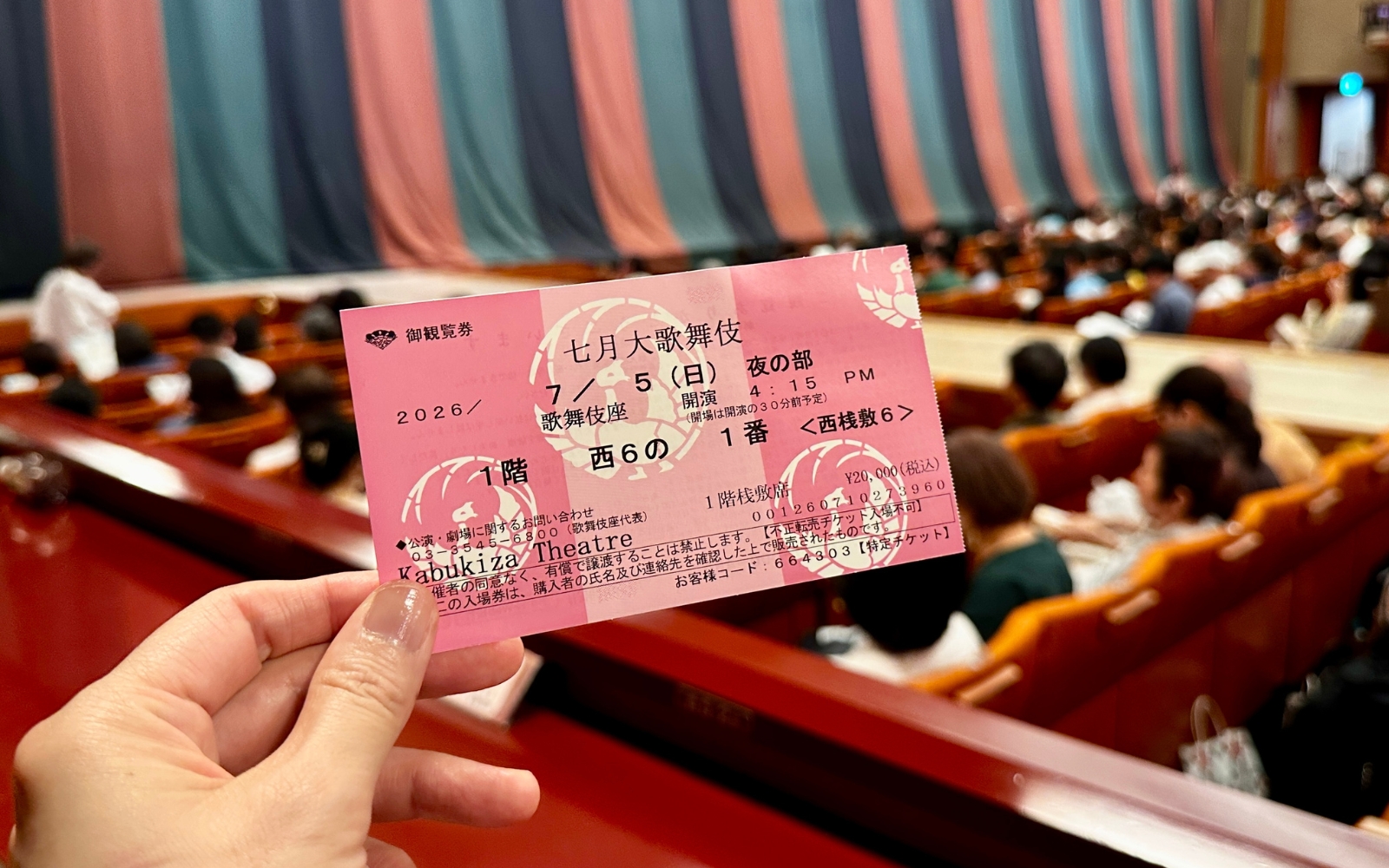
I attended the evening performance of the July Grand Kabuki (Shichigatsu Ōkabuki), held from July 2 to 26, 2026. For this visit, I went to Kabukiza Theatre in kimono and watched the performance from a first-floor western-side box seat. The box seats at Kabukiza offer a distinctly different experience from the theatre’s standard seating. From the view of the stage and the close proximity to the hanamichi—the raised walkway extending through the audience—to the way you spend the intervals between acts, these seats invite you to slow down and enjoy the entire rhythm of a kabuki performance. What should you wear in kimono to a summer kabuki performance? And how can you spend the time comfortably in the special setting of a Kabukiza box seat? Drawing on my own experience of visiting in kimono, I will share both the practical details of the experience and the summer kimono ensemble I chose for the occasion.
Table of Contents
Deep Eggplant-Navy Ro Hamachirimen for Summer Kabuki
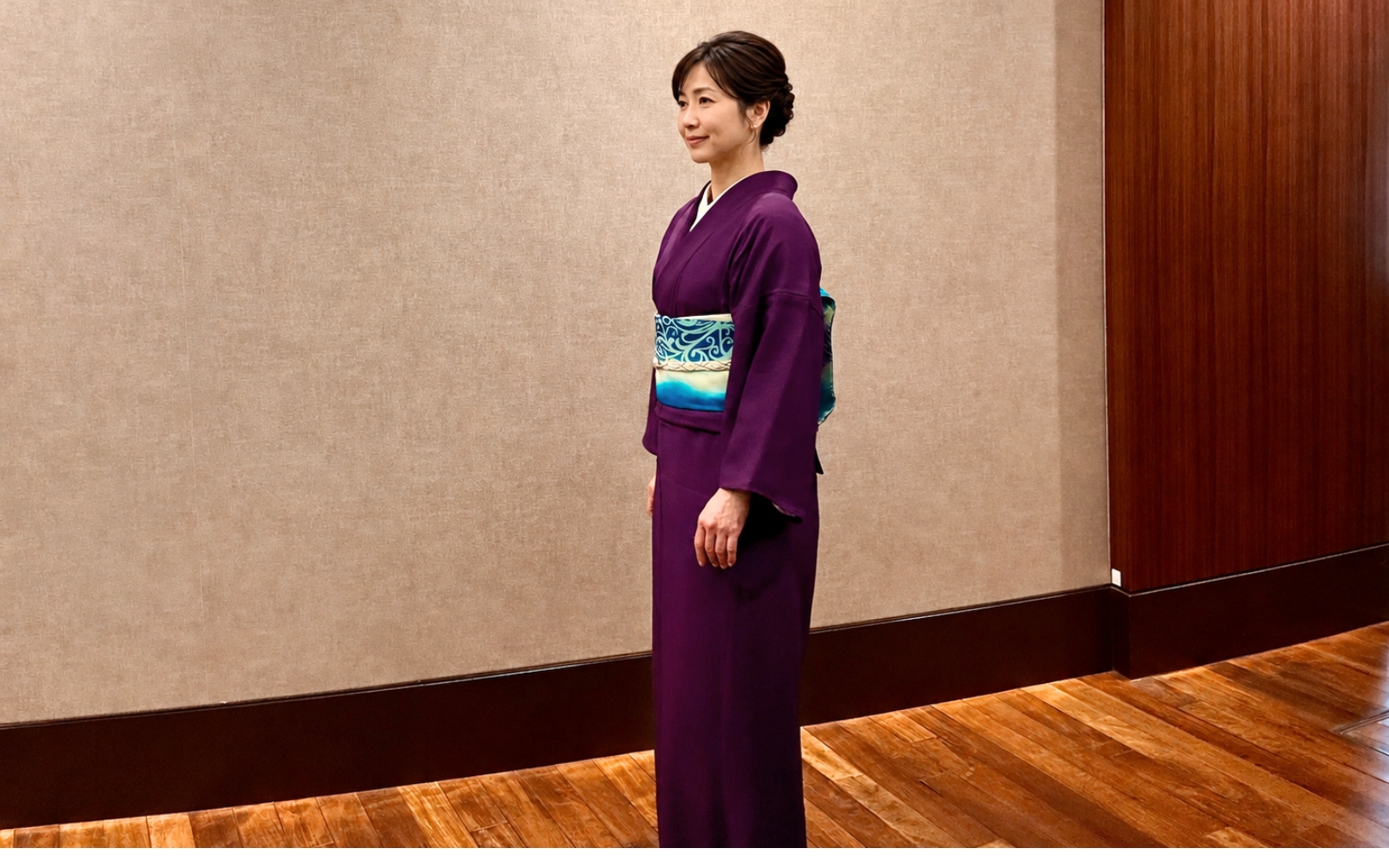
For this evening, I chose a nasukon (deep eggplant-navy) iromuji made from summer-weight ro Hamachirimen silk. Although the temperature in Ginza in early July reached only around 27°C, the high humidity made the air feel distinctly muggy even while walking. For that reason, I opted for a sheer summer Hamachirimen fabric. Its light, smooth texture feels comfortable against the skin, making it especially well suited to Japan’s humid summer season. The deep nasukon shade also felt beautifully at home beneath the evening lights of Kabukiza Theatre. Softer than black and less overtly feminine than purple, it quietly anchored the entire ensemble while allowing the theatre’s red lanterns and the brilliance of the stage to take visual precedence.
For the obi, I chose a karakusa-patterned monsha obi by Shinryusha / Yuzuki of Nishijin, Kyoto. The blue-green arabesque motif brings a cool, refreshing note to the deep nasukon tones of the kimono, giving the ensemble a distinctly summery feel. This iromuji also holds a particularly discreet detail: a hand-dyed Kaga Yuzen motif by master artisan Katsumasa Okuda, placed only on the lower inner front panel of the kimono. It is a small design that reveals itself only in passing—while walking, sitting, or at an unexpected moment. Rather than displaying its beauty openly, it offers a more private kind of pleasure: a hidden detail known and enjoyed primarily by the wearer herself.
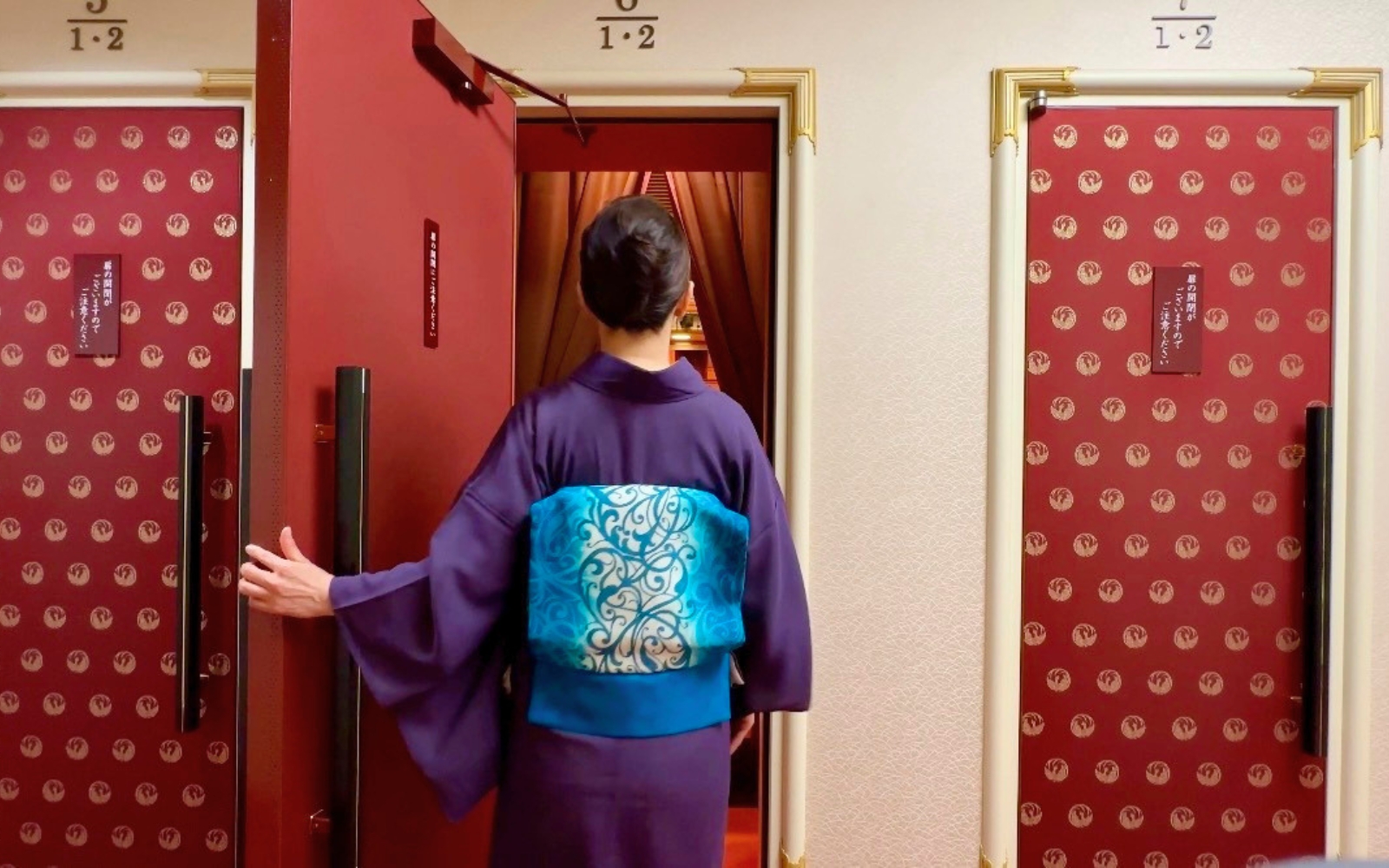
When dressing in kimono for Kabukiza Theatre, many visitors may wonder just how formal they need to be. It is certainly important to choose an ensemble with a sense of refinement appropriate to the setting, but the dress code at Kabukiza is more flexible than many people expect.
In summer, even a yukata can work beautifully for the theatre when styled in a more polished way—for example, worn over a nagajuban undergarment, with tabi socks and zori sandals.
Rather than pairing yukata with bare feet and geta, taking a little extra care with footwear helps the overall look feel more in harmony with the theatre environment, including its carpeted interiors and elegant atmosphere. These small considerations can make a summer kimono ensemble feel naturally at home at Kabukiza.
Visiting in kimono can subtly change the way you experience a space. The woven texture of the obi catching the light, the glow falling across the sleeves, the silhouette framed by a window, the hem moving gently with each step—these details become part of the scenery itself.
As the kimono blends into its surroundings, it also seems to encourage a more attentive way of experiencing the day, allowing each moment to be noticed and appreciated with greater care.
What Is a Kabukiza Box Seat Overlooking the Stage?
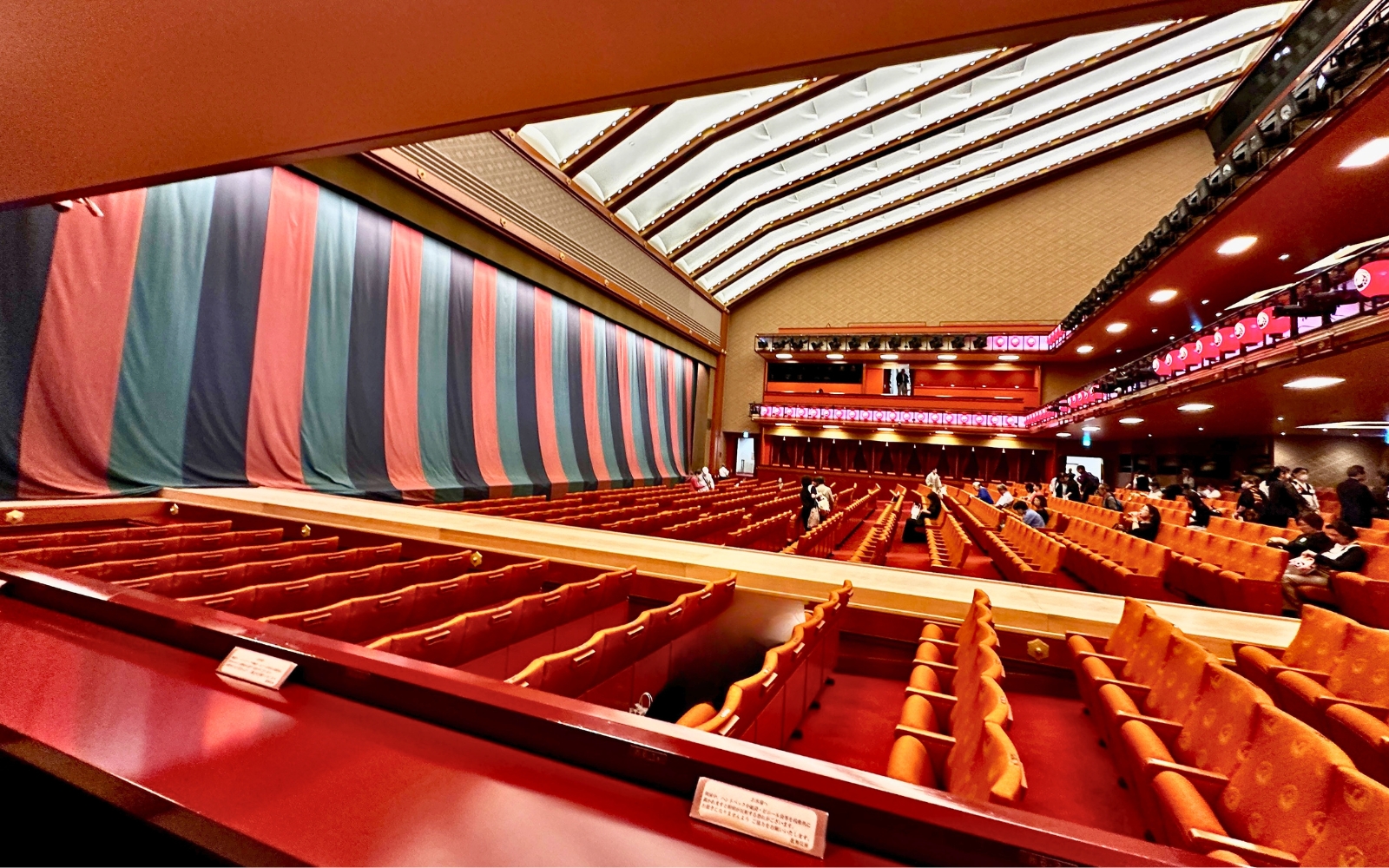
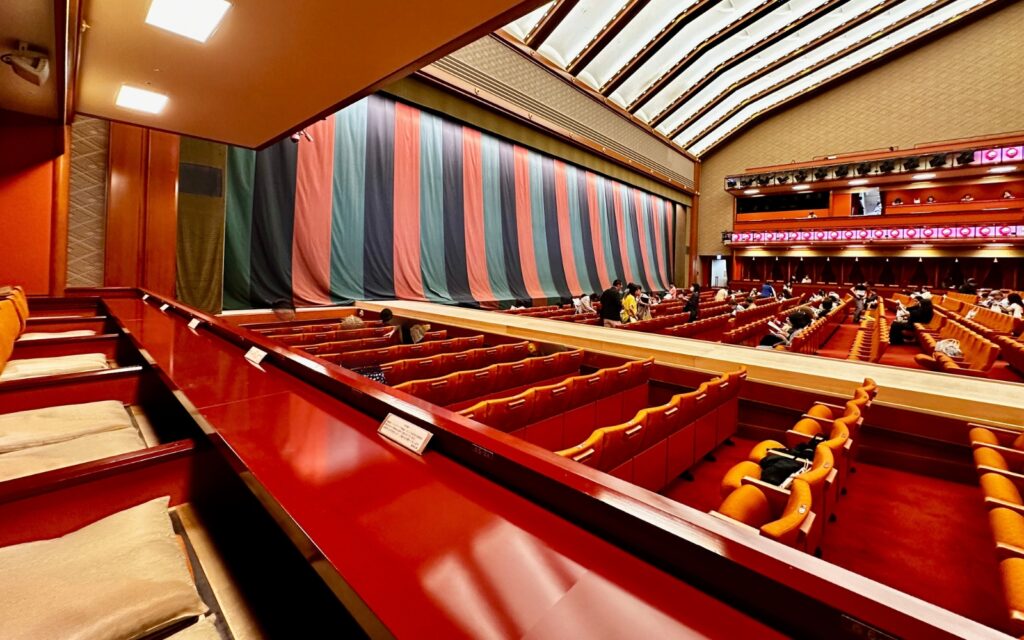
The first-floor box seats at Kabukiza Theatre are tatami-matted seating areas positioned along both sides of the auditorium, facing the stage. Guests remove their shoes before entering and watch the performance while seated on zaisu, traditional Japanese floor chairs.
On this occasion, I sat in a box seat on the western side of the theatre. Because these seats are set slightly higher than the main first-floor seating area, I was struck by how easily I could take in the full width of the stage without being overly conscious of the people seated in front.
In standard theatre seats, the view can sometimes vary depending on the height or posture of the person ahead of you. From the box seats, however, the slightly elevated perspective creates a much more open sightline, giving the impression that the stage unfolds clearly before your eyes.
The footwell is designed in the style of a horigotatsu, a traditional sunken seating arrangement. Although the box itself is tatami-matted, there is no need to remain seated in the formal seiza position.
You can lower your legs into the recessed space beneath the seat, making it considerably more comfortable for a long kabuki performance.
The Immersive Hanamichi Experience from the Western Box Seats
One of the greatest attractions of the western box seats is their proximity to the hanamichi, the raised walkway that extends through the audience.
The experience is not limited to watching the actors on stage—you can also feel the moment they pass along the hanamichi at remarkably close range. The energy of their movement, the sound of their footsteps, and even the sense of air shifting as they pass create an immediacy that is unique to these seats.
This is especially powerful in a lively Edo-period drama such as Megumi no Kenka, where the heat, momentum, and spirited atmosphere of the characters spread throughout the entire theatre. From the western box seats, the closeness of the hanamichi makes the performance feel even more vivid and immersive.
Rather than simply watching the stage from the front, you can also feel the path of the performers as they move through the audience and make their way toward the stage.
Experiencing that movement almost physically—seeing the actors pass through the auditorium before rejoining the main stage—is one of the distinctive pleasures of watching kabuki from a box seat at Kabukiza Theatre.
The Comfort of a Kabukiza Box Seat When Attending in Kimono
Days spent in kimono often involve more belongings than you might expect: a handbag, folding fan, parasol, drink, and an extra layer to wear if needed. Depending on the season, I may also carry a small portable fan and a few spare accessories, which can make standard theatre seating feel a little cramped around the feet or on the lap. In this respect, the box seat felt noticeably more comfortable. The tatami-matted area offers a little extra room, making it easier to keep belongings organized beside or behind the floor chair. The counter table also provides a convenient place for items such as the program, a fan, or a drink, allowing the space around you to remain calm and uncluttered throughout the performance.
When your belongings each have their own place, there is no need to keep them on your lap or worry about creasing the kimono. Your hands also remain free, allowing you to settle in without constantly rearranging things. I found that, when attending the theatre in kimono, the absence of these small sources of stress makes a greater difference than one might expect. At the same time, a little consideration is still important. To avoid interfering with the stage lighting or visual effects, it is best not to place highly reflective items on the counter table. The relative freedom of a box seat is part of its appeal, but it also calls for an awareness of the theatre environment and of the experience shared with those around you.
Discovering Kabukiza’s Textile Art During the Intermission
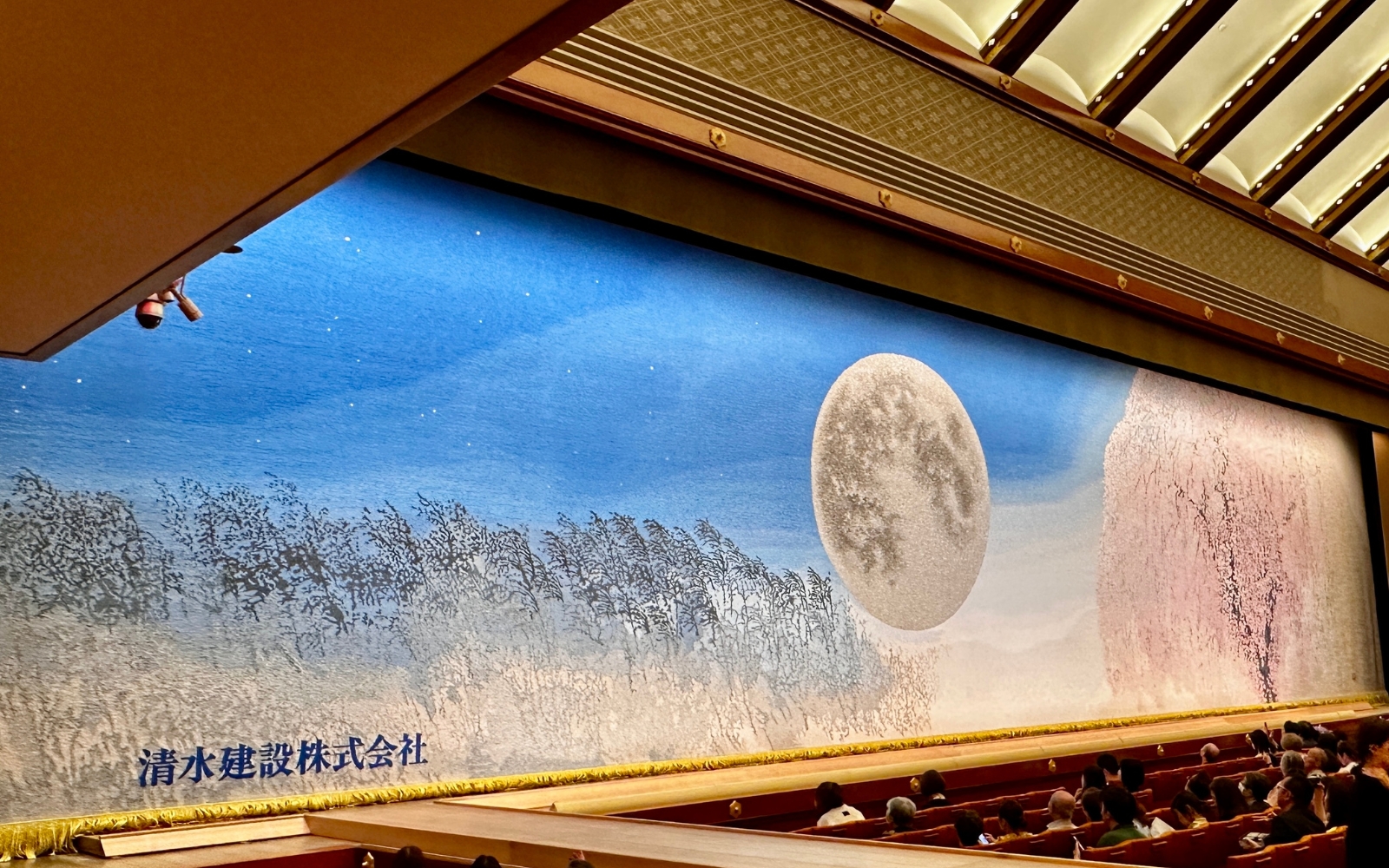
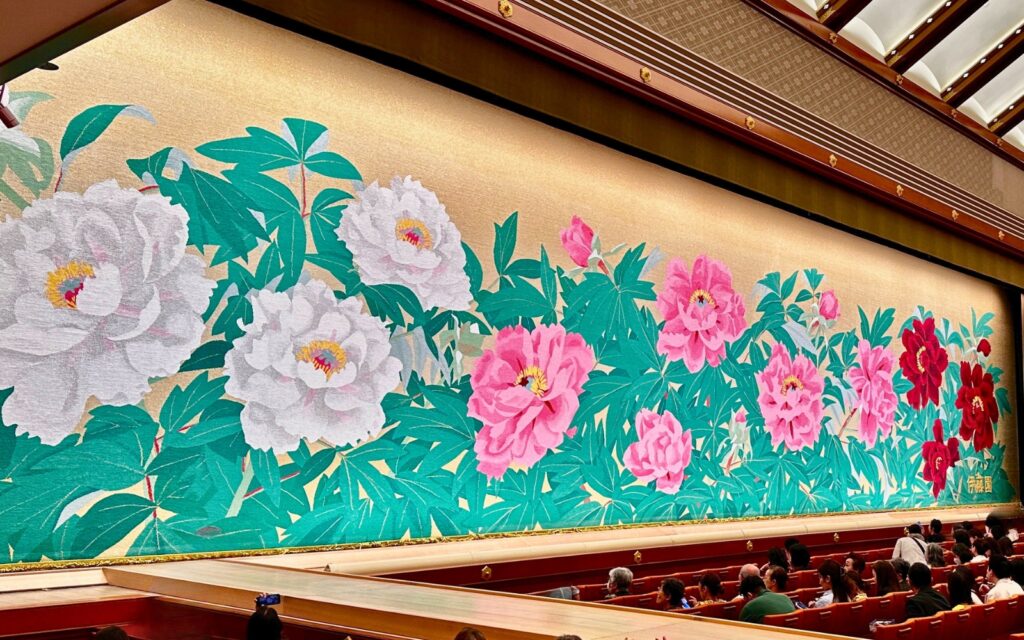
During the intermission following Megumi no Kenka, there was an introduction to Kabukiza’s decorative stage curtains. Unfolding before us were Fukikakyoen-zu, a richly composed scene of peonies in full bloom, and Shunju (Spring and Autumn), depicting a full moon, cherry blossoms, and susuki pampas grass. Both were woven by Tatsumura Textile, a renowned Kyoto textile house known for its artistic woven works. Seen from a distance, these enormous curtains covering the stage appear almost like paintings. Yet the closer you look, the more you begin to notice the subtle shadows, depth, and layers of color created through weaving. Even in the quiet intervals before and between performances, the skill of Japanese textile artisans is very much alive. For those who love kimono and textile arts, Kabukiza offers much more than the performance itself: the costumes, woven works, and theatre interiors all become part of the experience of Japan’s traditional performing arts.
Savoring the Exclusive Makunouchi Bento for Kabukiza Box Seats
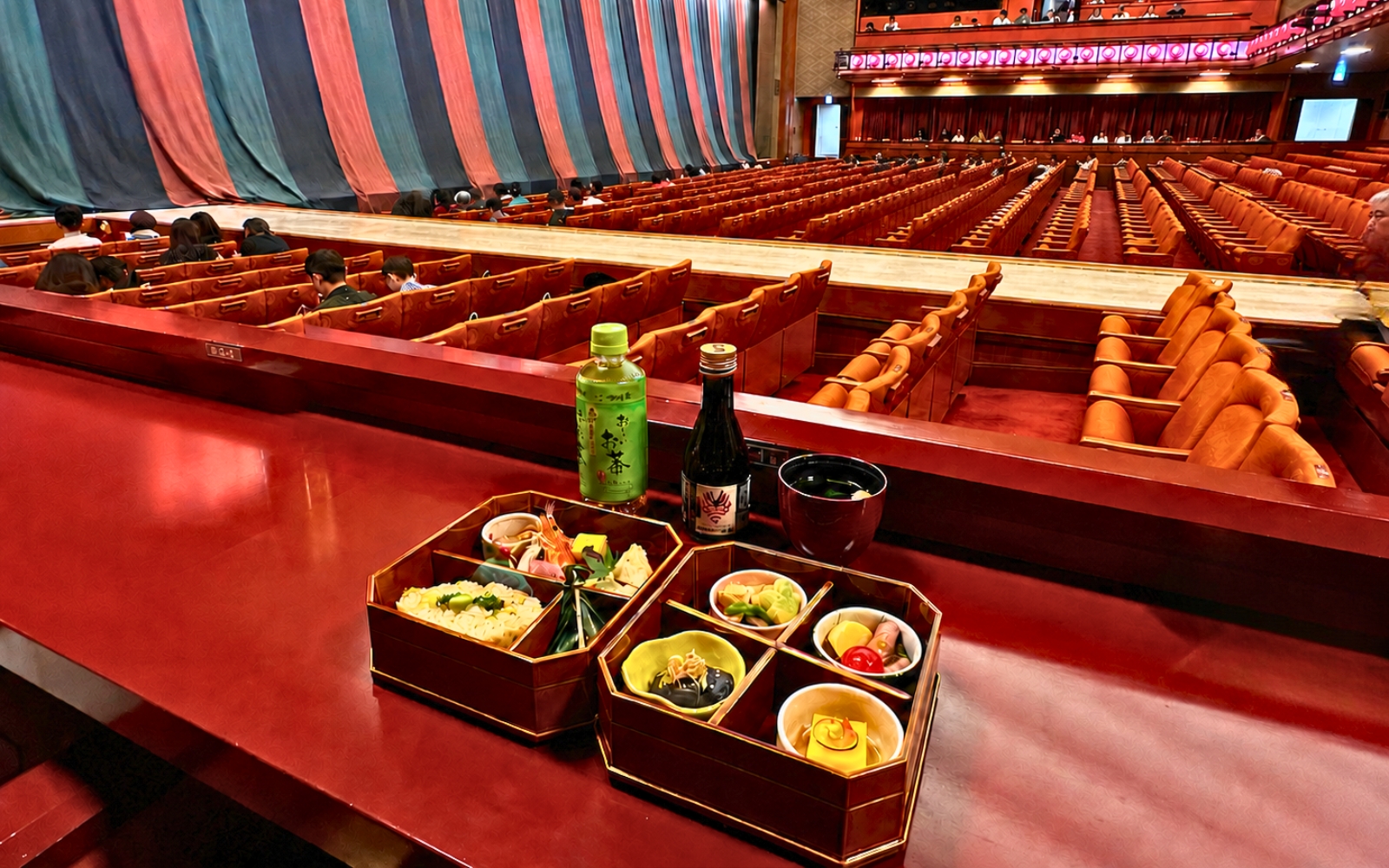
During the intermission, I enjoyed a makunouchi bento reserved in advance exclusively for guests seated in the Kabukiza box seats. The meal arrived in a two-tiered lacquer-style box, kept warm in an insulated bag, together with bottled tea and a bowl of hot clear soup. When ordered ahead, the meal is delivered directly to the box seat in time for the intermission. Opening the boxes revealed an assortment of beautifully arranged dishes, each served in small portions. After the intensity of the performance, it created a calm and leisurely pause. Being able to enjoy the meal without leaving the seat, and then simply remain in the private atmosphere of the box while waiting for the next act, is one of the great pleasures of this style of kabuki viewing.
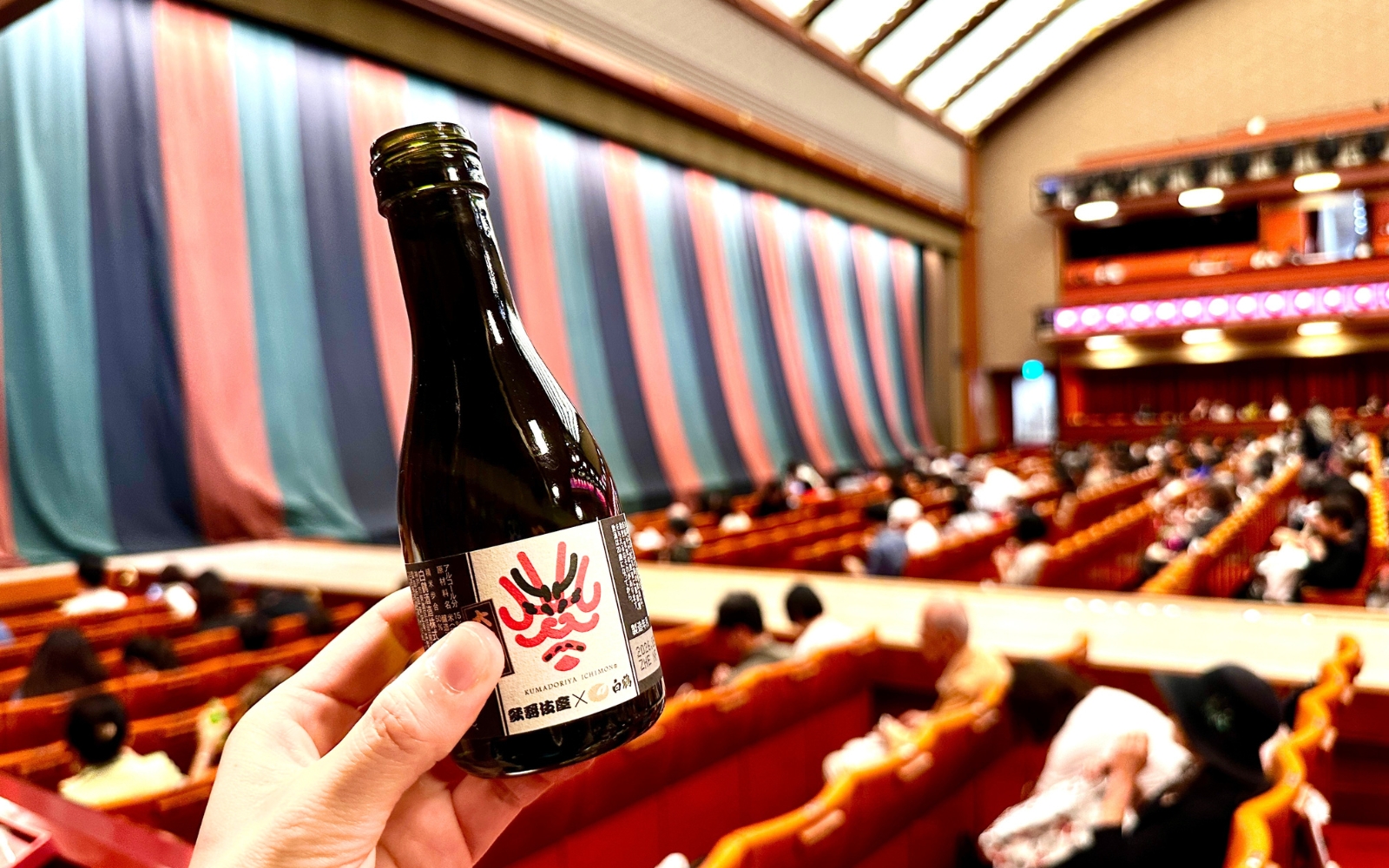
To accompany the meal, I chose a Daiginjo sake created in collaboration between Kabukiza Theatre and Hakutsuru, one of Japan’s long-established sake producers. Its rich, aromatic character paired beautifully with the makunouchi bento, adding another layer of enjoyment to the intermission. It was a pleasure to savor not only the meal and sake, but also the quiet anticipation of waiting for the next performance to begin.
During the intermission, I enjoyed a **makunouchi bento—a traditional Japanese boxed meal originally associated with theatre intermissions—**reserved in advance exclusively for guests seated in the Kabukiza box seats.
🔗 See details on how to reserve the makunouchi bento
Experiencing the Star-Studded July Grand Kabuki
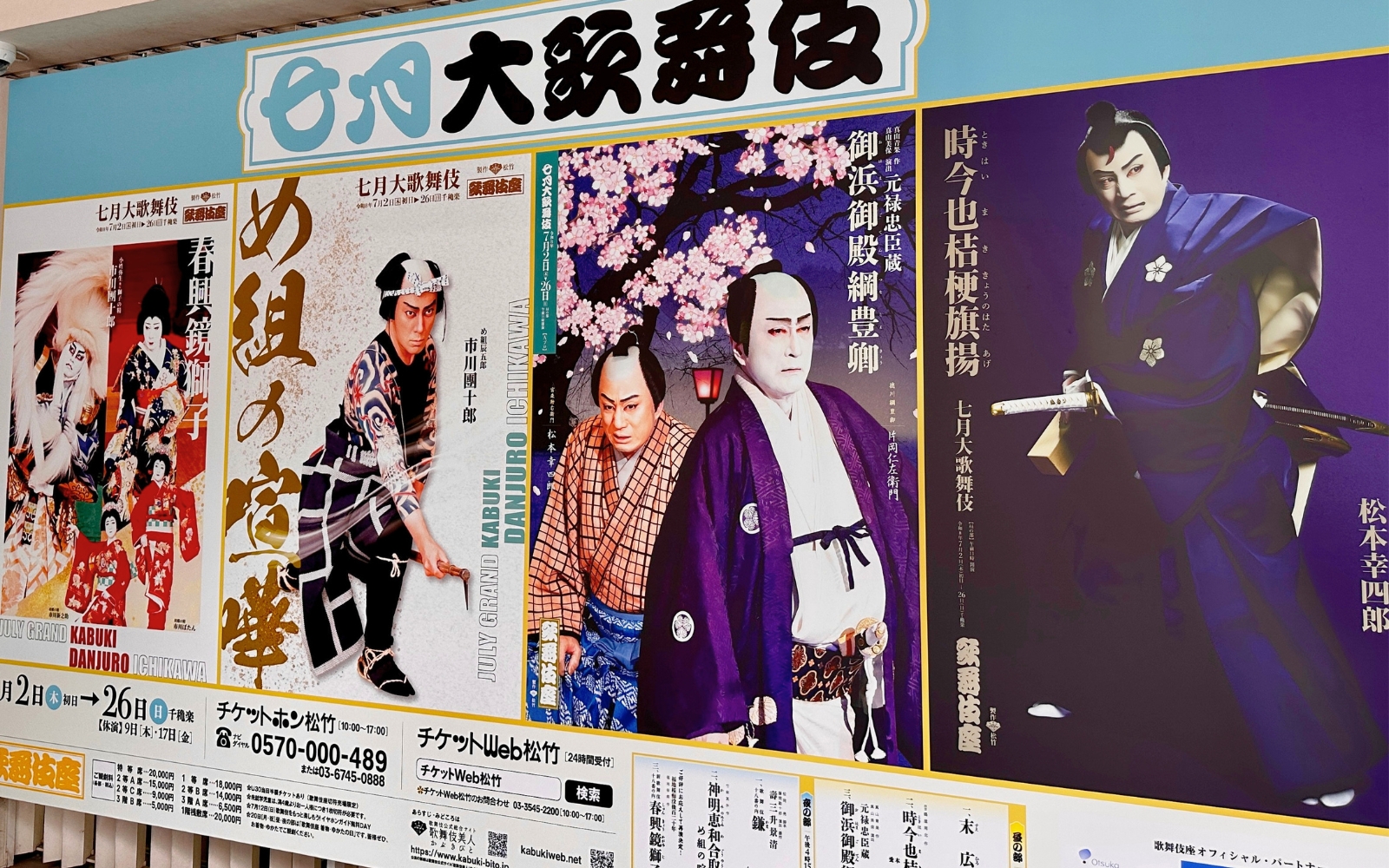
The evening program featured three works, each with a distinctly different character.
The performance opened with Kamahige, one of the celebrated Kabuki Jūhachiban (Eighteen Great Plays of Kabuki). On the evening I attended, Takanosuke Nakamura took the role of Kagekiyo, a formidable warrior who survives an attempt on his life by Genji samurai and repels them with almost superhuman strength.
The bold physicality and dramatic staging characteristic of aragoto, kabuki’s powerful and exaggerated acting style, gave the evening a striking and energetic opening.
Next came Shinmei Megumi no Wago no Torikumi, better known as Megumi no Kenka. This popular kabuki drama centers on Tatsugoro of the Megumi fire brigade, played by Ichikawa Danjuro, and depicts the escalating conflict between Edo-period town firefighters and sumo wrestlers.
The drama brings together the stylish spirit of Edo, fierce pride, and deep human loyalty, gradually filling the entire stage with a palpable sense of heat and momentum.
The evening concluded with Shunkyo Kagamijishi, one of the Shin Kabuki Jūhachiban (New Eighteen Great Plays of Kabuki). Ichikawa Danjuro first appears as the young page Yayoi and later as the spirit of the lion, while Ichikawa Botan and Ichikawa Shinnosuke perform as butterfly spirits. The performance shifts from graceful, refined dance to the bold and commanding presence of the lion spirit. As the stage moves from quiet elegance to sudden intensity, the energy in the audience rises with it. The powerful aragoto style, the vibrant atmosphere of Edo, and the beauty of kabuki dance each brought a different dimension to the evening. With such a distinguished cast, the night program felt so immediate that the heat and energy of the stage seemed to reach all the way into the audience.
Leaving Kabukiza After an Evening of Kabuki
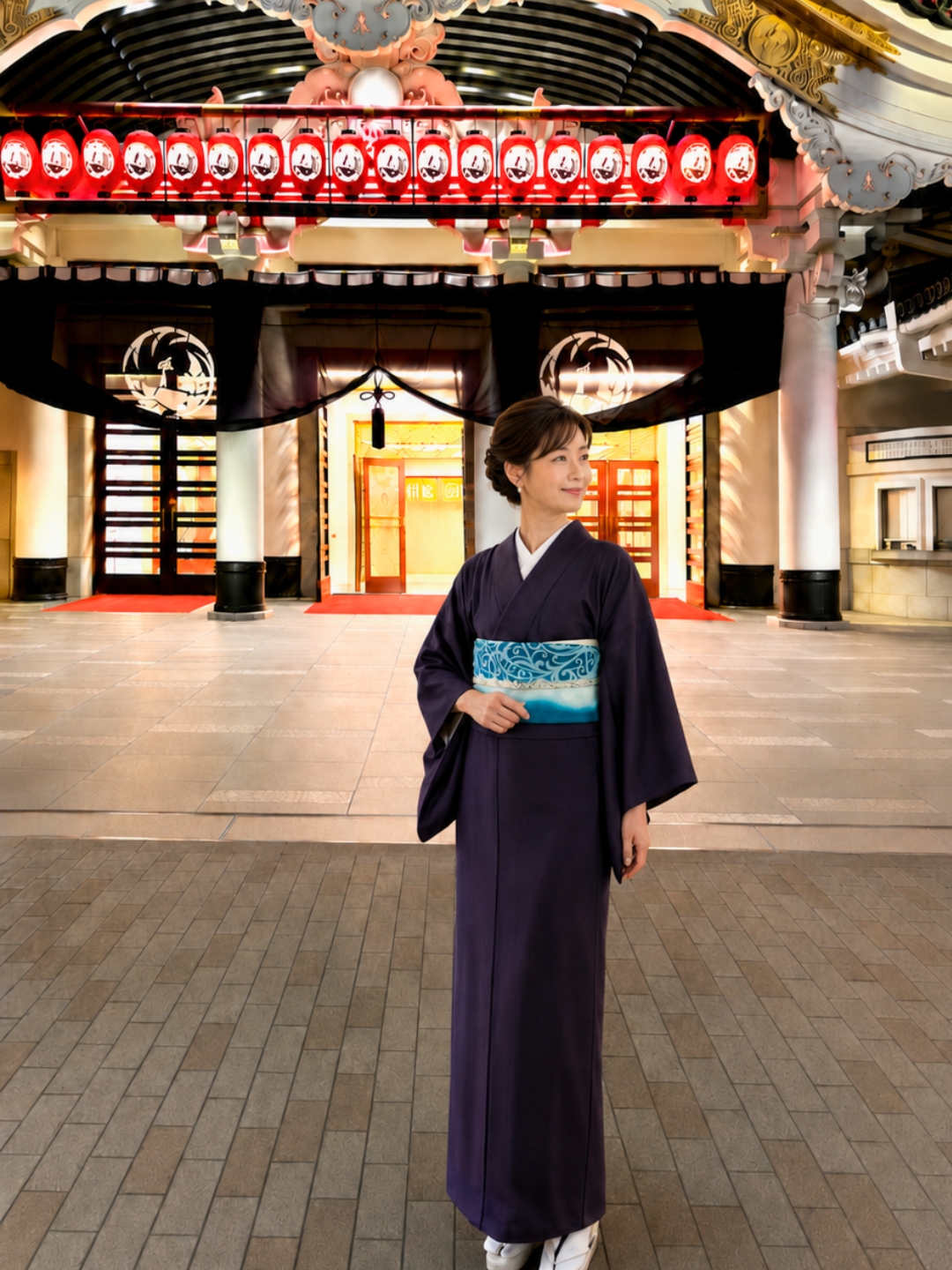
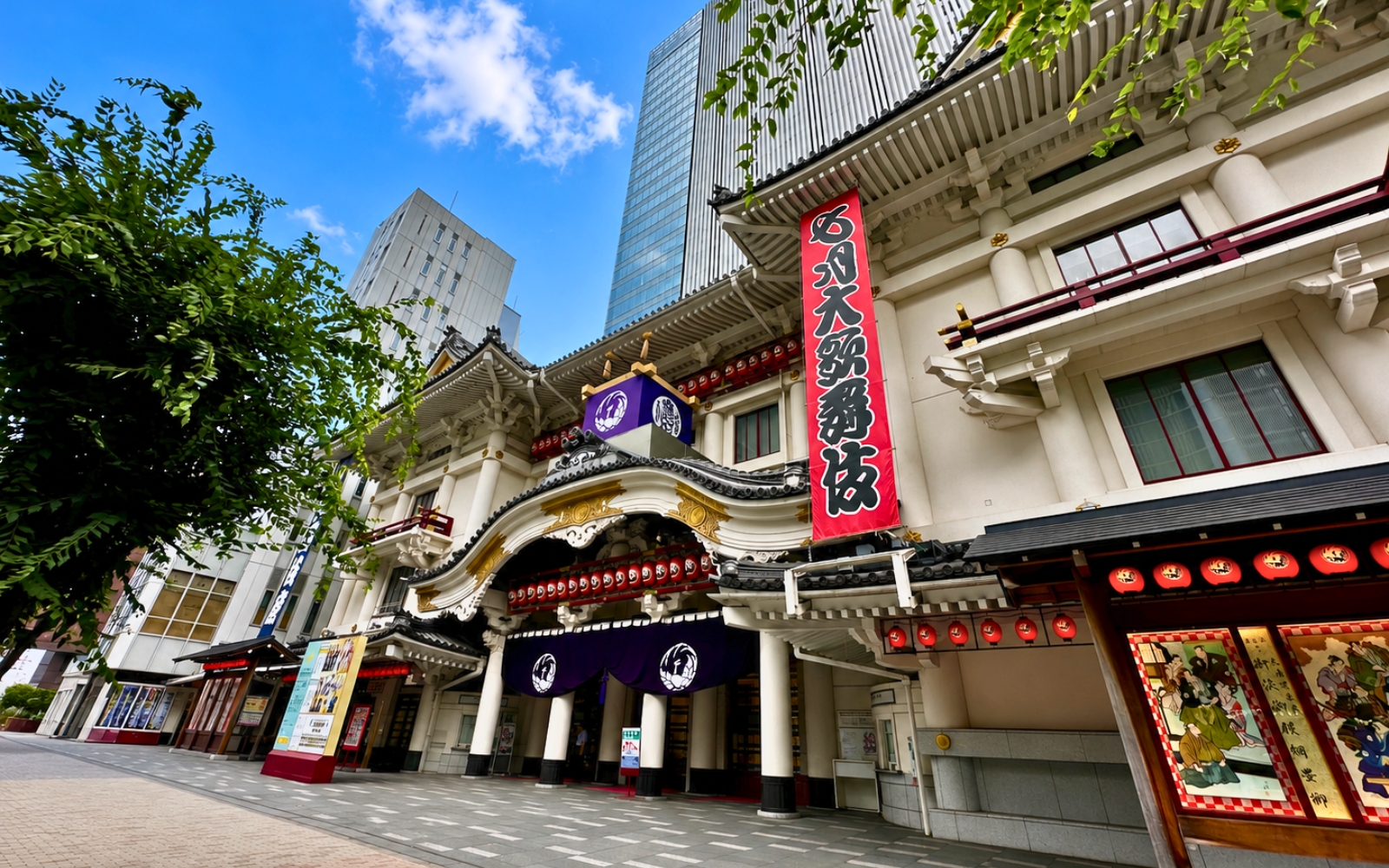
After the performance, stepping outside revealed an even more atmospheric side of Kabukiza Theatre at night. The red lanterns, the softly illuminated white façade, and the evening glow of Ginza created a scene entirely different from the daytime theatre.
Against that light, the deep nasukon kimono quietly brought the whole ensemble together.
The stage, the hanamichi, the intermissions—each became part of the experience of enjoying summer kabuki in kimono.
The box seats at Kabukiza are not simply a place from which to watch the performance. They offer a way to savor the entire theatre-going experience more deeply, including the quiet intervals between acts and the atmosphere that surrounds the stage.
What should you wear to a summer kabuki performance? And how can you enjoy a box seat comfortably while dressed in kimono?
I hope my experience offers a useful guide for anyone planning a visit to Kabukiza Theatre.
________________________________________
Kabukiza
4-12-15 Ginza, Chuo-ku, Tokyo
*Performance programs, showtimes,
and meal reservation procedures are subject to change.
Please check the official Kabukiza Theatre website before your visit.
▶︎ Kabukiza Theatre Official Website
_____________________________________