

Production Area: Ishikawa Prefecture
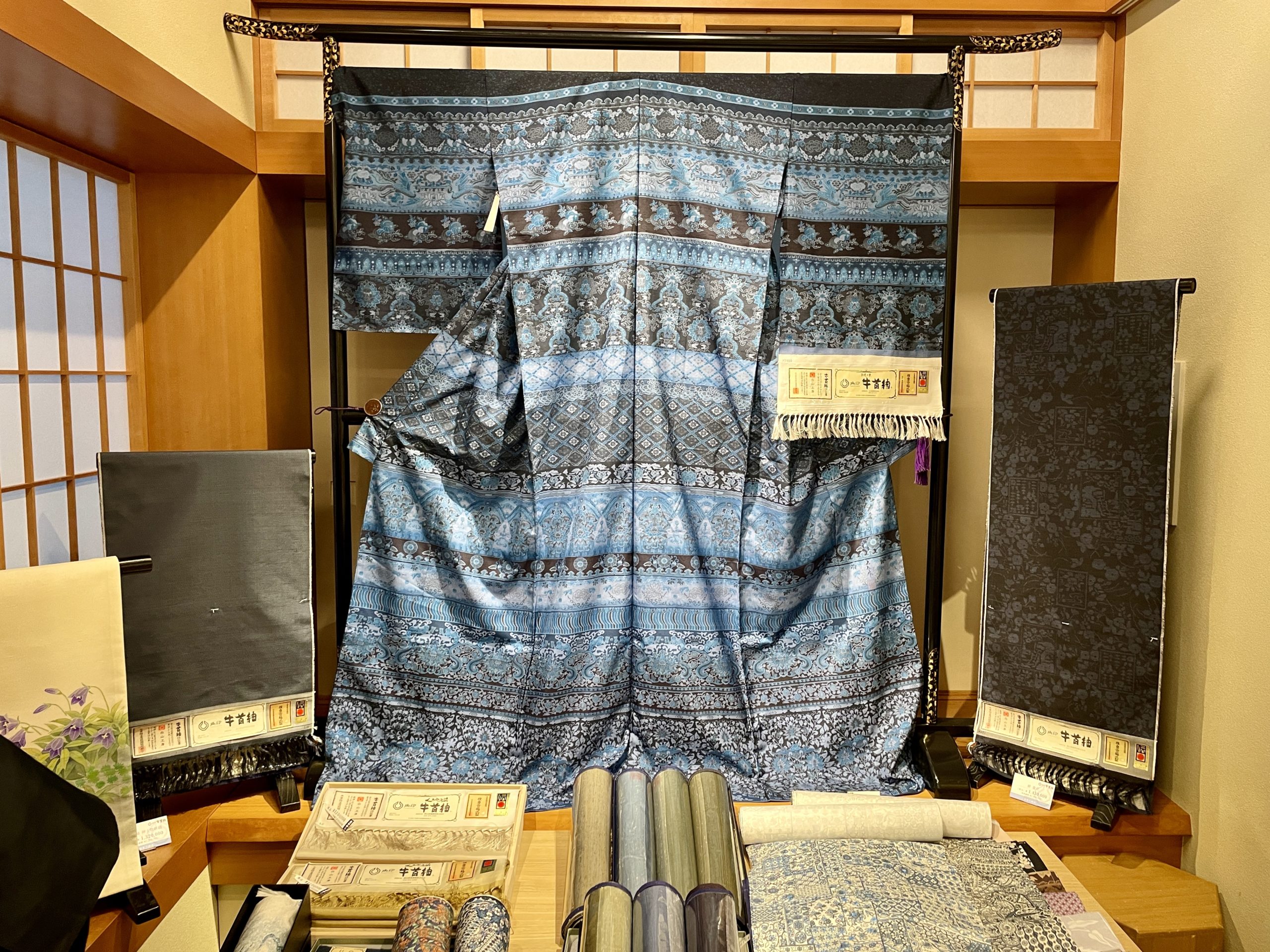
Woven in Hakusan City, Ishikawa Prefecture, Ushikubi Tsumugi boasts a history of over a thousand years. This distinctive silk textile is crafted from tama-mayu, or double cocoons spun by two silkworms together. The resulting yarn is uneven in thickness, creating a rustic texture with a warm, organic feel. Its exceptional strength has earned it the nickname kuginuki tsumugi—“nail-pulling silk”—a testament to its durability, making it a cherished fabric for everyday wear. Designated as an Important Intangible Cultural Property, Ushikubi Tsumugi stands as a symbol of Japan’s rich textile heritage.
In This Article:
- Ushikubi Tsumugi and the Beauty of Double-Cocoon Silk and Natural Slubs.
- The Origins of Ushikubi Tsumugi and Its History of More Than a Thousand Years.
- Its Strength and Rarity, Earning It the Name “Nail-Pulling Tsumugi”.
- Traditional techniques passed down through generations.
- Its Cultural Value as an Important Intangible Cultural Property.
Table of Contents
A Cultural Treasure Recognized as an Important Intangible Cultural Property
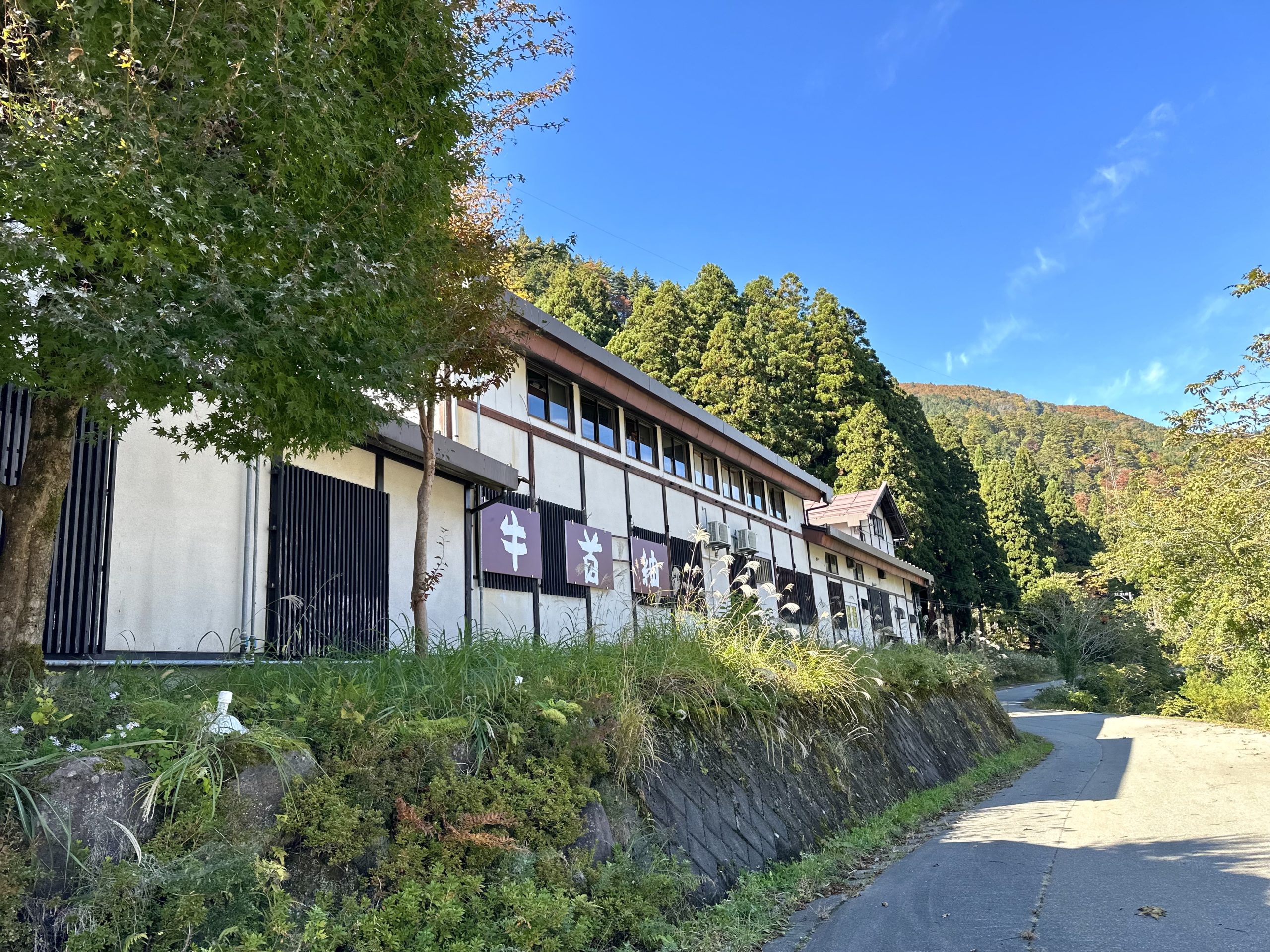
Ushikubi Tsumugi is a textile of quiet, rustic beauty, distinguished by the soft, refined lustre of silk and the richly textured character of its natural slubs. It is also remarkably durable: even when caught on a nail, the fabric will not tear—the nail is said to come loose first. For this reason, it is sometimes known as Kuginuki Tsumugi, or “nail-pulling tsumugi.” The weaving region of Ushikubi Tsumugi lies in Hakusan City, Ishikawa Prefecture, about 90 minutes by car from Kanazawa Station. Set on the western foothills of sacred Mount Hakusan, the area is surrounded by the mighty Tedori River and mountain landscapes of striking natural beauty.
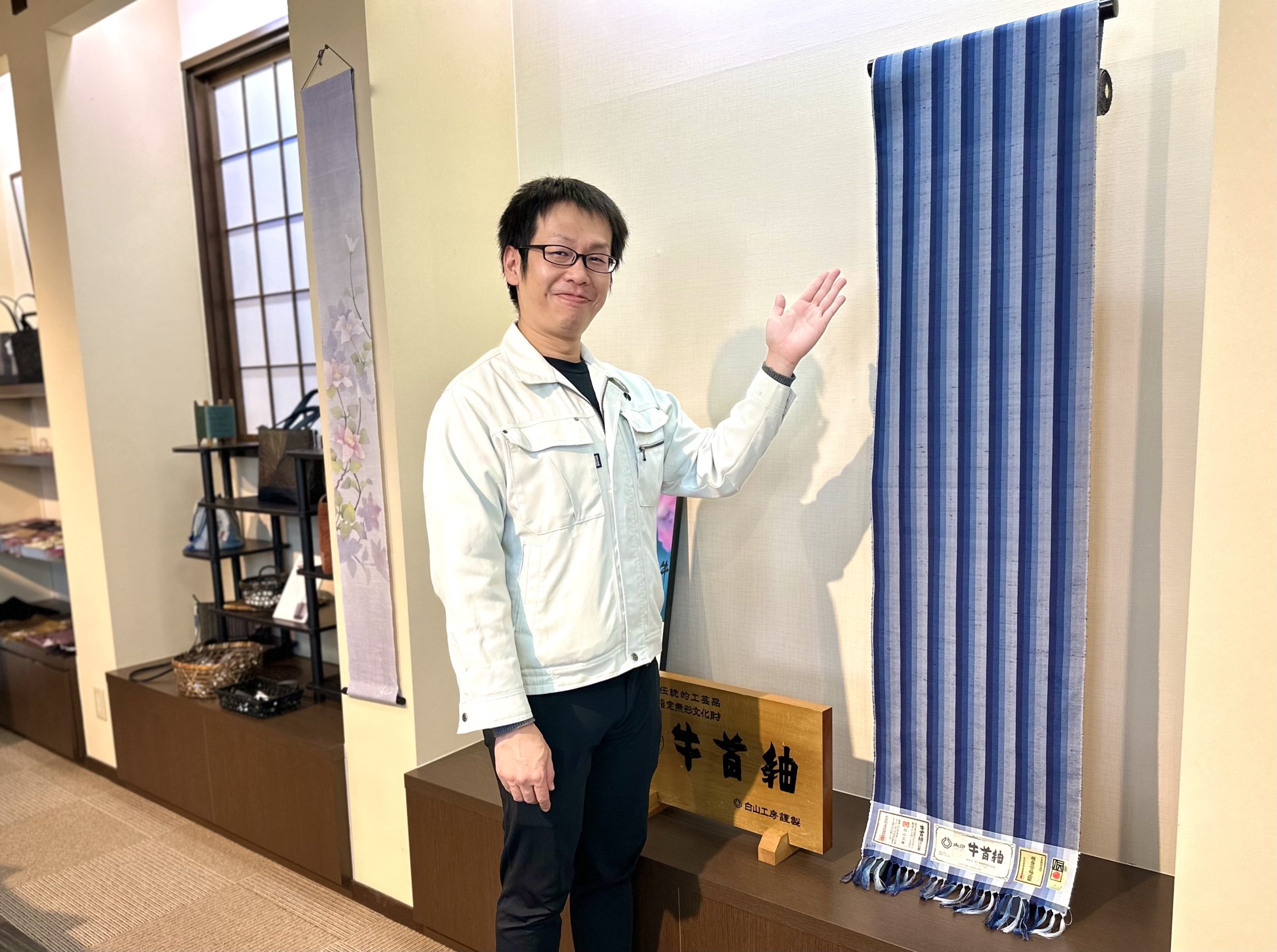
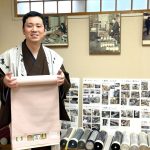
Ushikubi Tsumugi reached its peak in the Taishō era (1912–1926), but production sharply declined during the economic depression. Today, only two weaving houses continue to preserve the craft. In this visit, we explored “Hakusan Kobo,” operated by Nishiyama Sangyo, a company that inherited the facilities of a closed factory to ensure this proud local tradition would not fade away. Mr. Mikito Nishiyama, head of the textile division, kindly guided us through the workshop.
A History of the Land Dating Back to the 8th Century

In the Nara period (8th century), a monk who opened Mt. Hakusan to religious practice enshrined Gozu Tennō, a deity known as the guardian of the village. The place name is said to have been derived from the name of this deity. Later, in the Meiji era, the area was renamed, and today it is part of Hakusan City.
Villagers’ Ingenuity
That Turned “Discarded” Silk into a Strength
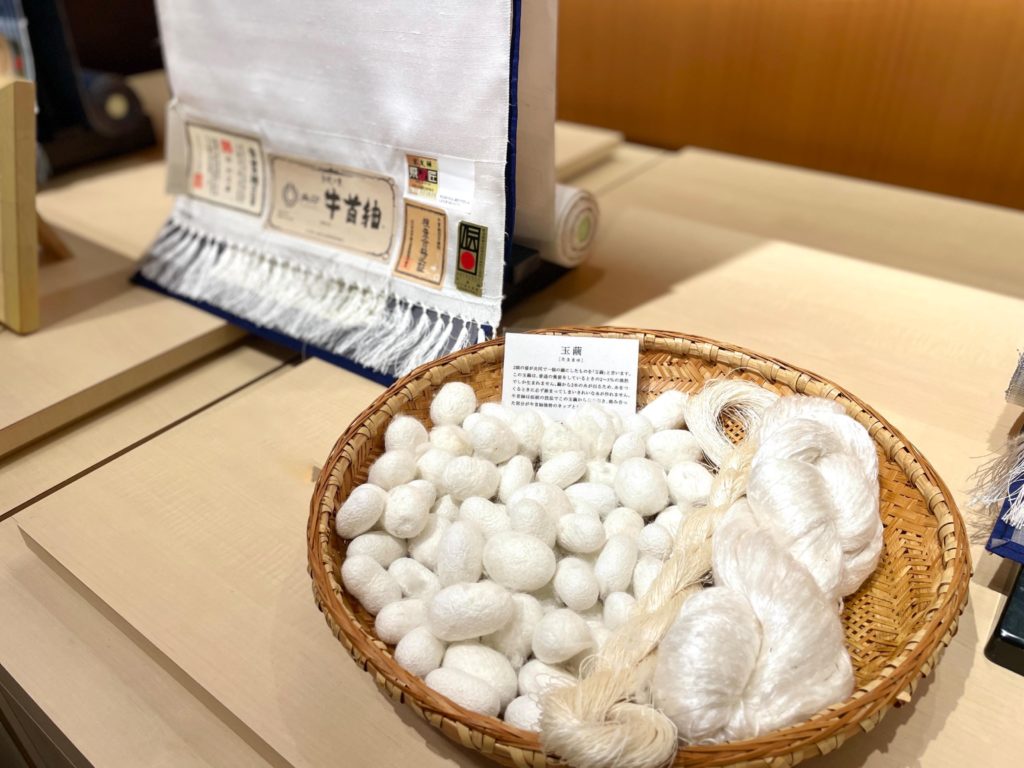
Ushikubi Tsumugi is also the product of the wisdom and skill of people living in a snowbound mountain village. This region is a heavy-snow area, recording accumulations of two to three meters in winter. Sericulture has long flourished here, and during the long months when deep snow cut the village off from the outside world, women would spend their time spinning thread and weaving cloth.
Its remarkable durability comes from using *tama-mayū*—double cocoons spun jointly by two silkworms as they produce their filaments. In the past, *tama-mayū* were considered “defective cocoons” (*kuzu-mayū*) because the filaments would tangle and break during reeling, and the thread thickness was uneven, putting them outside the standard for raw silk. However, instead of discarding these unsellable cocoons, villagers made practical use of them for their own needs. By using *tama-mayū* silk for the weft, they created a sturdy cloth with distinctive slubs and a rustic charm. The highly demanding techniques for reeling and weaving this challenging silk have been carefully passed down to the present day.
All in the Hands of Experience and Intuition
The Art of Nobehiki, a Key Step in Ushikubi Tsumugi
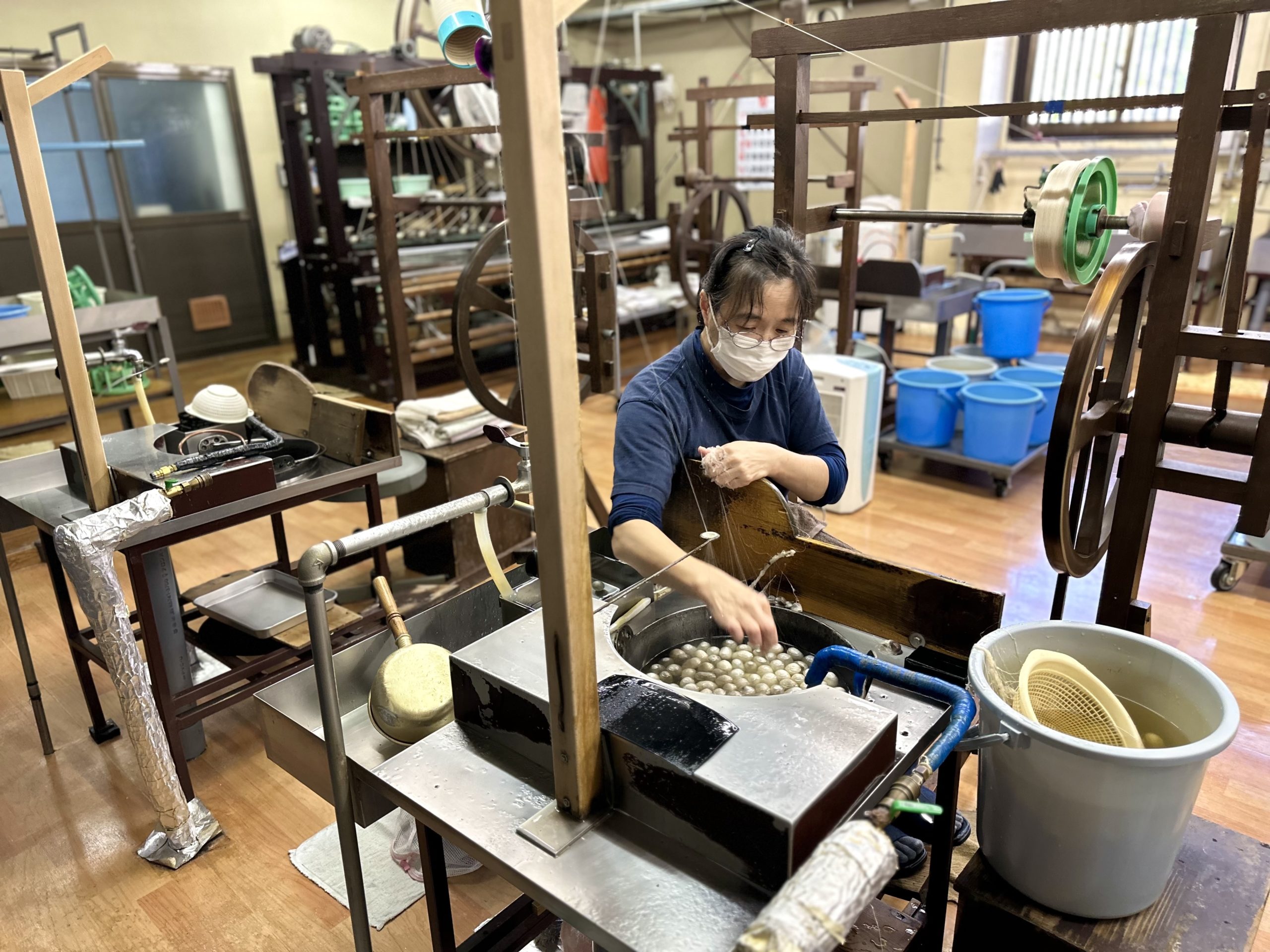
Ushikubi Tsumugi is a luxurious textile woven from precious tama-mayū, which make up only about 2–3% of all cocoons. The complex interlocking of their fibers creates exceptional strength, while the natural slubs add depth and texture to the cloth.
The process of drawing fine threads from 60 tama-mayū and bundling them into a single raw silk thread is called nobehiki (also known as zaguri—a traditional hand-reeling method in which the artisan sits while drawing silk filaments from cocoons and simultaneously winds them using foot pedals). This skill is recognized as an Intangible Cultural Property of Ishikawa Prefecture. The cocoons are placed in a pot of water kept at 90°C to dissolve the sericin (natural silk gum) secreted by the silkworms. The softened filaments are then guided through a small ceramic eyelet called fushikoki and given a twist.
The artisan simultaneously draws the filaments by hand while using foot pedals to wind the thread. Without a motor, this purely human-powered method imparts the distinctive softness unique to Ushikubi Tsumugi. It is a vital step in production, the result of many years of accumulated skill, instinct, and mastery.
Fourteen distinct steps And the mastery of skilled hands
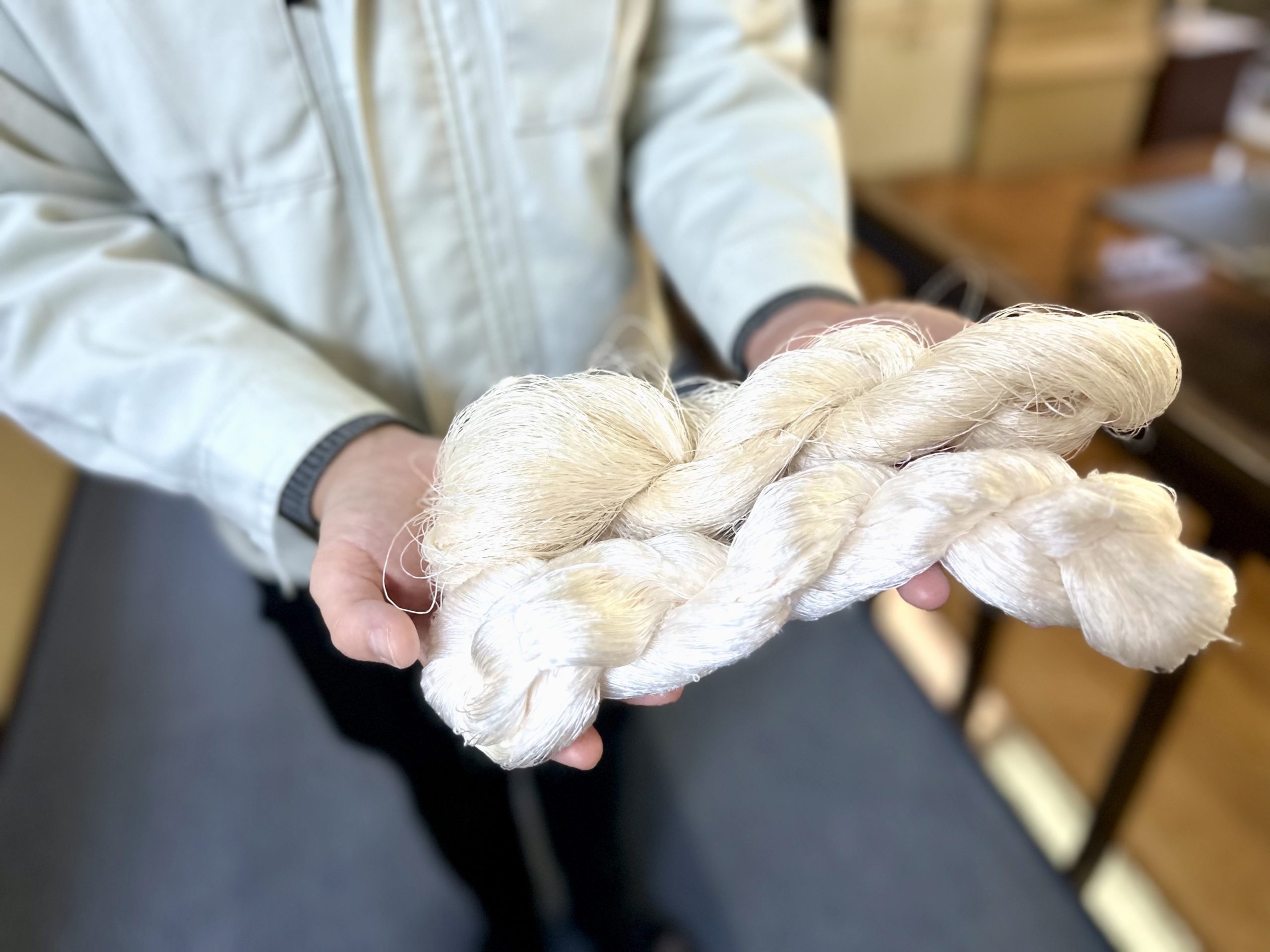
After nobehiki, the silk threads go through nenshi (twisting), seiren (refining to remove impurities), dyeing, and norizuke (applying a protective paste), before moving on to the weaving preparation.
Ushikubi Tsumugi is produced through fourteen major steps, each carried out with painstaking manual skill. This is a labor-intensive textile in every sense. In the past, it was woven on a jibata (traditional ground loom), but since the mid-Meiji period, takabata (upright looms, in which the warp is set vertically and operated with foot pedals) have been used. Upright looms allow for finer, more delicate patterns to be expressed.
A standard bolt of Ushikubi Tsumugi measures 38 cm in width and 13 m in length. A weaver can produce about 3 meters in a day, so one bolt takes four to five days to complete. At Hakusan Kobo, there are six looms in the pre-dyeing workshop and twenty in the post-dyeing workshop, where ten artisans work to create beautiful Ushikubi Tsumugi. In total, about thirty people are engaged in Ushikubi Tsumugi production, ranging in age from their twenties to their seventies, with active efforts to train the next generation.
From Traditional Dyeing
to Artist Collaborations
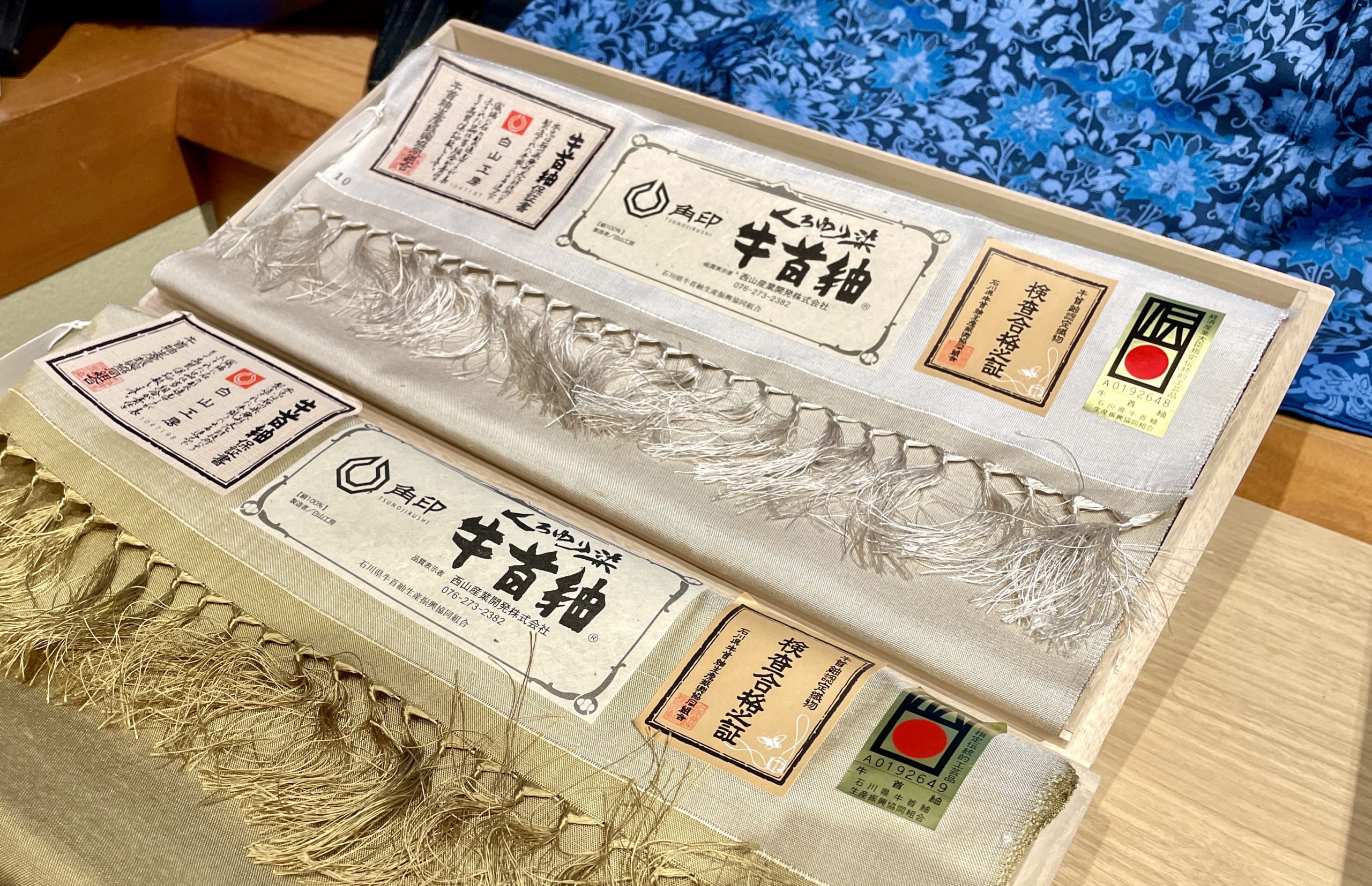
Another defining quality of Ushikubi Tsumugi from Hakusan Kobo is the makers’ continued commitment to sharing and expanding the textile’s appeal through new efforts and challenges. One example is Kuroyuri-zome, or black lily dyeing, regarded as the pinnacle of Ushikubi Tsumugi. This traditional dyeing method uses a plant-based dye extracted from around 10,000 black lily petals, creating an exceptionally rare and precious form of tsumugi. Because black lilies are now designated as a protected natural monument and can no longer be gathered from the wild, Hakusan Kobo cultivates them independently. Their growth is highly dependent on weather conditions, and in some years there may be no harvest at all. Today, only two artisans are able to carry out Kuroyuri-zome. Ushikubi Tsumugi dyed with black lilies carefully grown at the foot of the mountains can truly be considered the ultimate expression of this remarkable textile.
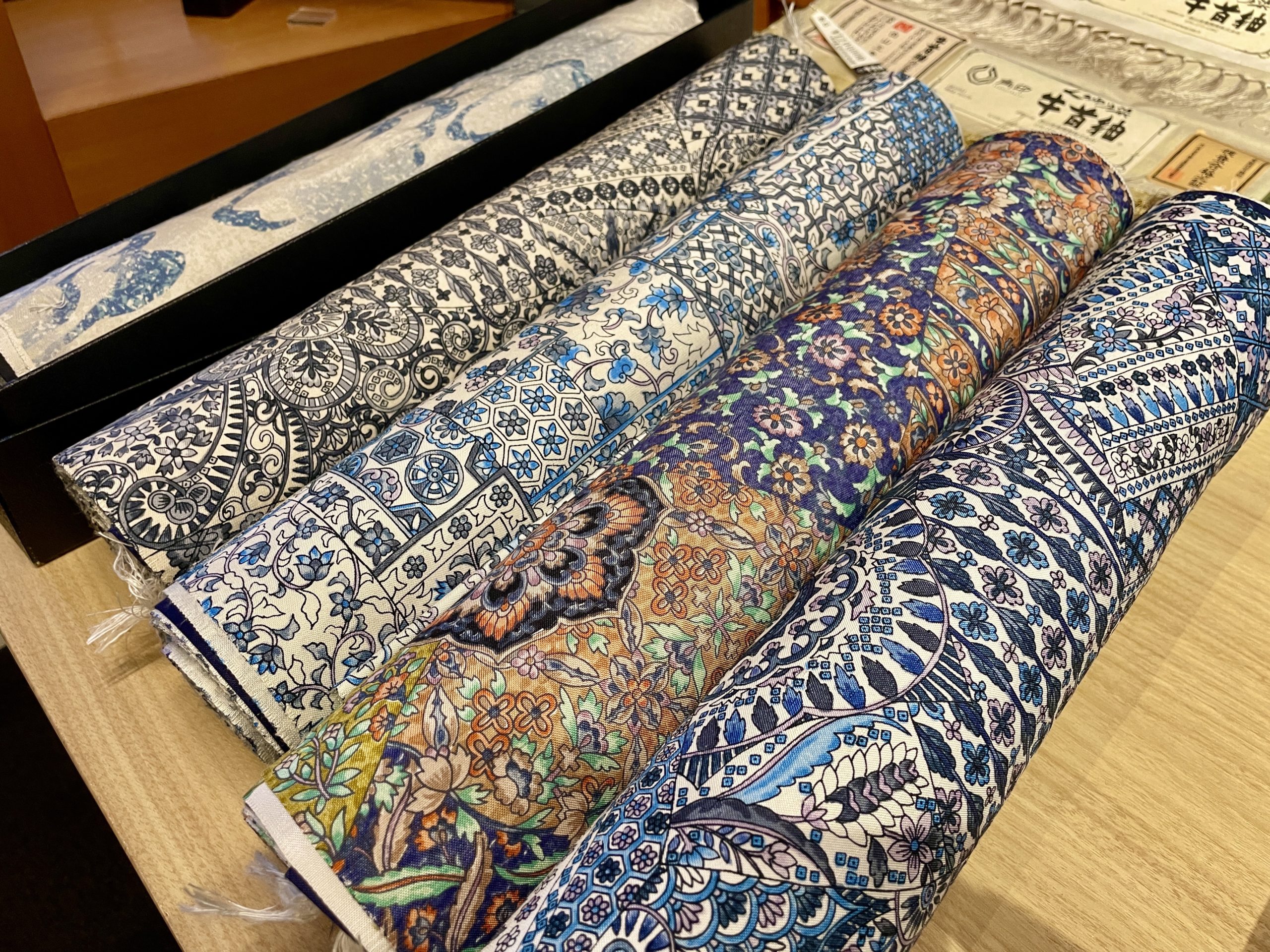
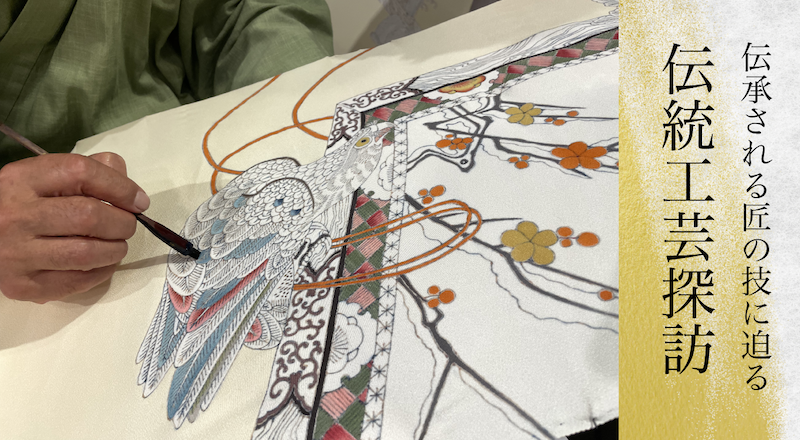
In recent years, design-oriented Ushikubi Tsumugi pieces have also drawn attention, including striking works by Yuzen artist Jinsen Maeda, known for his distinctive color sense and dynamic designs. These eye-catching collections are among Hakusan Kobo’s strengths.
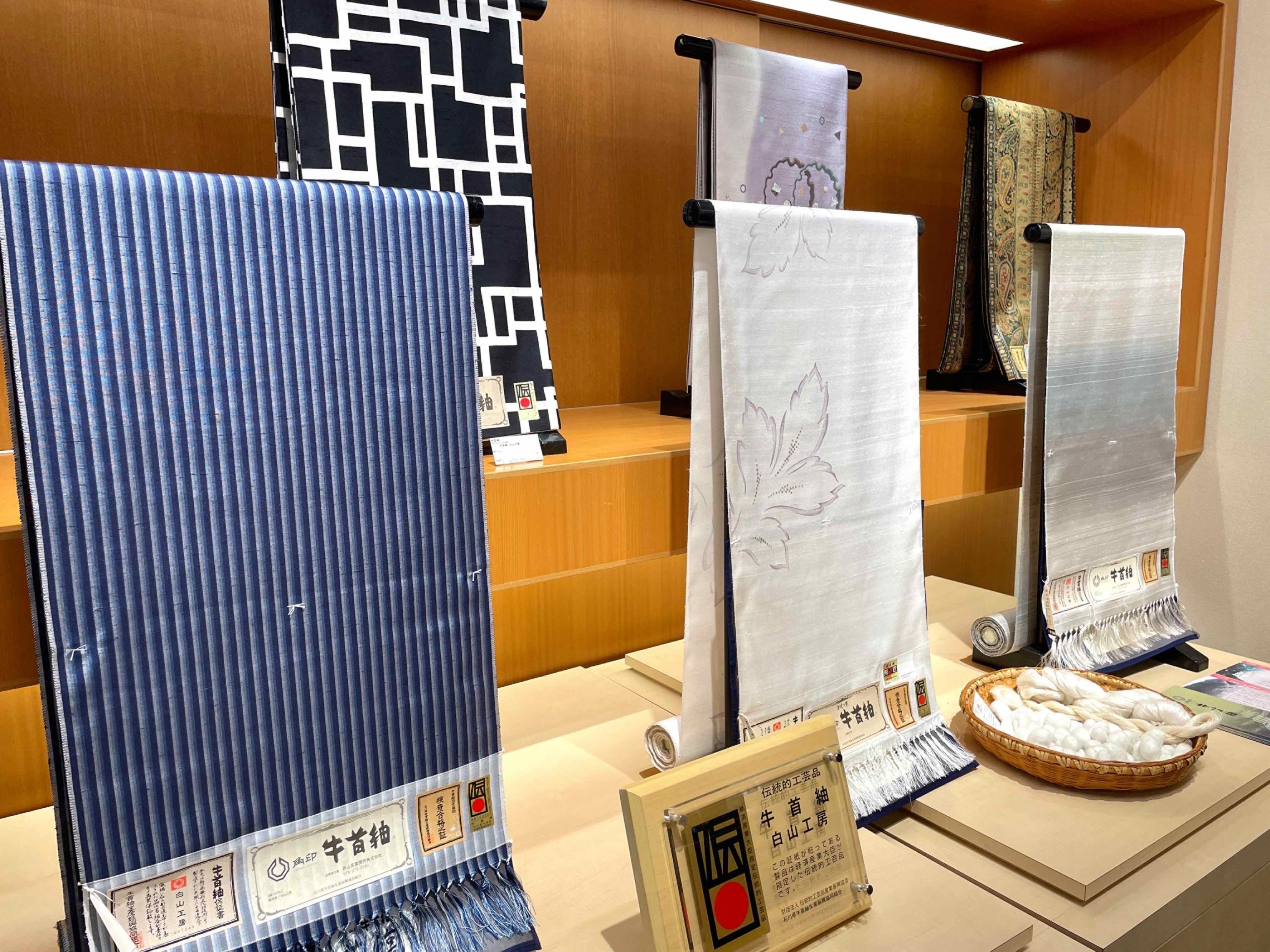
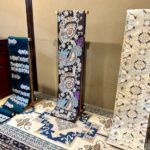
According to Mr. Nishiyama, “Ushikubi Tsumugi is often mentioned alongside Yūki Tsumugi and Ōshima Tsumugi as one of Japan’s three great tsumugi, but public recognition is still limited. First, people need to know about it. We are constantly introducing new creations to broaden its appeal for different occasions, so wearers never tire of it. Our standard is the ‘solid with bokashi’—a softly gradated plain color that works for both casual and semi-formal wear—but right now, sarasa (Indian-inspired floral patterns) is especially popular.”
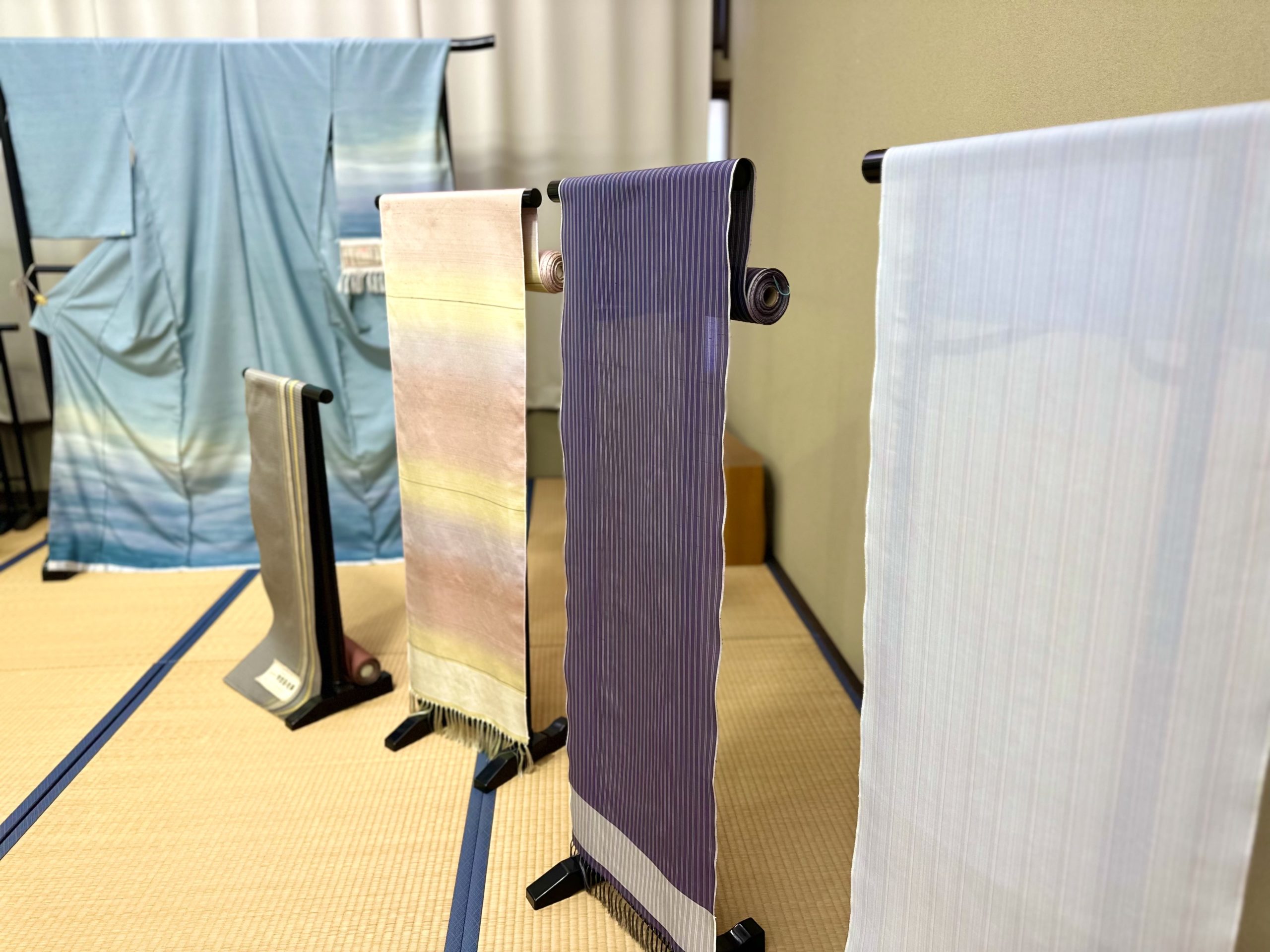
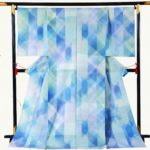
Also notable is Natsu Ushikubi Tsumugi (summer-weight Ushikubi Tsumugi), launched in 1994, which features an elegant translucency and crisp texture, with the characteristic slubs appearing more pronounced. While regular Ushikubi Tsumugi has tightly packed weft threads, this summer version is woven more openly to achieve lightness. Because its sheerness is subtle, it can be worn from the single-layer kimono season in May through mid-October, offering a long period of enjoyment.
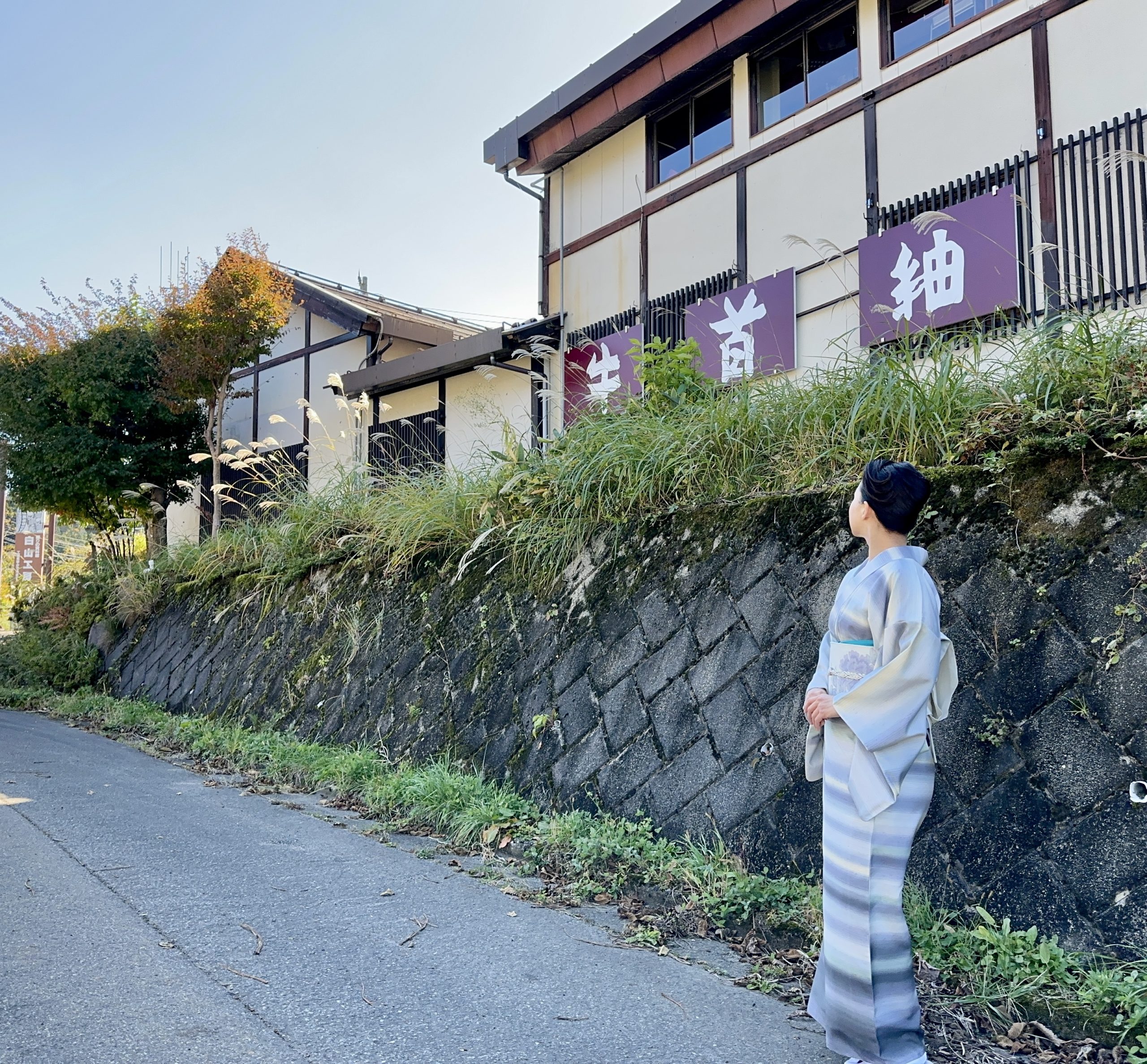
Developed in a snowbound mountain village and produced entirely in-house from silk-making to weaving, each bolt of Ushikubi Tsumugi embodies the artisans’ skill in every step. The moment you slip your arms into its sleeves, you can feel the heritage of a textile spun by generations past.
See Also : The Texile Encyclopedia | Ushikubi Tsumugi (Ishikawa Prefecture)
Ushikubi Tsumugi Weaving Museum — Hakusan Kobo
Nu 17, Shiramine, Hakusan City, Ishikawa Prefecture
TEL:+81-76-259-2859
Official Website>>
★Factory tours available (advance reservation required)